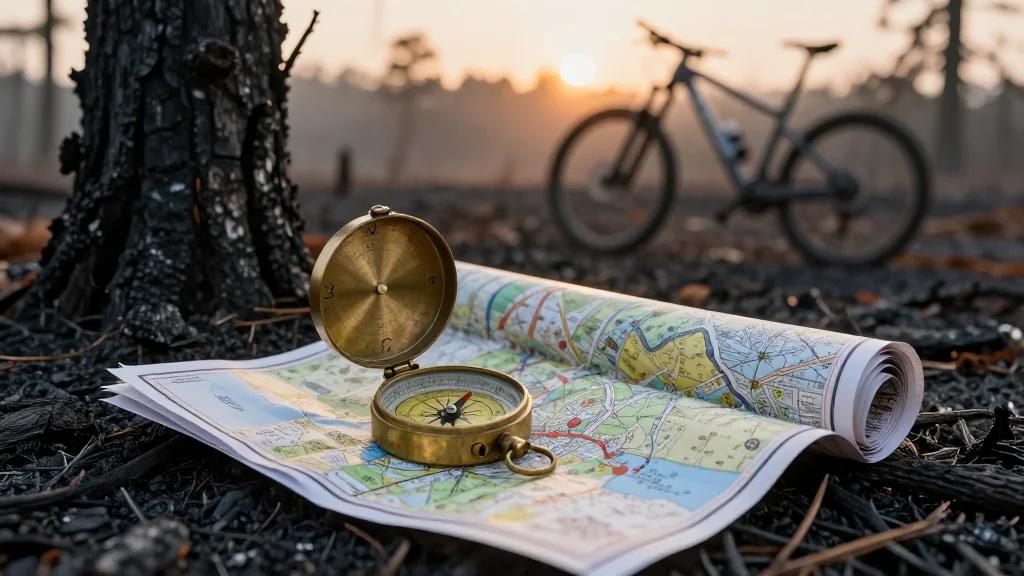
Fourth Ori‑Trail Rogaine Race Returns to Burned Landscape of Aguiar Da Beira

Why It Matters
The Ori‑Trail Rogaine race illustrates how adventure sports can serve as both a catalyst for local economies and a platform for environmental awareness. By staging a high‑profile competition on a landscape still bearing the scars of the 2025 wildfires, Aguiar da Beira demonstrates a proactive approach to post‑disaster recovery, turning a tragedy into a community‑building opportunity. The event also raises critical questions about the sustainability of outdoor recreation in a warming climate, prompting organizers and policymakers to develop guidelines that balance safety, ecological impact, and the desire for unique sporting experiences. For the broader outdoors community, the race offers a case study in adaptive event planning. It shows that with careful risk assessment and transparent communication, organizers can safely re‑open fire‑affected areas for sport, potentially shortening the economic downtime for rural regions that rely heavily on tourism. The lessons learned here could inform similar initiatives across Europe and beyond, where wildfires are becoming increasingly common.
Key Takeaways
- •Fourth Ori‑Trail Rogaine race scheduled for 25 April 2026 in Aguiar da Beira, Portugal
- •Event uses the fire‑scarred Aguiar da Beira Norte map, with 55 % of the area burned in 2025
- •Teams of 2‑5 compete for 4 hours (pedestrian) or 3 hours (Ori‑BTT) to visit maximum control points
- •Organizers assure safety despite burned terrain, citing cleared vegetation and faster navigation
- •Race aims to boost adventure tourism and showcase resilience after wildfire devastation
Pulse Analysis
The decision to host Ori‑Trail Rogaine on a recently burned map is a bold signal that the outdoor industry is moving from reactive disaster response to proactive resilience planning. Historically, major orienteering events have shied away from fire‑impacted zones due to safety concerns and the loss of navigational complexity. This edition flips that script, leveraging the reduced underbrush to create a faster, more spectator‑friendly format while still preserving the core challenge of precise map reading.
From a market perspective, the race taps into a growing niche of adventure tourists seeking authentic, off‑the‑beaten‑path experiences. The live‑stream component expands the event’s reach beyond the 150 participating teams, potentially attracting sponsorships from outdoor gear brands eager to associate with a narrative of recovery and innovation. However, the organizers must navigate the fine line between capitalizing on a disaster narrative and respecting the affected community, a balance that will be scrutinized by both environmental NGOs and the broader public.
Looking ahead, the success of this event could set a template for other regions grappling with wildfire aftermaths. If safety protocols prove effective and participant feedback is positive, we may see a new sub‑genre of “post‑fire orienteering” emerge, where maps are deliberately updated to reflect altered terrain, offering a dynamic, evolving challenge for athletes. This could also spur investment in rapid mapping technologies and fire‑impact assessment tools, further integrating environmental data into sport event planning. In short, the Ori‑Trail Rogaine race is not just a competition; it is a litmus test for the outdoor sector’s ability to adapt, innovate, and thrive amid climate‑driven change.
Fourth Ori‑Trail Rogaine Race Returns to Burned Landscape of Aguiar da Beira
Comments
Want to join the conversation?
Loading comments...