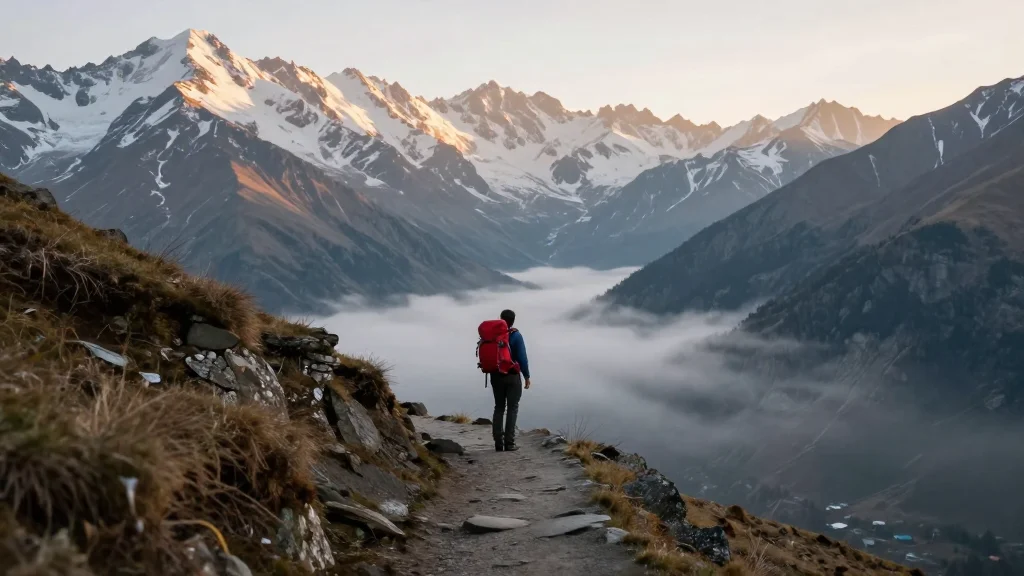
Georgia Launches Expanded Curated Hiking Trail Network to Lure Global Adventure Tourists

Why It Matters
Georgia's trail expansion reflects a broader shift in the outdoors industry toward emerging destinations that can offer high‑quality experiences at lower cost. As adventure travelers seek new frontiers, countries like Georgia that invest in infrastructure, safety standards and community engagement stand to capture significant market share. The move also underscores the increasing importance of sustainable tourism practices, as the industry grapples with balancing visitor growth against environmental stewardship. For the global outdoors market, Georgia's model could serve as a template for other regions with untapped mountain terrain. By aligning government policy with private sector expertise, the initiative demonstrates how coordinated investment can quickly elevate a destination's profile, stimulate rural economies and promote conservation through responsible use of natural assets.
Key Takeaways
- •Georgia announced an expanded curated hiking trail network in 2026 targeting international adventure tourists.
- •Signature routes include an eight‑day Tusheti‑Khevsureti traverse, a seven‑day Svaneti Ring Trail and a two‑day Kazbegi Peak ascent.
- •Altitude variation spans from 1,200 m valleys to 5,193 m peaks, offering diverse ecological zones within compact itineraries.
- •New infrastructure features standardized signage, waymarking, designated campsites and internationally certified local guides.
- •Improved access via Tbilisi International Airport and 4‑8 hour ground transport links aims to streamline visitor arrival.
Pulse Analysis
Georgia's aggressive rollout of curated hiking trails arrives at a moment when adventure tourism is outpacing traditional leisure travel. The country's natural assets—steep elevation gradients, relatively untouched high‑altitude ecosystems and living mountain cultures—provide a compelling alternative to saturated European and North American markets. By standardizing trail infrastructure and investing in guide certification, Georgia reduces perceived risk for foreign trekkers, a critical factor that often deters first‑time visitors to less‑known regions.
Economically, the initiative could diversify revenue streams for a nation historically reliant on wine tourism and historic city visits. Rural communities along the new routes stand to benefit from direct spending on guide services, homestays and local crafts, potentially curbing urban migration. However, the rapid scaling of visitor numbers poses a classic sustainability dilemma: increased foot traffic can accelerate erosion, disturb wildlife and strain limited water supplies. Georgia's emphasis on environmental monitoring and community‑based management will be the litmus test for whether the model can be replicated elsewhere.
From a competitive standpoint, Georgia's pricing advantage—lower costs for guides, lodging and logistics—positions it as a budget‑friendly gateway to high‑altitude trekking. This could attract a new segment of middle‑income travelers who previously could not afford Alpine experiences. If the country can maintain high safety and service standards while preserving its natural and cultural heritage, it may redefine the geography of premium adventure tourism, shifting some of the spotlight from the Alps to the Caucasus.
Looking forward, the success of Georgia's trail network will hinge on data‑driven adjustments. Tracking visitor satisfaction, environmental impact metrics and economic outcomes will inform subsequent phases, such as adding new loops or expanding camping capacity. The initiative's outcome will likely influence policy decisions in other emerging mountain destinations seeking to balance growth with stewardship.
Georgia Launches Expanded Curated Hiking Trail Network to Lure Global Adventure Tourists
Comments
Want to join the conversation?
Loading comments...