Hudson Crossing Park Opens First Accessible Kayak Launch on Champlain Canal

Companies Mentioned
Why It Matters
The new launch directly addresses a long‑standing barrier to water‑based recreation: the lack of entry points that accommodate mobility challenges. By removing that obstacle, Hudson Crossing Park not only expands the pool of potential paddlers but also signals to other outdoor venues that accessibility can be integrated without prohibitive cost. The project’s grant‑driven financing model demonstrates how public‑private partnerships can accelerate inclusive infrastructure, setting a precedent for parks nationwide. Moreover, the launch aligns with broader public‑health goals by encouraging physical activity among seniors and people with disabilities, groups that historically have lower participation rates in outdoor sports. As climate‑change‑related concerns push more communities toward active, low‑impact recreation, accessible facilities like this kayak launch become essential components of resilient, equitable outdoor ecosystems.
Key Takeaways
- •Ribbon‑cutting ceremony held on April 28, 2026 at Hudson Crossing Park’s Lock C5 Island
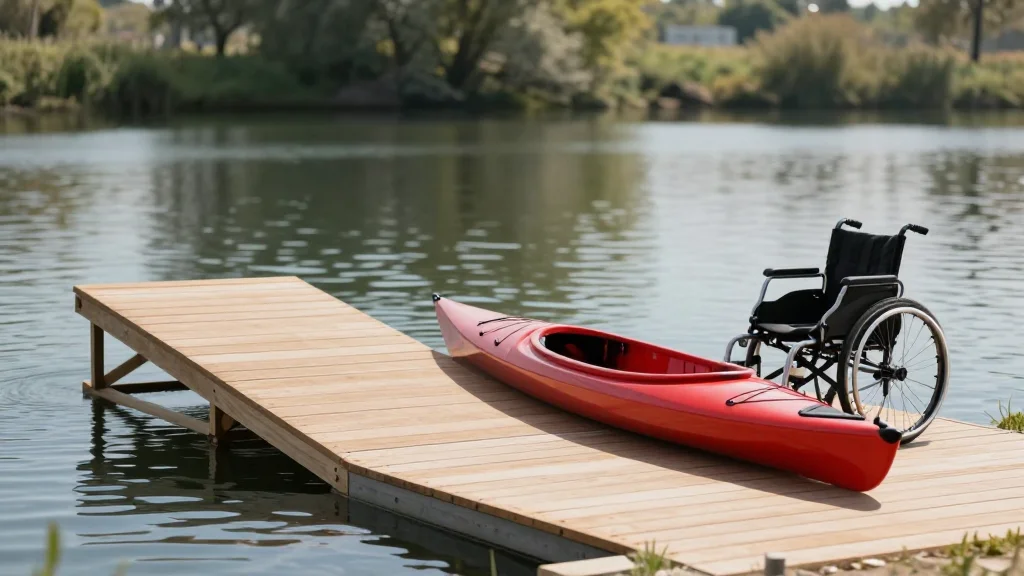
- •Launch includes a sloped ramp, hand‑rails, and widened entry to meet ADA standards
- •Installed by BoardSafe, a nonprofit specializing in accessible waterfront design
- •Funding comprised $7,500 from Saratoga County, $24,999 from the Christopher & Dana Reeve Foundation, and $15,000 from AARP (total $47,499)
- •Park will offer adaptive paddling workshops and maintain volunteer support for users with disabilities
Pulse Analysis
Hudson Crossing Park’s accessible kayak launch arrives at a moment when outdoor recreation providers are re‑evaluating equity in their offerings. Historically, many waterways have been designed for able‑bodied users, leaving a sizable segment of the population excluded. This project illustrates how modest capital outlays—under $50,000—can produce outsized social returns, especially when the funding is sourced from a mix of local government, health‑focused foundations, and senior advocacy groups.
The involvement of BoardSafe is notable because it brings specialized engineering expertise that bridges the gap between compliance and user experience. Their model of partnering with parks reduces the learning curve for municipalities that lack in‑house accessibility engineers. As more parks adopt similar collaborations, we can expect a ripple effect: standardized design guidelines, shared best‑practice repositories, and potentially lower costs through economies of scale.
Looking forward, the real test will be sustained engagement. Initial enthusiasm can wane if programming does not evolve. Hudson Crossing Park’s plan to host adaptive paddling workshops and collect usage data is a strategic move to keep the launch relevant and to justify future investments. If the park can demonstrate increased participation among under‑served groups, it will provide a compelling case study for state and federal grant agencies to fund similar projects across the nation, accelerating a shift toward truly inclusive outdoor recreation.
Hudson Crossing Park Opens First Accessible Kayak Launch on Champlain Canal
Comments
Want to join the conversation?
Loading comments...