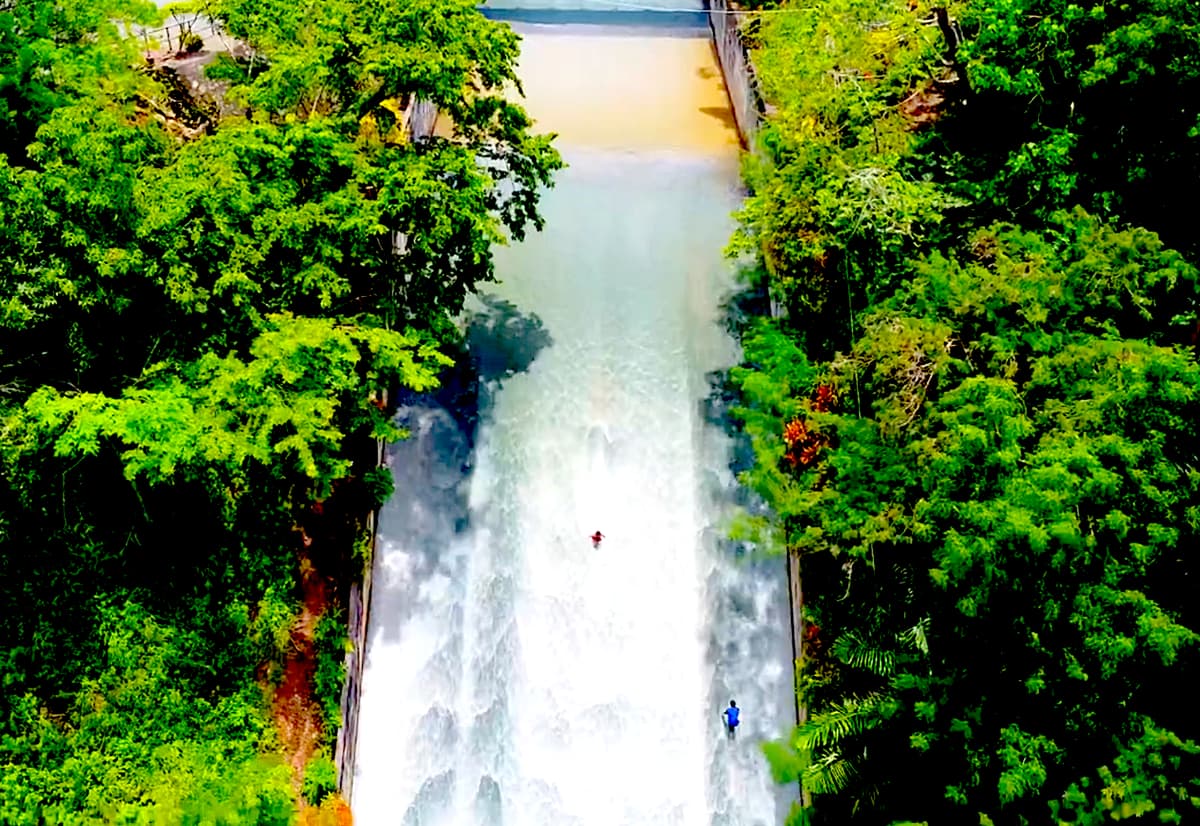
Insane 800ft Waterslide Unleashed in Philippines: ‘Is This Even Legal?’ (Video)
Why It Matters
The unregulated slide spotlights safety gaps in repurposed infrastructure and signals a potential tourism revenue source that requires formal oversight.
Key Takeaways
- •250‑meter spillway turned into unofficial waterslide in Bansalan, Philippines
- •Dam originally built in 1978 for irrigation and household water supply
- •Videos of the slide have gone viral, attracting tourists
- •No formal safety measures; local authorities express concern
- •Highlights trend of repurposing infrastructure for adventure tourism
Pulse Analysis
The concrete spillway of the Bansalan Dam in Davao del Sur has become an impromptu waterpark, drawing locals and visitors to slide down its 250‑meter (820‑foot) channel. Built in 1978 to channel the Talomo River for irrigation and domestic use, the structure now hosts spontaneous recreation captured in dozens of viral videos. The footage shows riders leaping from the top, gliding on a thin sheet of water, and splashing into the pool below, turning a utilitarian piece of infrastructure into a spectacle that resonates with thrill‑seekers worldwide.
Despite the excitement, the makeshift slide raises serious safety questions. There are no guardrails, signage, or lifeguards, and the water flow can vary dramatically after rain, increasing the risk of injury or drowning. Local officials from the National Irrigation Administration have issued warnings, but enforcement is hampered by the remote setting and the community’s attachment to the attraction. The lack of liability coverage means any accident could fall on residents or tourists, exposing the region to potential legal and reputational fallout.
The Bansalan spillway illustrates a growing global trend where abandoned or underused infrastructure is repurposed for adventure tourism. While such grassroots initiatives can boost local economies by attracting visitors and generating social‑media buzz, they also compel authorities to balance revenue potential with public safety. Policymakers may consider formalizing the site with controlled access, safety barriers, and modest entry fees, turning an informal pastime into a regulated attraction. Doing so could create jobs, fund maintenance, and set a precedent for responsibly leveraging civil works as community assets.
Insane 800ft Waterslide Unleashed in Philippines: ‘Is This Even Legal?’ (Video)
Comments
Want to join the conversation?
Loading comments...