Is There a Good Way to Visit Our National Parks in 2026? It’s Complicated.
Why It Matters
The funding shortfall forces parks to rely on visitors, intensifying overcrowding and threatening both conservation goals and local economies, while political pressures could erode protections.
Key Takeaways
- •2024 record 331.9 million visits; 2025 slight dip to 323 million
- •NPS budget stays $2.14 B in 2027 despite higher visitation
- •Visitor fees now cover 80% of park costs; non‑resident rates tripled
- •Overtourism forces $1.5 B Yellowstone wastewater upgrades and trail redesigns
- •Gateway towns lose up to $600 M when park visits drop sharply
Pulse Analysis
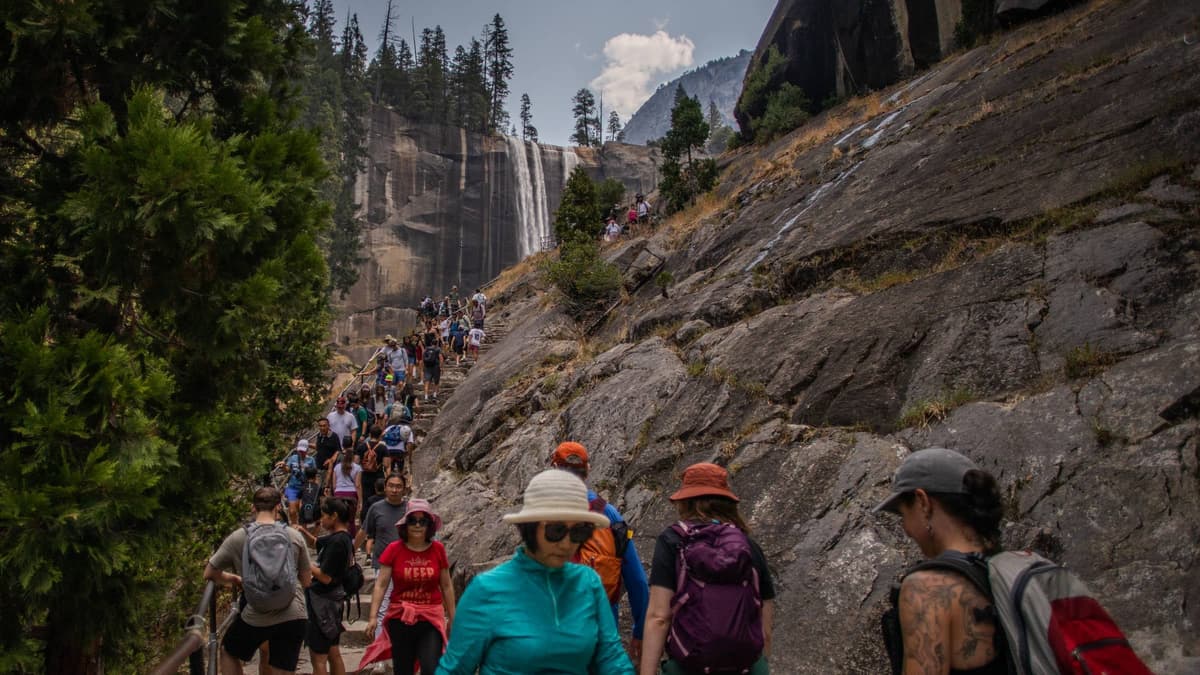
National park visitation has surged over the past decade, culminating in a record 331.9 million entries in 2024 and a still‑high 323 million in 2025. This growth strains infrastructure—from congested trailheads in Yosemite to wastewater systems in Yellowstone that now demand a $1.5 billion overhaul. The National Park Service’s budget, however, has not kept pace; the proposed 2027 allocation sits at $2.14 billion, barely a fraction of the $3.5 billion needed in today’s dollars. As a result, parks increasingly lean on visitor fees, retaining 80% of entrance revenues while non‑resident rates have been tripled to boost cash flow.
The financial reliance on tourists ripples beyond park boundaries. In 2024, visitors poured roughly $29 billion into surrounding gateway towns, with the Great Smoky Mountains alone generating $2 billion annually. Such dependence makes local economies vulnerable—when visitation fell during the 2013 shutdown, communities faced an estimated $600 million loss. Consequently, park officials and local leaders push for managed tourism, balancing off‑season travel and less‑known sites against the need to sustain jobs, tax revenues, and community services.
Politically, crowded parks keep the issue in the public eye, yet they also expose a paradox: high visitation can justify both increased protection and, paradoxically, cuts to funding. Recent federal moves to end successful reservation programs and proposals to lease adjacent lands for oil and gas heighten the risk of weakened safeguards. The challenge for policymakers is to devise a sustainable model that funds maintenance, protects ecosystems, and supports local economies without sacrificing the very public access that defines America’s national parks.
Is There a Good Way to Visit Our National Parks in 2026? It’s Complicated.
Comments
Want to join the conversation?
Loading comments...