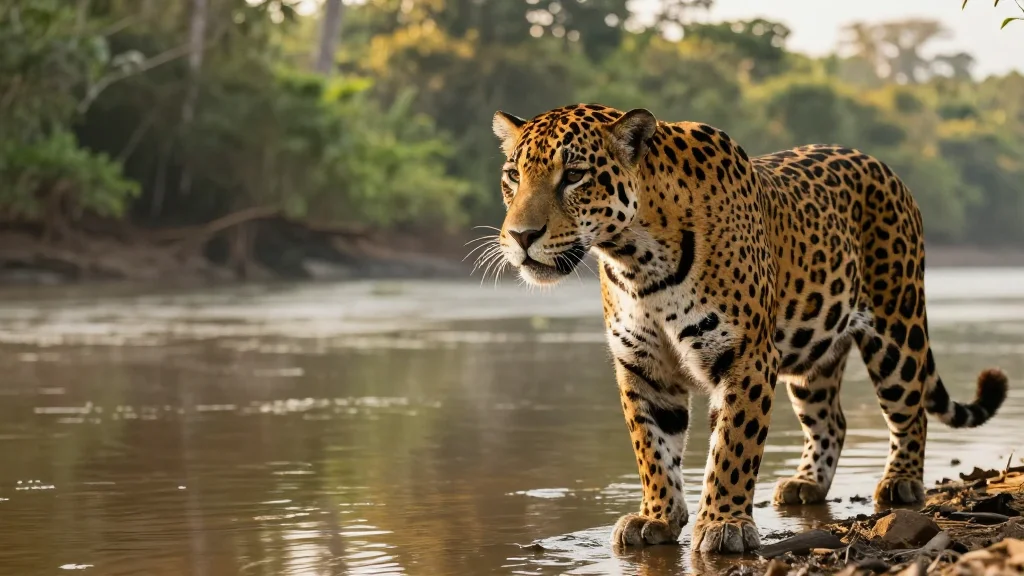
Jaguar Rivers Initiative Launches to Reconnect South America’s Fragmented River Ecosystems

Why It Matters
The Jaguar Rivers Initiative represents a paradigm shift in conservation by treating a major river system as a single ecological entity that transcends national borders. For the outdoors community, restored corridors mean richer wildlife viewing opportunities, safer river recreation and new destinations for adventure tourism. Moreover, the initiative’s emphasis on collaborative governance could set a template for other fragmented ecosystems worldwide, linking biodiversity protection with sustainable outdoor economies. By focusing on flagship species such as jaguars and giant otters, the coalition leverages charismatic wildlife to rally public support and attract funding, while also addressing broader ecosystem services—clean water, flood mitigation and carbon sequestration—that benefit both nature and people. Key benefits include: enhanced biodiversity, increased ecotourism revenue, stronger cross‑border policy coordination, and a scalable model for river‑based conservation that other regions can emulate.
Key Takeaways
- •Four NGOs—Rewilding Argentina, Onçafari, Nativa and Moisés Bertoni Foundation—formalized the Jaguar Rivers Initiative in 2025
- •The initiative targets the 1.2 million‑sq‑km Paraná River basin across Argentina, Paraguay, Brazil and Bolivia
- •Restoration aims to protect jaguars, red‑and‑green macaws, giant river otters and other keystone species
- •Pilot habitat‑restoration projects launch in 2026 along key tributaries in northern Argentina and southern Paraguay
- •Improved river health is expected to boost ecotourism, fishing and community‑based recreation
Pulse Analysis
The Jaguar Rivers Initiative arrives at a moment when South American conservation is grappling with fragmented funding streams and political volatility. By anchoring its strategy around the Paraná River—a natural conduit that already links disparate ecosystems—the coalition sidesteps the traditional nation‑centric model that often stalls cross‑border projects. This river‑first approach mirrors successful watershed initiatives in North America and Europe, where integrated management has yielded measurable gains in water quality and biodiversity.
Historically, jaguar conservation has suffered from isolated protected‑area designations that ignore the species’ extensive home‑range needs. The initiative’s emphasis on connectivity directly addresses this gap, offering a realistic pathway for jaguar populations to disperse and maintain genetic diversity. The inclusion of the giant river otter, a species once thought extinct in Argentina, adds a compelling narrative hook that can mobilize public interest and donor dollars.
From an outdoor‑recreation perspective, the plan could transform the Paraná basin into a flagship destination for river‑based adventure tourism, akin to the rise of Patagonia’s trekking corridors. However, the coalition must navigate complex land‑use conflicts, especially where hydroelectric dams and agricultural expansion threaten river continuity. Success will hinge on securing long‑term financing, harmonizing legal frameworks across four countries, and delivering tangible benefits to local communities to prevent backlash. If these challenges are met, the Jaguar Rivers Initiative could become a blueprint for trans‑national conservation that balances wildlife protection with sustainable outdoor economies.
Jaguar Rivers Initiative Launches to Reconnect South America’s Fragmented River Ecosystems
Comments
Want to join the conversation?
Loading comments...