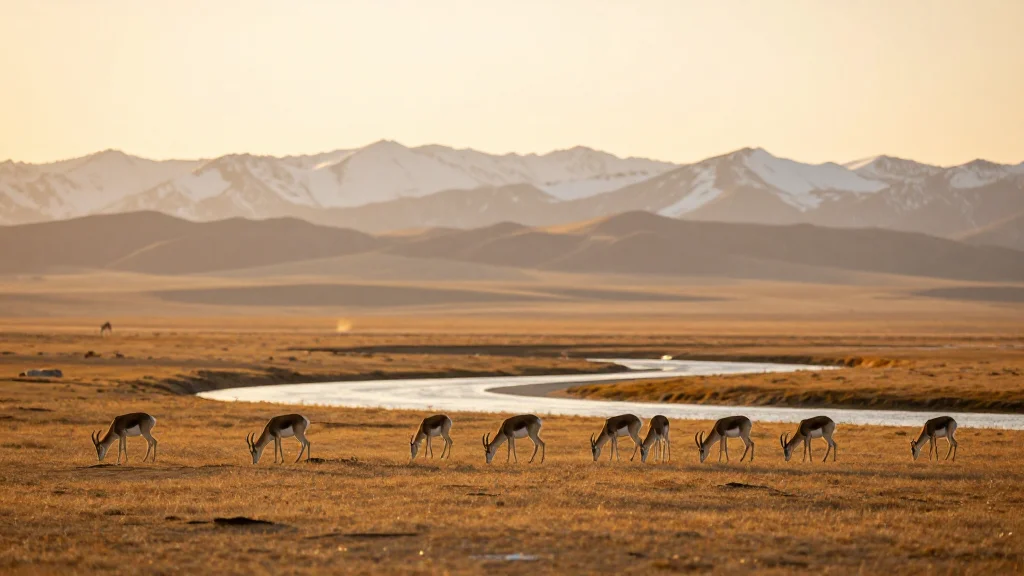
Kazakhstan to Add 20,000 Sq Km to Parks, Reaching 332,000 Sq Km by 2035

Why It Matters
The park expansion reshapes Central Asia’s conservation landscape, offering a template for large‑scale habitat protection that aligns with global biodiversity targets. By linking protected areas with tourism infrastructure, Kazakhstan is attempting to turn natural assets into economic drivers without compromising ecological health. For regional outdoor enthusiasts, the move opens a suite of new destinations for trekking, wildlife tracking and cultural immersion, potentially shifting travel patterns away from traditional European and North American wilderness hubs toward the vast steppes and mountains of Kazakhstan.
Key Takeaways
- •Kazakhstan will add 20,000 sq km of protected land, raising total parks to ~332,000 sq km by 2035
- •The expansion includes 8,000 sq km of new forest planting, primarily saxaul trees near the Aral Sea
- •Endangered species such as snow leopards, Bukhara deer and Przewalski’s horse will receive expanded habitats
- •New visitor centres, glamping sites and hiking trails are planned to boost eco‑tourism
- •Implementation begins in 2024 with phased designation of new protected zones
Pulse Analysis
Kazakhstan’s park expansion represents a strategic pivot from a resource‑dependent economy toward a diversified model that leverages natural capital. Historically, the country’s vast steppe and mountain regions have been under‑utilized for tourism due to limited infrastructure and modest international marketing. By committing to a concrete acreage target and coupling it with visitor‑focused amenities, the government signals confidence that eco‑tourism can deliver measurable economic returns while meeting biodiversity commitments.
The plan also reflects a broader trend among emerging economies to embed conservation within growth strategies. Similar initiatives in neighboring Mongolia and Uzbekistan have shown that well‑managed protected areas can attract niche adventure travelers willing to pay premium prices for authentic experiences. Kazakhstan’s advantage lies in its sheer scale—its projected park network would surpass the combined area of Poland and Italy—offering a unique selling point for multi‑day treks and wildlife safaris that few other destinations can match.
However, the success of the initiative will depend on effective governance. Past attempts at large‑scale reforestation and wildlife reintroduction in the region have stumbled over funding gaps and local community resistance. Transparent monitoring, benefit‑sharing mechanisms for nearby villages, and partnerships with international NGOs will be critical to avoid the pitfalls of “paper parks” that exist in name only. If these challenges are met, Kazakhstan could emerge as a flagship example of how protected‑area expansion fuels both conservation outcomes and sustainable tourism growth in the 21st century.
Kazakhstan to Add 20,000 sq km to Parks, Reaching 332,000 sq km by 2035
Comments
Want to join the conversation?
Loading comments...