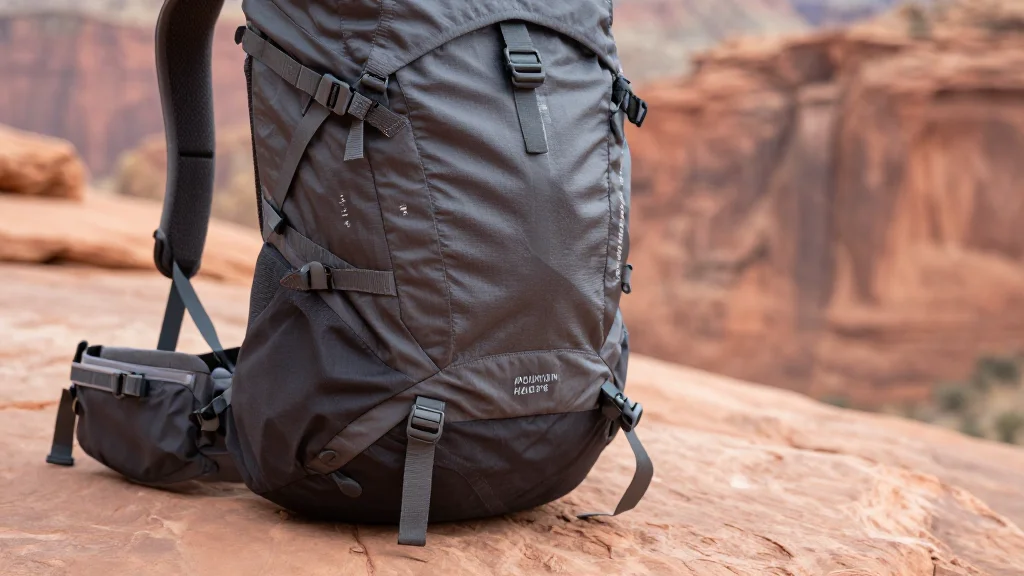
Mountain Hardwear's $595 Alakazam 60L Backpack Reviewed: Ultralight Yet Heavy‑Duty

Companies Mentioned
Why It Matters
The Alakazam 60L introduces a new material benchmark for ultralight backpacks, challenging the dominance of existing UHMWPE fabrics. Its high price forces the market to weigh durability against cost, potentially spurring competitors to innovate or lower prices. For the broader outdoors community, the pack’s ability to carry heavy loads while remaining lightweight could influence packing strategies for multi‑day treks, especially in remote or high‑altitude environments where gear weight directly impacts safety and performance. If the Alakazam’s durability holds up under rigorous testing, it may set a new standard for waterproof, steel‑strength composites in outdoor gear. This could ripple into other product categories—tents, jackets, and technical apparel—accelerating the adoption of glue‑free, fused‑fiber technologies across the industry.
Key Takeaways
- •Mountain Hardwear released the Alakazam 60L backpack at $595, weighing 1 lb 14 oz.
- •Three‑day, 40‑mile Canyonlands test demonstrated the pack handling a 45‑lb load comfortably.
- •Patented GiddyUp Compression System reduces the full‑capacity pack to a compact size.
- •ALUULA Graflyte UHMWPE fabric is claimed to be eight times stronger than steel and fully waterproof.
- •Price is nearly double that of comparable ultralight packs, raising value‑for‑money questions.
Pulse Analysis
Mountain Hardwear’s entry into the ultralight segment with the Alakazam reflects a strategic pivot toward high‑performance materials that can command premium pricing. Historically, the ultralight market has been dominated by niche brands that prioritize weight above all else, often at the expense of durability. By introducing a fabric touted as eight times stronger than steel, Hardwear is betting that durability will become a differentiator as hikers push the limits of lightweight gear on longer, more demanding trips.
The pricing strategy is a double‑edged sword. While the $595 tag positions the Alakazam as a flagship product, it also narrows its immediate audience to affluent enthusiasts or professional guides. Competitors may respond by either accelerating their own material research to close the performance gap or by undercutting Hardwear with aggressive pricing. The crinkling noise noted in the review, though minor, hints at a trade‑off between material innovation and user experience—a factor that could influence adoption rates.
Looking forward, the Alakazam could catalyze a broader shift toward glue‑free composite fabrics across outdoor gear. If the pack’s durability holds up in extreme conditions, manufacturers may see a pathway to justify higher price points for a new generation of lightweight yet rugged equipment. For consumers, the key takeaway is that the market is moving beyond the weight‑only paradigm; durability, weather resistance, and compressibility are becoming equally critical metrics in gear selection.
Mountain Hardwear's $595 Alakazam 60L Backpack Reviewed: Ultralight Yet Heavy‑Duty
Comments
Want to join the conversation?
Loading comments...