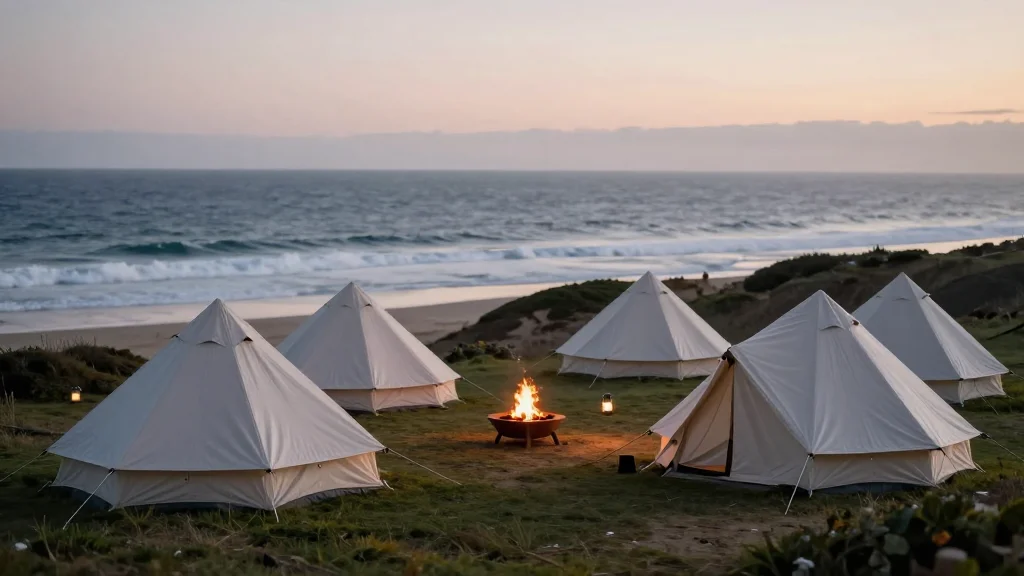
Nightsky Camps Launches Low‑Impact 45‑Key Retreat on California’s Central Coast

Why It Matters
Nightsky Camps represents a tangible shift toward sustainable, design‑centric outdoor hospitality that balances economic growth with environmental stewardship. By situating a high‑design retreat within an existing public recreation area, the project showcases how low‑impact construction can expand tourism capacity without compromising natural landscapes. This model could inspire other regions to adopt similar approaches, potentially redefining how outdoor destinations accommodate increasing traveler demand while meeting climate‑action goals. The retreat also highlights the rising consumer appetite for immersive wellness experiences that go beyond traditional lodging. As travelers seek deeper connections with nature, venues that integrate local food, communal spaces and low‑impact architecture are poised to capture a premium market segment, influencing future investment decisions in the broader outdoor and hospitality sectors.
Key Takeaways
- •45‑key eco‑tent retreat opening summer 2026 on California’s Central Coast
- •Founders Anatoly Mezhov, Irene Polo and David Smith designed modular, low‑impact structures
- •Located within the county‑owned Dairy Creek Golf Course campus, adjacent to a botanical garden
- •Amenities include Camp Commons, wellness zone, and Marcerro Restaurant led by chef Tret Toussaint
- •Early access offered via a “Stargazer” list; reservations pending
Pulse Analysis
Nightsky Camps arrives at a moment when the outdoor hospitality market is fragmented between traditional campgrounds and luxury glamping operators. Its hybrid approach—combining high‑design eco‑tents with a public‑land setting—addresses a gap in the market for upscale, environmentally responsible stays that do not require new land development. Historically, California’s coastal tourism has relied on low‑density, car‑centric models; Nightsky’s modular construction could lower upfront capital costs and accelerate deployment, making it an attractive template for investors seeking scalable sustainability.
From a competitive standpoint, the retreat differentiates itself through its integration with existing public amenities, such as the golf course and botanical garden, creating a multi‑use destination that can attract both local residents and out‑of‑state travelers. This synergy reduces the need for extensive on‑site infrastructure, potentially improving operating margins. However, the reliance on county land introduces regulatory risk—any future policy shifts regarding public land use could affect expansion plans.
Looking ahead, the success of Nightsky Camps will likely hinge on its ability to deliver on promised sustainability metrics while maintaining high occupancy rates. If the “Stargazer” list converts into strong demand, it could validate the market for low‑impact luxury glamping and spur a wave of similar projects across the West Coast. Conversely, if occupancy lags, it may signal that the premium price point for eco‑tents remains a niche. Either outcome will provide valuable data for policymakers and investors navigating the evolving intersection of outdoor recreation, hospitality, and climate‑smart development.
Nightsky Camps Launches Low‑Impact 45‑Key Retreat on California’s Central Coast
Comments
Want to join the conversation?
Loading comments...