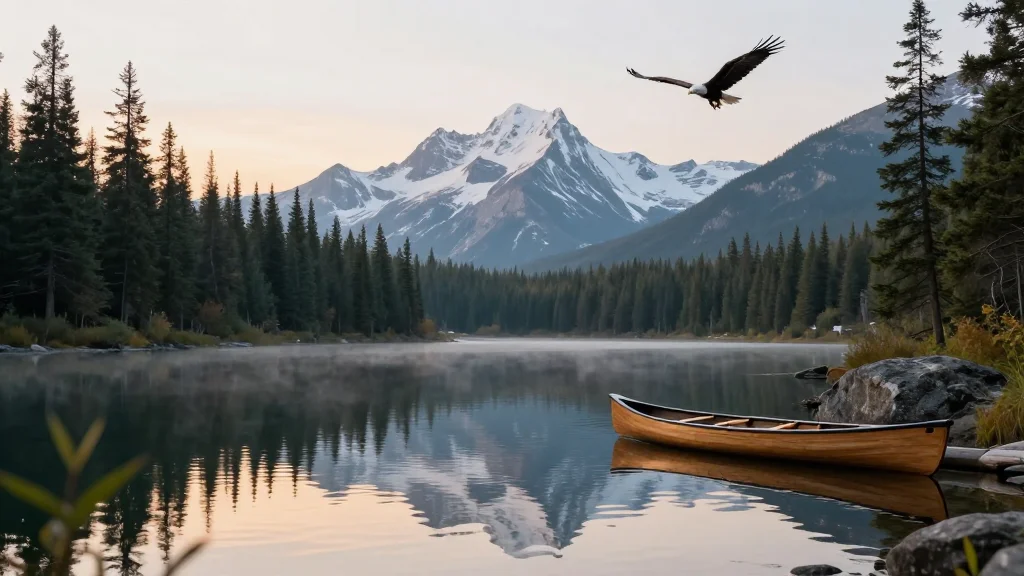
Ottawa Unveils $2.8 B USD Nature Strategy to Safeguard 30% of Canada’s Lands and Waters by 2030

Why It Matters
Protecting 30% of Canada’s lands and waters will directly influence the scale and quality of outdoor recreation, from trail networks to wildlife viewing opportunities. By channeling billions into park upgrades and Indigenous stewardship, the strategy aims to ensure that future generations can access pristine natural spaces while supporting a robust tourism sector. The plan also positions Canada alongside global leaders that have committed to similar conservation targets under the Convention on Biological Diversity. Success could bolster Canada’s climate‑adaptation credentials and attract international visitors seeking well‑managed wilderness experiences, reinforcing the economic link between conservation and outdoor recreation.
Key Takeaways
- •Ottawa commits $3.8 billion CAD (≈$2.8 billion USD) to a national nature strategy.
- •Goal: protect 30% of Canada’s lands and waters by 2030.
- •Funding split: $1.5 billion for national parks, $800 million for Indigenous stewardship, $500 million for habitat restoration, $1 billion for provincial partners.
- •Strategy emphasizes co‑management with Indigenous groups and climate‑resilient ecosystems.
- •First funding wave expected in the next fiscal quarter; mid‑term review set for 2028.
Pulse Analysis
The Ottawa nature strategy represents a watershed moment for Canada’s outdoor economy, but its impact will hinge on execution. Historically, large‑scale conservation funding in Canada has been hampered by jurisdictional fragmentation; provinces control most land, while the federal government owns a relatively small share of parks. By earmarking a dedicated $1 billion for provincial collaborations, the government acknowledges this reality and attempts to align incentives across levels of government. If the funding is disbursed efficiently, it could accelerate the creation of a contiguous network of protected corridors, a prerequisite for both biodiversity and long‑distance trail systems that attract high‑spending adventure tourists.
Equally significant is the allocation toward Indigenous stewardship. Past conservation initiatives often sidelined First Nations, leading to mistrust and underutilized knowledge. By committing nearly $800 million CAD to Indigenous‑led projects, Ottawa is betting that co‑management will unlock new access points and culturally rich experiences, expanding the market for niche tourism such as guided cultural hikes and traditional land‑based learning. However, the success of this model will depend on clear governance frameworks and timely fund transfers—areas where previous federal‑Indigenous partnerships have stumbled.
From a market perspective, the strategy could stimulate a cascade of private investment. Outdoor gear manufacturers, eco‑tour operators, and regional hospitality providers stand to benefit from increased visitation to newly protected or upgraded sites. Yet, the plan also raises questions about balancing conservation with commercial use. Over‑development of popular parks could erode the very ecosystems the strategy aims to protect, prompting a need for robust visitor management policies. In sum, Ottawa’s $3.8 billion gamble could redefine Canada’s outdoor landscape, but its ultimate value will be measured by how well it integrates ecological integrity, Indigenous rights and sustainable tourism.
Ottawa Unveils $2.8 B USD Nature Strategy to Safeguard 30% of Canada’s Lands and Waters by 2030
Comments
Want to join the conversation?
Loading comments...