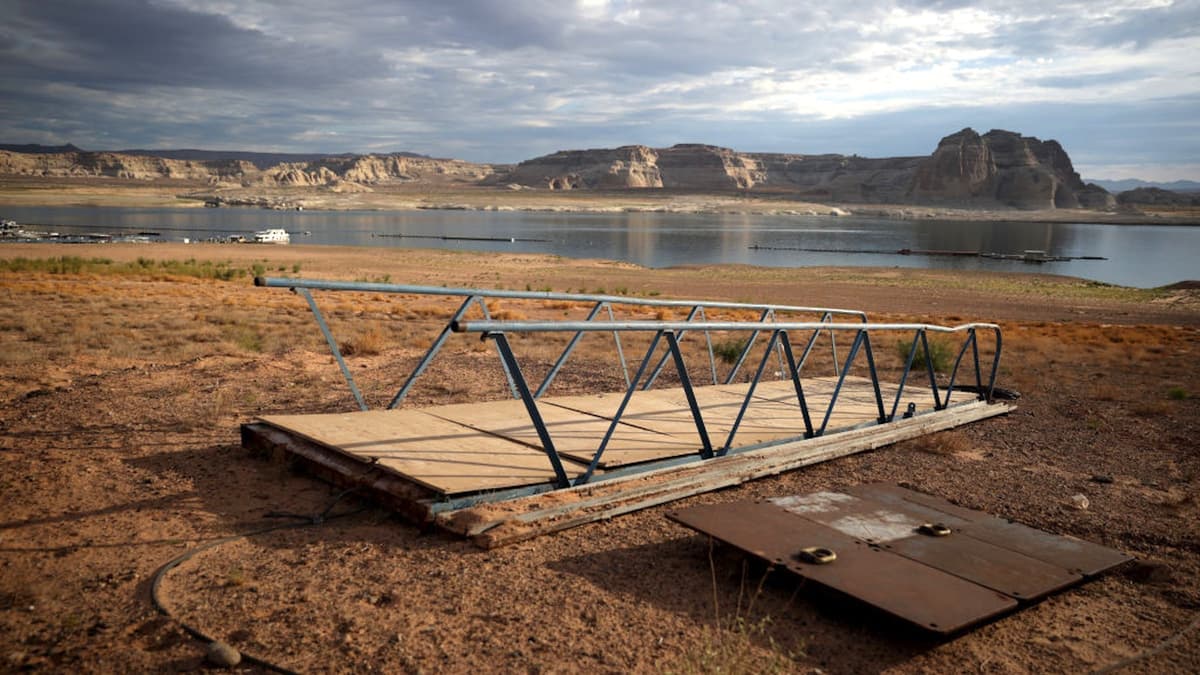
Planning a Trip to Lake Powell? Here’s What You Need to Know About Historically Low Water Levels.
Why It Matters
The unprecedented low water threatens Lake Powell’s tourism revenue and safety while highlighting broader Southwest water‑scarcity issues, forcing operators and visitors to adapt quickly.
Key Takeaways
- •Lake Powell water level 174 ft below full pool, near record low
- •Only 2 of 11 launch ramps open, causing congestion
- •NPS urges slower speeds, vigilant lookout due to submerged hazards
- •Visitors may need 5‑10 minute walk from parking to water
- •Low water reveals dramatic canyons, offering unique photo opportunities
Pulse Analysis
Lake Powell, a 160,000‑acre reservoir that fuels recreation and water supply across the Southwest, is now sitting 174 feet below its full‑pool mark, a level not seen since the 2023 drought peak. The decline reflects a multi‑year shortfall in Colorado River inflows, driven by prolonged arid conditions and higher agricultural withdrawals. As the lake recedes, previously submerged canyon passages become exposed, reshaping the visual landscape and drawing photographers, yet simultaneously eroding the lake’s capacity to support the millions of visitors who generate an estimated $300 million annually for local economies.
The National Park Service’s operational response underscores the safety and logistical challenges posed by the low water. With only the Wahweap Stateline Auxiliary and Bullfrog North ramps functional, boaters face longer queues and must pre‑stage vessels at nearby parking areas to minimize wait times. The NPS has updated its hazard advisories, emphasizing reduced speeds, heightened vigilance for submerged rocks, and the risk of quicksand along exposed shorelines. Rental operators are adjusting pricing and reservation policies, while guide services like Lake Powell Guide Services stress early starts and thorough pre‑trip planning to navigate the shifting channels safely.
Beyond the immediate season, the lake’s plight signals a broader water‑management crisis for the Colorado River basin. Persistent drought and climate‑induced temperature rises threaten to keep reservoir levels depressed, prompting federal agencies to consider long‑term allocation reforms and conservation incentives. For visitors, the evolving conditions mean embracing a more flexible itinerary, investing in up‑to‑date NPS resources, and recognizing that the dramatic, newly visible canyon walls may be a fleeting spectacle. Adapting to these realities will be essential for sustaining Lake Powell’s tourism appeal while protecting public safety.
Planning a Trip to Lake Powell? Here’s What You Need to Know About Historically Low Water Levels.
Comments
Want to join the conversation?
Loading comments...