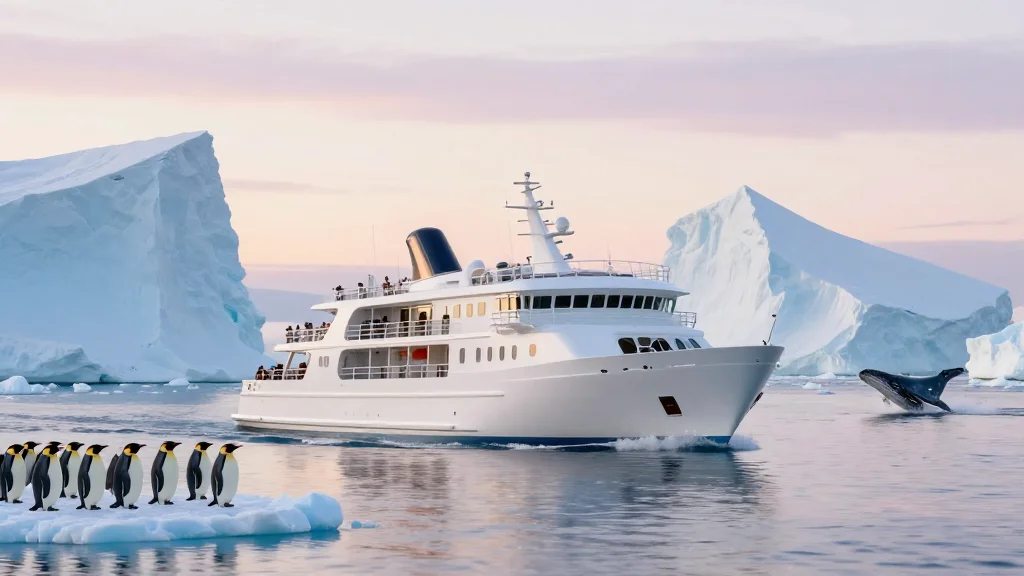
Poseidon Expeditions Extends Antarctic Season to April, Opening New Wildlife‑Watching Windows

Why It Matters
Extending the Antarctic cruise season reshapes the adventure‑travel calendar, offering tourists access to phenomena—such as penguin fledging and humpback whale curiosity—that were previously confined to a narrow summer window. This shift also tests the balance between expanding tourism revenue and preserving the continent's delicate ecosystems. By demonstrating that small‑ship operators can safely operate later in the season, Poseidon sets a precedent that could influence regulatory frameworks and industry best practices for sustainable polar tourism. Moreover, the move signals how climate‑driven changes in sea‑ice dynamics are already affecting commercial operations. Operators that can adapt quickly may capture new market segments, while those that cling to traditional schedules risk losing relevance. The extended season could also alleviate peak‑season pressure on landing sites, potentially reducing environmental stress and aligning with IAATO’s stewardship goals.
Key Takeaways
- •Poseidon Expeditions adds April to its 2026‑27 Antarctic itinerary, extending the season by ~1 month.
- •April sailings enable observation of penguin fledging, molting, elephant seal breeding, and increased humpback whale curiosity.
- •Sea Spirit’s 114‑passenger capacity and 1:9 staff‑to‑passenger ratio ensure low‑impact, personalized expeditions.
- •Fewer vessels in shoulder season provide quieter landings, better photography lighting, and reduced crowding.
- •Extension reflects broader industry trend of longer polar seasons amid shifting sea‑ice conditions.
Pulse Analysis
Poseidon’s decision to push its Antarctic calendar into April is both a strategic business move and a litmus test for the sustainability of expanding polar tourism. Historically, the Antarctic cruise window has been tightly bound to the melt‑season, when sea ice recedes enough for safe navigation. Recent satellite data show a modest but consistent retreat of the seasonal ice edge, granting ships access to previously off‑limits coastal zones later in the year. By capitalizing on this shift, Poseidon not only diversifies its product offering but also positions itself as a pioneer in adaptive itinerary design.
From a market perspective, the extension could catalyze a competitive cascade. Larger operators with bigger vessels may be slower to adjust due to logistical constraints, leaving a niche for boutique, small‑ship players to dominate the shoulder season. This could drive a segmentation where high‑end travelers gravitate toward the quieter, wildlife‑focused April voyages, while mass‑market operators continue to focus on the traditional summer peak. The resulting differentiation may spur innovation in onboard education, photography workshops, and scientific collaboration, further enriching the value proposition.
Conservation implications remain a double‑edged sword. While fewer ships in the peak months can reduce cumulative disturbance, the sheer addition of a new operational window increases total vessel days in the region. Poseidon’s emphasis on low passenger density and strict IAATO compliance mitigates some risk, but regulators will need robust monitoring to ensure that wildlife behavior—especially sensitive breeding cycles—remains unharmed. If the industry can demonstrate that extended seasons are managed responsibly, it may unlock new revenue streams without compromising the pristine nature of Antarctica, setting a template for sustainable growth in other fragile environments.
Poseidon Expeditions Extends Antarctic Season to April, Opening New Wildlife‑Watching Windows
Comments
Want to join the conversation?
Loading comments...