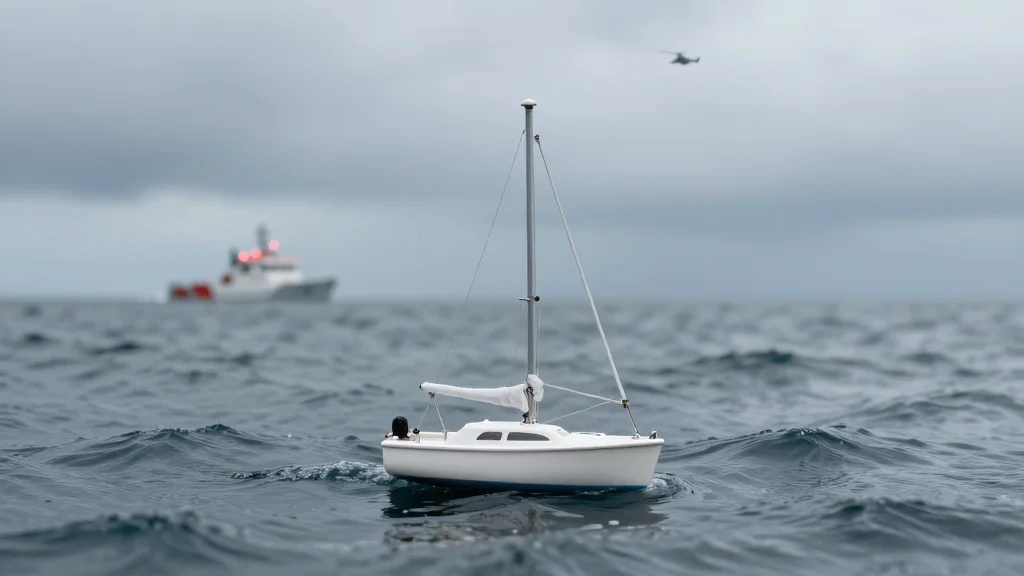
Rescue Halts Record Atlantic Crossing on World's Smallest Ocean‑Going Yacht

Why It Matters
The rescue of Andrew Bedwell spotlights a growing niche in adventure sailing: ultra‑light, ultra‑small ocean‑going craft. As designers push the envelope of what can be built, regulators and rescue services must adapt to vessels that sit at the edge of traditional safety standards. The incident also underscores the human cost of record‑chasing, reminding sponsors and charities that the allure of a headline record must be balanced against the real dangers of open‑water navigation. For the broader outdoors market, the episode may temper enthusiasm for extreme micro‑yacht projects while spurring innovation in safety equipment, real‑time monitoring, and emergency response coordination. Companies that supply marine electronics, solar power solutions, and lightweight composites could see heightened demand for more robust, fail‑safe designs, reshaping product development priorities across the sector.
Key Takeaways
- •Andrew Bedwell rescued by Canadian Coast Guard on June 5 after his 1‑meter yacht capsized 120 km east of Grates Cove.
- •Attempt aimed to break the Guinness World Record for smallest vessel to cross the Atlantic, previously held by Hugo Vihlen's 1.62 m yacht.
- •Big C V2 featured twin Dacron sails, polycarbonate hatch, solar power and vacuum‑packed food bars.
- •This was Bedwell's second abortive attempt; his first micro‑yacht was destroyed during a 2023 launch.
- •Rescue raises safety concerns for ultra‑small ocean‑going vessels and may prompt revised emergency protocols.
Pulse Analysis
The Bedwell rescue is a textbook case of the tension between human ambition and engineering limits. Micro‑yachts like Big C V2 exploit cutting‑edge materials to achieve unprecedented size reductions, yet they inherit the same exposure to the Atlantic’s ferocious weather that larger, more stable vessels face. Historically, record‑setting attempts have driven innovation—think of the evolution from wooden schooners to carbon‑fiber monohulls—but they have also prompted regulatory catch‑up, as seen after the 1970s wave of solo circumnavigations that led to stricter safety equipment mandates.
In the current market, the incident could catalyze a niche but lucrative segment: safety retrofits for ultra‑light craft. Companies specializing in compact AIS transponders, inflatable buoyancy aids, and autonomous distress signaling may find new customers among record‑seekers. Moreover, insurers are likely to reassess risk models for vessels under two meters, potentially raising premiums or demanding additional safety certifications.
Looking ahead, the key question is whether the allure of “smallest‑ever” records will outweigh the operational hazards. If Bedwell returns with a reinforced design, it could validate a new class of micro‑yachts capable of safe long‑distance voyages, opening doors for low‑cost, low‑impact ocean exploration. Conversely, a series of rescues could dampen enthusiasm, steering adventurers toward more conventional, albeit still innovative, vessel sizes. The outcome will shape not only the future of extreme sailing but also the broader narrative of how far technology can safely push the boundaries of human endurance on the open sea.
Rescue Halts Record Atlantic Crossing on World's Smallest Ocean‑Going Yacht
Comments
Want to join the conversation?
Loading comments...