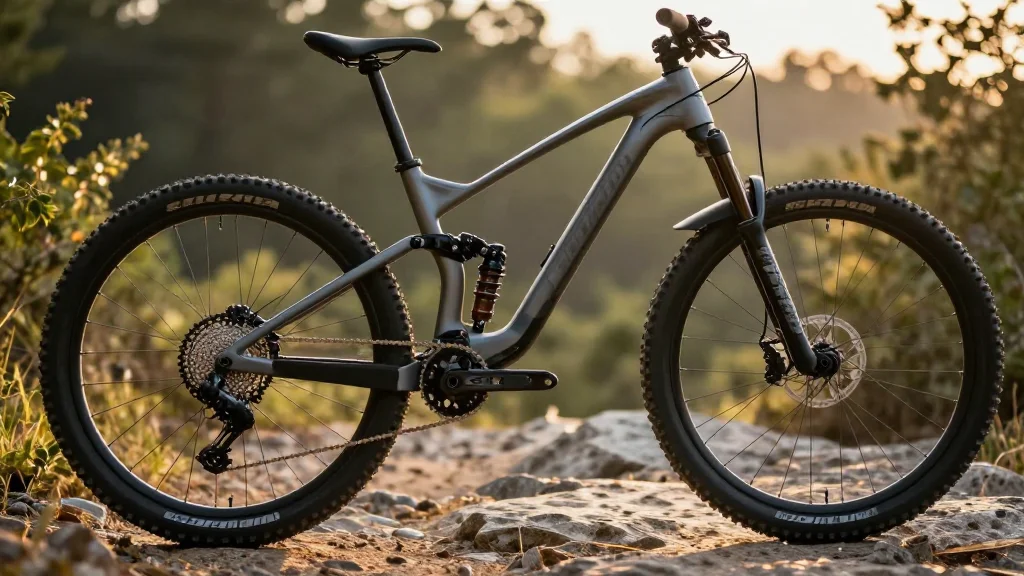
Revel Unveils Ranger V3 with Bigger Travel, Quieter Ride and Faster Performance

Why It Matters
The Ranger V3’s upgrades address two persistent pain points for long‑distance off‑road cyclists: efficiency and acoustic distraction. By delivering a lighter, stiffer frame with reduced rattles, Revel gives riders more confidence on technical descents and a clearer mental focus on navigation and endurance. The move also signals a broader industry trend toward hybridizing hardtail speed with full‑suspension comfort, potentially reshaping product strategies for competitors. If the V3’s performance lives up to its claims, it could accelerate the shift away from single‑purpose bikes toward versatile platforms that serve both race‑day speed and multi‑day touring. That would influence component manufacturers, trail designers and even bike‑packing tour operators, who may begin to favor routes that exploit the bike’s enhanced handling and quieter ride.
Key Takeaways
- •Revel adds 120mm of short‑travel CBF suspension, 5mm more than the V2
- •Steeper seat‑tube angle and longer reach improve pedaling efficiency
- •Slacker head‑tube angle, lower bottom bracket boost descending confidence
- •Noise‑damping rubber and internal cable routing cut chain‑slap and rattles
- •Average weight reduction of ~200 g across all frame sizes
Pulse Analysis
Revel’s decision to overhaul the Ranger platform reflects a calculated bet on the growing convergence of bikepacking and cross‑country racing. Historically, manufacturers have segmented their line‑ups: hardtails for speed, long‑travel full‑suspensions for technical terrain. The V3 blurs that line, offering a short‑travel bike that can comfortably handle both high‑speed climbs and aggressive descents while staying light enough for multi‑day hauling. This hybrid approach mirrors trends seen in the mountain‑bike market over the past five years, where brands like Specialized and Trek introduced “all‑mountain” models that blend efficiency with confidence.
From a competitive standpoint, Revel’s internal link redesign and noise‑damping measures give it a distinct advantage in a niche where rider comfort often translates directly into performance. The quieter frame reduces cognitive load on long rides, a factor that can shave minutes off multi‑day itineraries. Moreover, the modest weight savings, while numerically small, can be a decisive factor for riders who prioritize pack weight. If the V3 gains traction, rivals may be forced to accelerate their own full‑suspension upgrades, potentially sparking a new wave of lightweight, low‑noise designs.
Looking ahead, the Ranger V3 could become a benchmark for future bikepacking bikes. Its success will likely hinge on real‑world durability and how well the new geometry holds up under varied terrain and load conditions. Should the bike prove its claims in the field, we may see a cascade of similar updates across the industry, with manufacturers re‑evaluating the balance between travel, stiffness, and acoustic performance. In that scenario, the V3 would not just be a product launch—it would be a catalyst reshaping the standards for high‑performance, long‑distance off‑road cycling.
Revel Unveils Ranger V3 with Bigger Travel, Quieter Ride and Faster Performance
Comments
Want to join the conversation?
Loading comments...