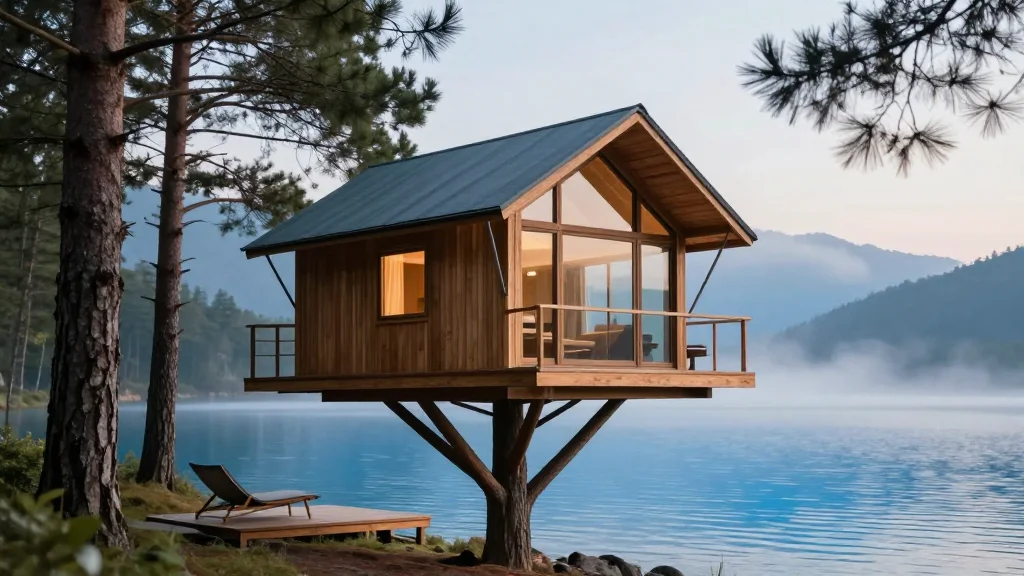
Round Lake State Park Unveils $850,000 Luxury Treehouse Glamping Pods

Why It Matters
The launch of luxury canopy‑camping at Round Lake State Park illustrates how public lands are adapting to changing consumer preferences for comfort‑focused outdoor experiences. By leveraging federal relief money, Idaho demonstrates a model for turning pandemic‑era funding into lasting infrastructure that can boost tourism revenue and fund park upkeep. At the same time, the project raises questions about equity and environmental stewardship, as higher price points may exclude lower‑income visitors and increased foot traffic could stress fragile ecosystems. If the treehouses prove financially viable and environmentally sustainable, other state and national parks may follow suit, potentially reshaping the economics of public‑land recreation across the United States. The balance between generating income and preserving open access will likely become a focal point for policymakers and advocacy groups in the coming years.
Key Takeaways
- •Round Lake State Park opened two luxury treehouses, Chattertail and Cubhouse, at an estimated $850,000 cost.
- •Construction used steel supports set in cement after local trees proved insufficient.
- •Funding came primarily from American Rescue Plan Act relief money approved by Gov. Brad Little.
- •Pete Nelson’s Nelson Treehouse and Supply handled design and build, bringing TV‑star expertise to a public park.
- •The project signals a broader shift toward upscale glamping on public lands, sparking debate over access and conservation.
Pulse Analysis
The Round Lake treehouse rollout is a microcosm of the glamping boom that has been accelerating since 2020. Early adopters—private resorts and boutique operators—have shown that consumers are willing to pay premium rates for curated nature experiences that blend comfort with adventure. By entering this space, a state agency is effectively testing whether public‑land operators can capture a slice of that market without compromising their core mission of universal access.
Historically, state parks have relied on modest entrance fees and campground rentals to fund operations. The infusion of $850,000 in federal relief money gave Idaho a rare opportunity to experiment with a higher‑margin product. If the reservation system yields strong occupancy and the environmental impact remains low, the model could be replicated in other cash‑strapped parks, especially those with scenic lakes or forested backdrops. However, the success hinges on careful capacity management and transparent reporting to avoid the perception that public resources are being privatized for profit.
Looking ahead, the key variables will be demand elasticity and regulatory response. Should demand outpace supply, parks may be tempted to expand the concept, potentially leading to a tiered accommodation system that could alienate traditional campers. Conversely, if the treehouses attract a new demographic that also participates in day‑use activities, the overall visitor base could broaden, delivering ancillary revenue for concessions, ranger programs, and conservation projects. The next season’s occupancy data and ecological monitoring will be the litmus test for whether upscale glamping can coexist with the egalitarian ethos of public lands.
Round Lake State Park Unveils $850,000 Luxury Treehouse Glamping Pods
Comments
Want to join the conversation?
Loading comments...