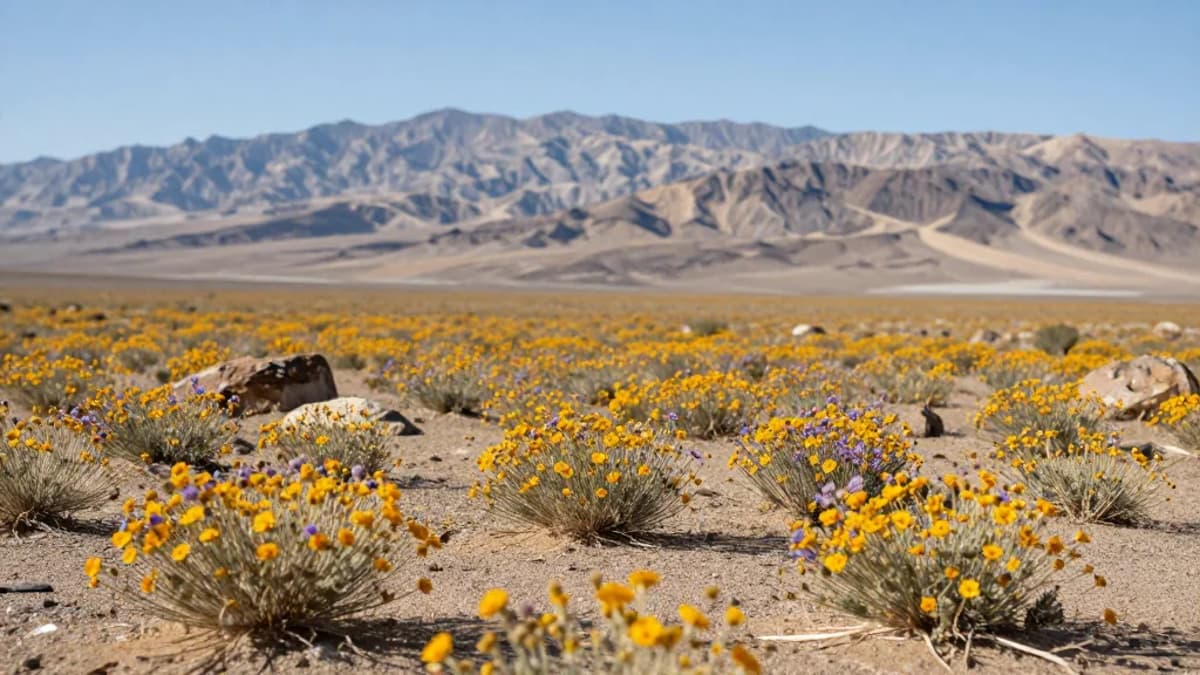
See Death Valley Covered in an Ethereal Blanket of Wildflowers
•March 5, 2026
0
Why It Matters
The superbloom boosts tourism and highlights climate‑driven ecosystem resilience, offering economic and scientific value to the region. It underscores the importance of water‑year variability for desert biodiversity.
Key Takeaways
- •2026 superbloom largest since 2016.
- •Well‑spaced winter rains trigger massive wildflower growth.
- •Low elevations bloom March; higher elevations April.
- •Visitors urged not to pick flowers.
- •Superblooms occur roughly every ten years.
Pulse Analysis
Death Valley’s 2026 superbloom illustrates how desert ecosystems respond to subtle shifts in precipitation patterns. When winter rains arrive in moderate, well‑spaced intervals, dormant seed banks germinate en masse, producing a vivid tapestry of desert gold, paintbrush, lupine and star species. This natural spectacle is more than a visual treat; it signals a rare alignment of climate variables that can inform hydrological models and long‑term ecological forecasts for arid regions worldwide.
The bloom’s timing aligns perfectly with the spring tourism window, drawing photographers, hikers and nature enthusiasts from across the globe. Local businesses—from lodging to guided tours—anticipate a surge in revenue, while park officials balance visitor access with conservation mandates. By discouraging flower picking, the National Park Service protects seed viability, ensuring that the next generation of blooms can thrive without human‑induced depletion, thereby sustaining both the ecosystem and the economic benefits it generates.
Beyond tourism, the superbloom offers a living laboratory for scientists studying climate change impacts on desert flora. Researchers can track phenological shifts, species composition changes, and seed dispersal mechanisms in real time. Data gathered during this event will feed into broader climate resilience strategies, helping policymakers anticipate how increasing temperature extremes and altered precipitation regimes may reshape desert landscapes in the coming decades.
See Death Valley covered in an ethereal blanket of wildflowers
0
Comments
Want to join the conversation?
Loading comments...