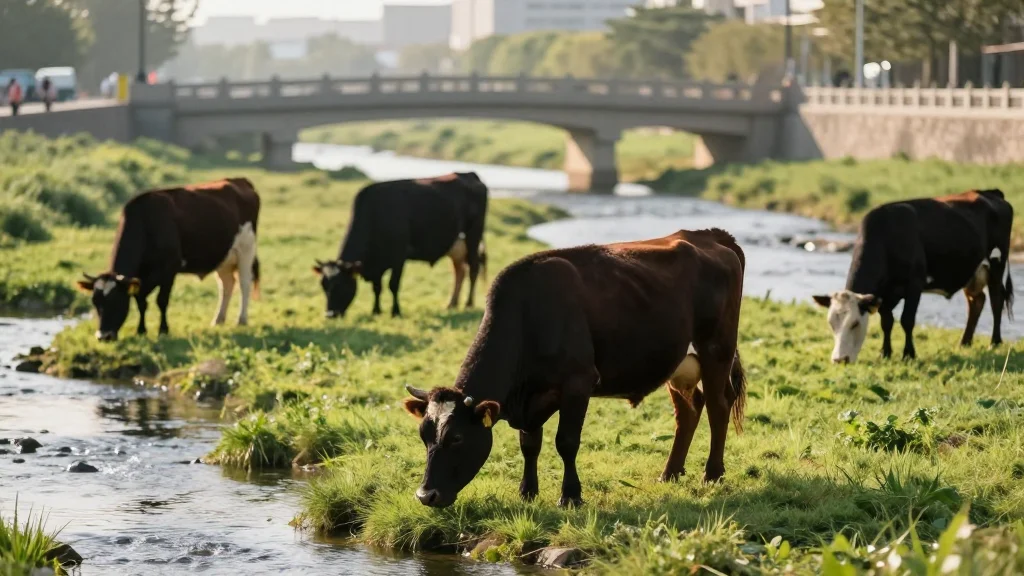
Twenty Cows Launched Into Shrewsbury Urban Reserve for Annual Conservation Grazing

Why It Matters
Urban conservation grazing offers a scalable, cost‑effective tool for cities grappling with habitat loss, flood risk and declining pollinator populations. Shrewsbury’s experiment shows that livestock can be integrated into public green spaces without compromising safety or recreation, while delivering measurable ecological gains. The success of the pasture‑pump system also highlights how modest engineering can mitigate the environmental downsides of grazing, a lesson that could be replicated in other riverine parks worldwide. If other councils adopt similar models, the cumulative impact could reshape urban land‑management policies, shifting focus from mechanical mowing to living, self‑maintaining ecosystems. This approach aligns with broader UK biodiversity strategies and could attract additional funding from environmental trusts seeking innovative, community‑friendly projects.
Key Takeaways
- •Twenty Angus crossbreed cows released for annual conservation grazing at Shrewsbury’s Rea Brook reserve
- •Cows create a habitat mosaic that supports butterflies, bees, birds, bats and raptors
- •Pasture pumps installed in 2015, funded by Severn Rivers Trust, reduce bank erosion and water pollution
- •Council countryside manager Jim Goldsmith describes the herd as "very docile" and "curious"
- •Program includes monitoring of biodiversity metrics and public engagement to ensure safety
Pulse Analysis
Shrewsbury’s conservation grazing initiative marks a turning point in how municipalities can leverage traditional farming practices for modern urban ecology. Historically, city parks have relied on mechanical mowing, which offers uniform aesthetics but strips away structural diversity essential for wildlife. By re‑introducing large herbivores, the council restores heterogeneity, a principle long championed by European conservationists but rarely applied at this scale within a built‑up environment.
The economic calculus also favors grazing. Maintaining a herd of twenty cows costs a fraction of the annual budget for diesel‑powered mowers, especially when factoring in the ancillary benefits of reduced erosion and improved water quality—factors that can lower downstream flood mitigation expenses. Moreover, the pasture‑pump technology demonstrates a low‑tech, low‑maintenance solution that other councils can adopt without significant capital outlay.
Looking ahead, the model’s replicability hinges on community acceptance and regulatory frameworks. Shrewsbury’s proactive communication—emphasizing the cows’ docility and setting clear dog‑control guidelines—has mitigated potential conflicts. As urban planners increasingly prioritize nature‑based solutions, we can expect a wave of similar projects, each adapted to local species, terrain and cultural attitudes. The key will be robust monitoring to prove ecological outcomes, thereby turning anecdotal success into data‑driven policy.
In the broader context of the UK’s post‑2020 biodiversity net gain targets, urban grazing could become a mainstream tool, bridging the gap between agricultural land‑use and city‑scale habitat restoration. If the Shrewsbury trial delivers on its promised biodiversity uplift, it may catalyze a national shift toward integrating livestock into the fabric of urban green infrastructure.
Twenty Cows Launched into Shrewsbury Urban Reserve for Annual Conservation Grazing
Comments
Want to join the conversation?
Loading comments...