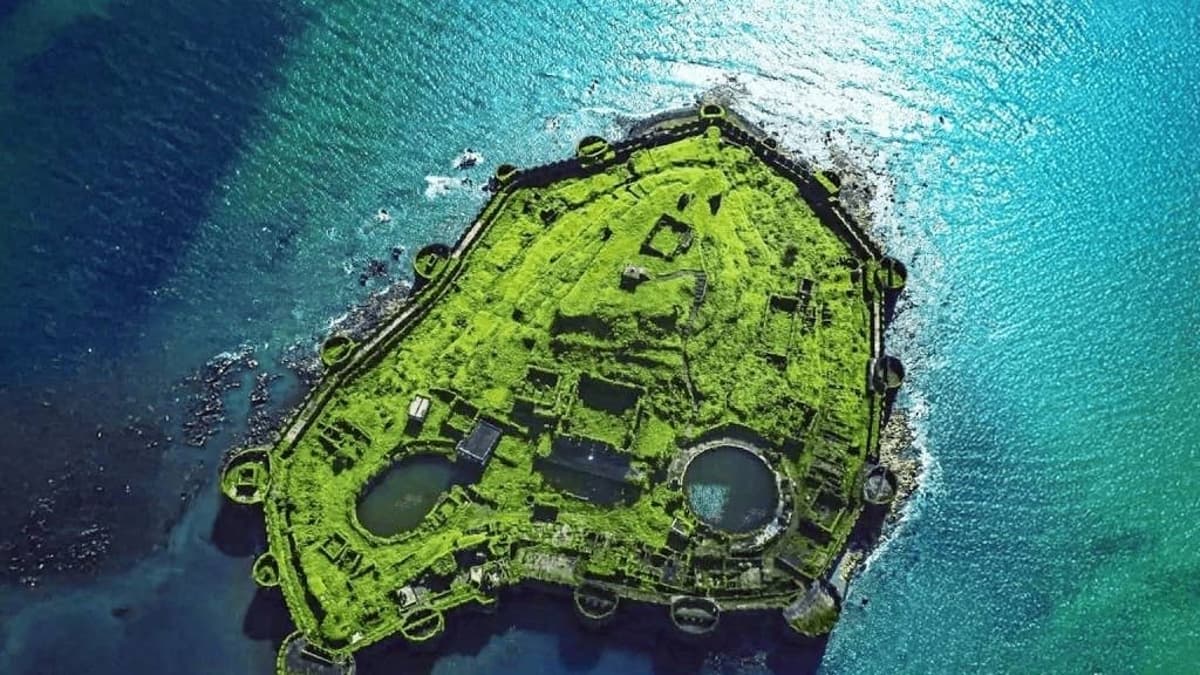
‘Unconquerable’ 500-Year-Old Sea Fortress Defies Empires in the Arabian Sea (Video)
Why It Matters
The fortress exemplifies how maritime architecture can shape regional power dynamics and now fuels heritage tourism, contributing to local economies while preserving a rare example of pre‑colonial naval defense.
Key Takeaways
- •Built 1567 AD by Malik Ambar on earlier wooden fort.
- •360-degree moat and cannons made it militarily impregnable.
- •Defended against Marathas, Mughals, Portuguese, British.
- •Key hub on Arabian Sea trade route linking major ports.
- •Now tourist site preserving heritage and boosting local economy.
Pulse Analysis
Murud‑Janjira’s origins trace back to the 15th‑century fishing communities that erected a modest wooden watchtower on a massive rock to deter pirates. Recognizing the site’s strategic value, Malik Ambar, the Abyssinian regent of the Ahmadnagar Sultanate, replaced the timber structure with a formidable stone fortress in 1567. Situated near the bustling maritime corridor that linked Broach, Daman, Diu and Mangalore, the fort quickly became a linchpin for regional commerce, facilitating the flow of ivory, gold, silk and other luxury goods across the Indian Ocean.
The fort’s defensive brilliance lay in its circular design, encircled by a deep moat and equipped with an array of cannons that commanded a 360‑degree field of fire. This architecture thwarted multiple sieges by powerful empires—Maratha chieftains, Mughal generals, Portuguese fleets and even the British East India Company—earning it the moniker “Unconquerable Janjira.” Scholars attribute its resilience to a combination of natural isolation, robust stone masonry, and the ability to resupply via sea, which neutralized traditional land‑based siege tactics and underscored the importance of naval supremacy in pre‑colonial India.
In the 21st century, Murud‑Janjira has transitioned from a military bastion to a cultural asset. The Maharashtra tourism board promotes the site as a living museum, drawing domestic and international visitors seeking authentic heritage experiences. Preservation efforts focus on stabilizing the stonework while allowing limited access to protect the structure from erosion. The influx of tourists generates revenue for nearby communities, creating jobs in hospitality and guiding services, and highlights the broader economic potential of safeguarding historic coastal fortifications across the subcontinent.
‘Unconquerable’ 500-Year-Old Sea Fortress Defies Empires in the Arabian Sea (Video)
Comments
Want to join the conversation?
Loading comments...