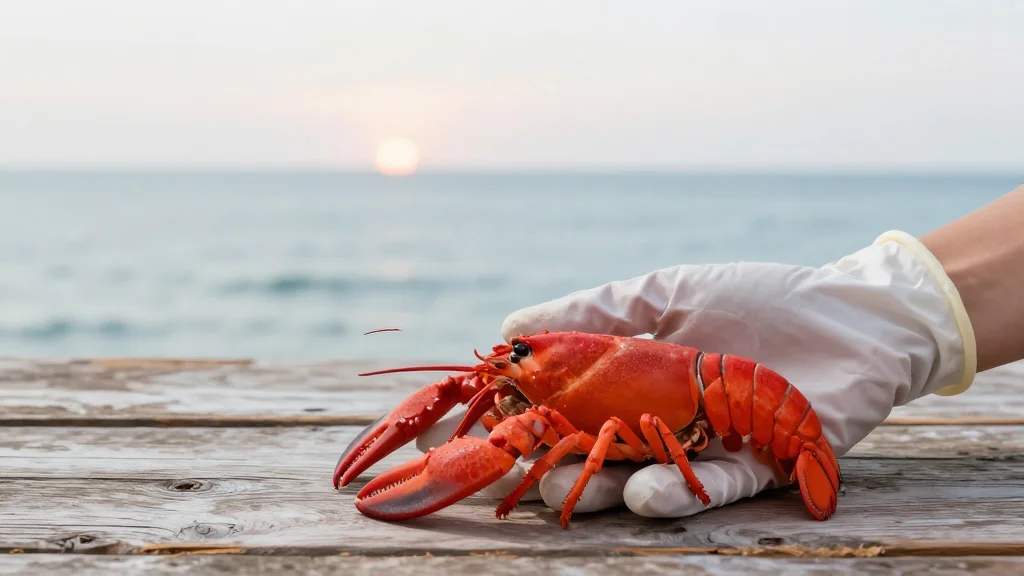
Whitby Lobster Hatchery Holds Third Annual Blessing, Marks Record Year

Why It Matters
The Whitby Lobster Hatchery’s blessing ceremony signals a pivotal moment for marine conservation in the North Sea, where overfishing and climate stress have pressured crustacean populations. By committing to release 100,000 juveniles annually, the hatchery aims to bolster wild lobster stocks, directly supporting the economic viability of local fishers and preserving a cultural heritage that defines Whitby’s coastal identity. Beyond the immediate ecological benefits, the event showcases how community rituals can galvanize support for scientific initiatives, creating a model for other coastal towns seeking to align traditional livelihoods with modern sustainability goals. The partnership between North Sea Conservation, the hatchery, and the fishing fleet illustrates a collaborative pathway that could be replicated across the UK’s maritime sectors.
Key Takeaways
- •Third annual blessing held on April 9 at Whitby’s Marine Discovery Centre.
- •Record 20,000 juvenile lobsters released in 2025, total of ~45,000 since inception.
- •Goal set to release 100,000 juvenile lobsters annually to support North Sea stocks.
- •General manager Joe Redfern highlighted the hatchery as a new chapter for the town’s lobster industry.
- •Ceremony blended cultural tradition (sea shanty, prayers) with marine conservation objectives.
Pulse Analysis
The Whitby blessing underscores a growing convergence of heritage and science in coastal economies. Historically, lobster fisheries in the UK have relied on natural recruitment, leaving stocks vulnerable to environmental fluctuations. The hatchery’s ambitious scaling plan represents a shift toward active stock enhancement, a strategy more common in North American fisheries but still emerging in Europe. If successful, Whitby could become a benchmark for integrated marine management, demonstrating that community‑driven rituals can reinforce, rather than distract from, rigorous conservation efforts.
Financially, the hatchery’s expansion will likely depend on a mix of charitable grants, government subsidies, and private investment. The involvement of North Sea Conservation suggests a solid foundation for grant funding, while the fishing fleet’s stake may attract industry‑specific subsidies aimed at sustaining local supply chains. However, scaling to 100,000 releases will require significant capital for additional tanks, feed, and monitoring equipment, raising questions about long‑term fiscal sustainability.
Looking ahead, the real test will be translating juvenile releases into measurable adult lobster returns. Monitoring programs will need to track survival rates, migration patterns, and fishery catch data to validate the hatchery’s impact. Success could spur similar initiatives along the UK’s coastline, fostering a network of hatcheries that collectively reinforce the North Sea’s ecological resilience while preserving the cultural fabric of fishing communities.
Whitby Lobster Hatchery Holds Third Annual Blessing, Marks Record Year
Comments
Want to join the conversation?
Loading comments...