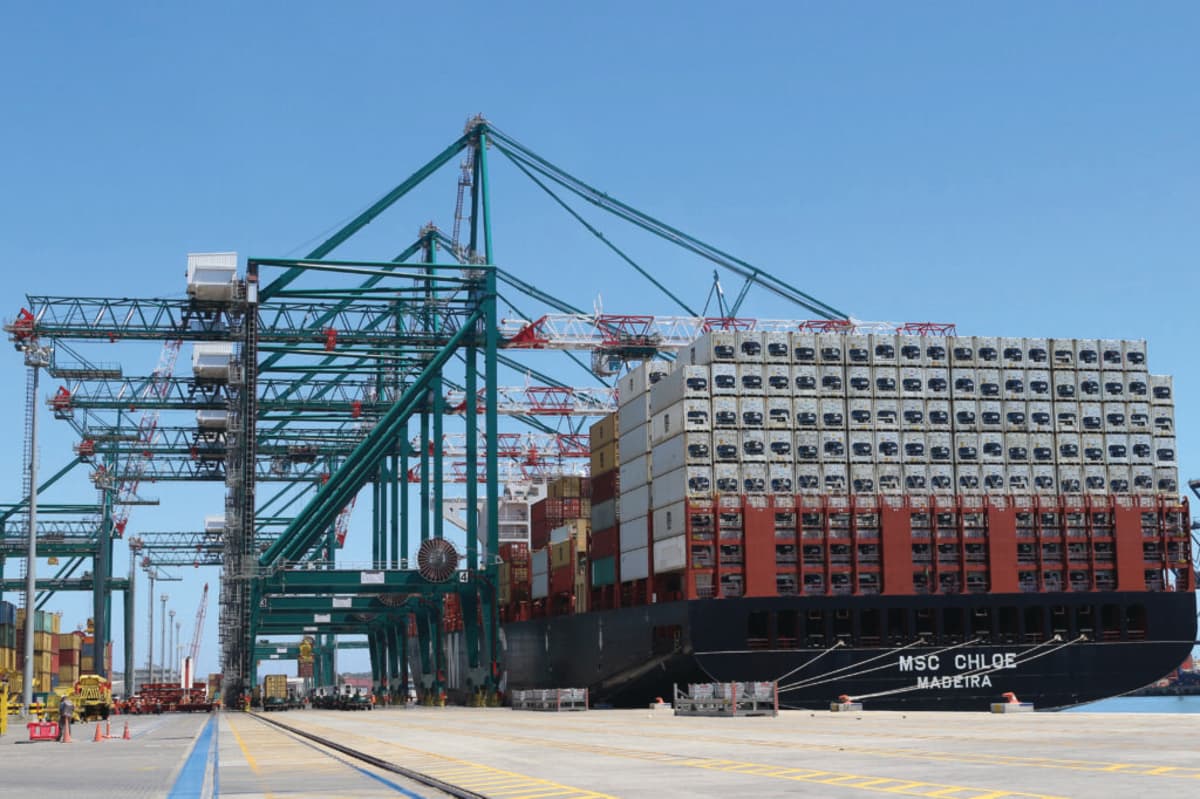
How Disruption Capital Is Redrawing the Architecture of Global Port Control
Key Takeaways
- •Disruption capital fuels three multi‑billion‑dollar port deals in two weeks
- •Private equity firms target high‑growth terminals in Asia, Europe, Latin America
- •New ownership structures increase data transparency and operational efficiency
- •Consolidation could reshape shipping lanes and pricing power
- •Regulators face pressure to balance security with investment incentives
Pulse Analysis
The surge of disruption capital into port infrastructure marks a turning point for an industry traditionally dominated by state entities. Private equity groups and sovereign wealth funds are now leveraging deep pockets and advanced analytics to acquire stakes in terminals that serve as critical nodes in global trade. This capital infusion not only provides the funding needed for costly upgrades—such as automated cranes, AI‑driven scheduling, and green energy retrofits—but also introduces a profit‑oriented mindset that prioritizes throughput and reliability.
In the latest round of activity, three landmark deals closed within a fortnight. A leading U.S. private equity firm secured a 30% stake in a fast‑growing Latin American container terminal, promising $1.2 billion in capital for expansion. Meanwhile, an Asian strategic operator partnered with a Chinese sovereign fund to co‑manage a European gateway, creating a joint venture valued at roughly $2 billion. The third transaction saw a European logistics conglomerate sell a minority interest in its North African hub to a consortium of infrastructure investors, unlocking $800 million for digital transformation. Each deal underscores a pattern: investors are targeting high‑growth markets where container volumes are outpacing legacy capacity.
The implications ripple through the supply chain. Consolidated ownership can streamline customs procedures, reduce dwell times, and enable real‑time data sharing across carriers, ultimately lowering costs for shippers. However, the concentration of control raises antitrust and national‑security concerns, prompting governments to tighten oversight of foreign stakes in strategic ports. As disruption capital continues to reshape port architecture, industry players must balance efficiency gains with regulatory compliance, while shippers watch closely for shifts in pricing power and service reliability.
How disruption capital is redrawing the architecture of global port control
Comments
Want to join the conversation?