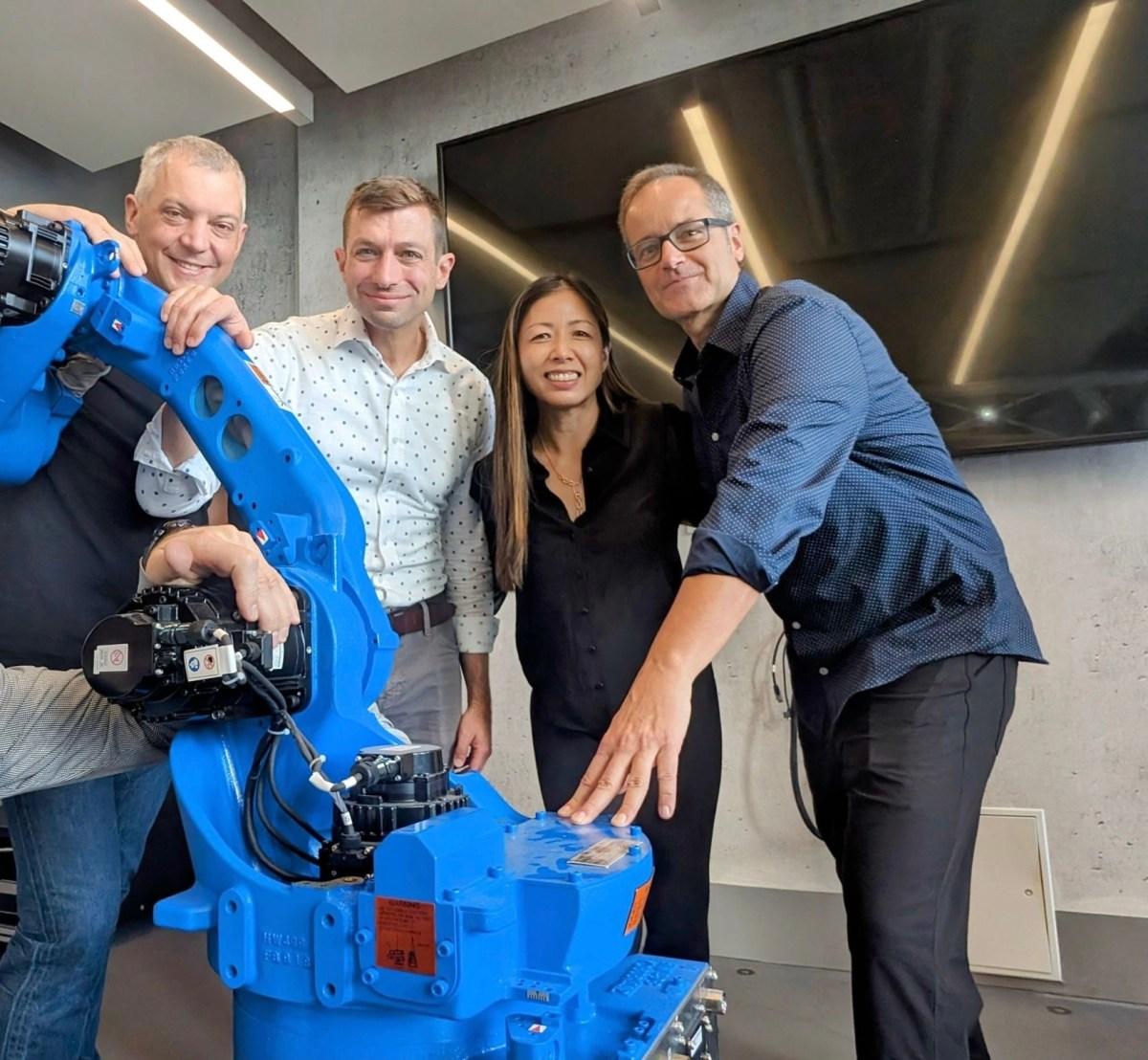
Alphabet-Owned Robotics Software Company Intrinsic Joins Google
•February 25, 2026
0
Why It Matters
By embedding Intrinsic’s robotics expertise into Google’s AI stack, the alliance accelerates the commercialization of physical AI, reshaping manufacturing economics and expanding Google’s enterprise revenue streams.
Key Takeaways
- •Intrinsic becomes Google unit, retains separate brand
- •Will leverage Gemini models and Google Cloud
- •Focus on democratizing industrial robot software
- •Prior acquisitions include Vicarious and Open Robotics divisions
- •Joint venture with Foxconn targets factory automation
Pulse Analysis
Google’s acquisition of Intrinsic marks a strategic pivot toward physical AI, extending the company’s dominance beyond cloud and search into tangible production environments. Intrinsic, born from Alphabet’s X lab, has built a reputation for simplifying robot programming through its Flowstate platform and Vision AI model, enabling developers without deep robotics expertise to create sophisticated workflows. By integrating these tools with Google’s Gemini models and robust cloud infrastructure, the combined offering promises faster deployment cycles, lower entry barriers, and scalable automation solutions for midsize manufacturers that previously could not afford bespoke robotics.
The manufacturing sector is at a crossroads, with rising labor costs and supply‑chain volatility driving demand for intelligent automation. Intrinsic’s prior acquisitions—Vicarious, known for advanced perception algorithms, and key assets from Open Robotics—have equipped it with a rich software stack and a growing ecosystem of partners. Aligning this with Google DeepMind’s research capabilities creates a feedback loop where real‑world robot data can refine AI models, while cutting‑edge Gemini models enhance robot decision‑making. This synergy positions Google to compete directly with Nvidia’s Omniverse and Microsoft’s Azure Robot services, potentially reshaping the competitive landscape of industrial AI.
Looking ahead, the joint venture with Foxconn underscores a commitment to full‑factory automation, a goal that could redefine production economics across electronics, automotive, and consumer goods. However, success hinges on overcoming integration challenges, data security concerns, and the need for standardized robotics interfaces. If Google can deliver a seamless, end‑to‑end solution, it could unlock a new revenue tier while accelerating the broader adoption of physical AI, cementing its role as a pivotal player in the next wave of enterprise technology.
Alphabet-owned robotics software company Intrinsic joins Google
0
Comments
Want to join the conversation?
Loading comments...