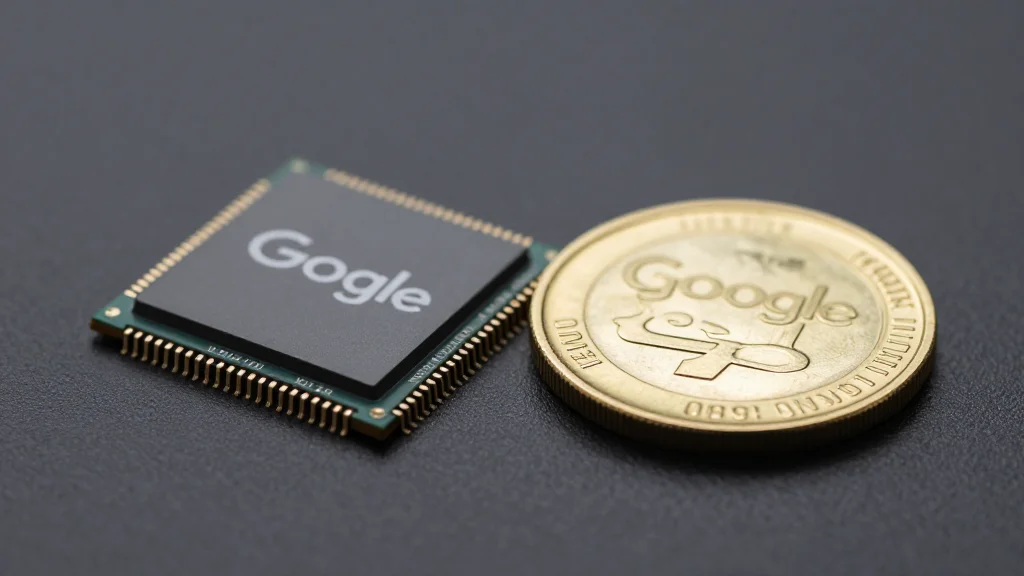
Blackstone and Google Commit $5 B to Launch U.S. AI‑Chip Company Focused on TPUs

Companies Mentioned
Why It Matters
The Blackstone‑Google joint venture places private‑equity at the core of AI‑hardware supply, a segment traditionally dominated by technology manufacturers and cloud providers. By financing a dedicated TPU capacity pool, Blackstone gains exposure to a high‑margin, recurring‑revenue business that aligns with the explosive growth of generative AI workloads. The deal also signals to the broader PE community that large‑scale, capital‑intensive infrastructure projects are now viable investment theses, potentially unlocking new sources of capital for similar ventures. Beyond the financial implications, the partnership could reshape competitive dynamics in the AI‑compute market. Offering TPUs outside of Google Cloud may lower barriers for enterprises that need specialized hardware but are wary of vendor lock‑in, thereby accelerating AI adoption across industries. This could intensify pressure on rivals like Nvidia and CoreWeave to expand their own dedicated service offerings, ultimately driving innovation and price competition that benefits end users.
Key Takeaways
- •Blackstone commits $5 billion in equity to a new AI‑chip company with Google.
- •The venture will launch 500 MW of TPU‑based data‑center capacity by 2027.
- •Benjamin Treynor‑Sloss, a Google executive, appointed CEO of the new company.
- •The joint venture creates a dedicated compute‑as‑a‑service platform separate from Google Cloud.
- •The deal positions private‑equity as a direct investor in AI‑hardware infrastructure.
Pulse Analysis
Blackstone’s $5 billion stake marks a watershed moment for private‑equity’s involvement in AI infrastructure. Historically, PE firms have shied away from hardware‑intensive bets due to long payback periods and rapid technology obsolescence. The partnership with Google mitigates these risks by coupling capital with a proven hardware roadmap and a built‑in customer pipeline through Google’s AI ecosystem. This hybrid model—capital from PE, technology from a cloud titan—could become a template for future deals, especially as AI workloads demand ever‑more specialized silicon.
From a market perspective, the venture addresses a clear supply‑side bottleneck. While cloud providers have expanded GPU fleets, TPU capacity remains relatively scarce outside of Google’s own services. By creating a stand‑alone TPU provider, the joint venture offers enterprises a middle ground: access to cutting‑edge AI chips without committing to a full cloud stack. This could accelerate AI adoption in regulated sectors—finance, healthcare, defense—where data residency and vendor diversification are paramount.
Looking ahead, the success of the Blackstone‑Google entity will hinge on its ability to secure multi‑year service contracts and to scale efficiently. If the 500 MW target is met on schedule and the company demonstrates robust utilization rates, it will validate the PE‑tech partnership model and likely trigger a wave of similar investments. Conversely, any delay or under‑performance could reinforce skepticism about the viability of large‑scale hardware bets in a fast‑moving AI market. Investors and industry watchers should monitor early customer sign‑ups, pricing structures, and the firm’s ability to integrate future TPU generations as key indicators of long‑term sustainability.
Blackstone and Google Commit $5 B to Launch U.S. AI‑Chip Company Focused on TPUs
Comments
Want to join the conversation?
Loading comments...