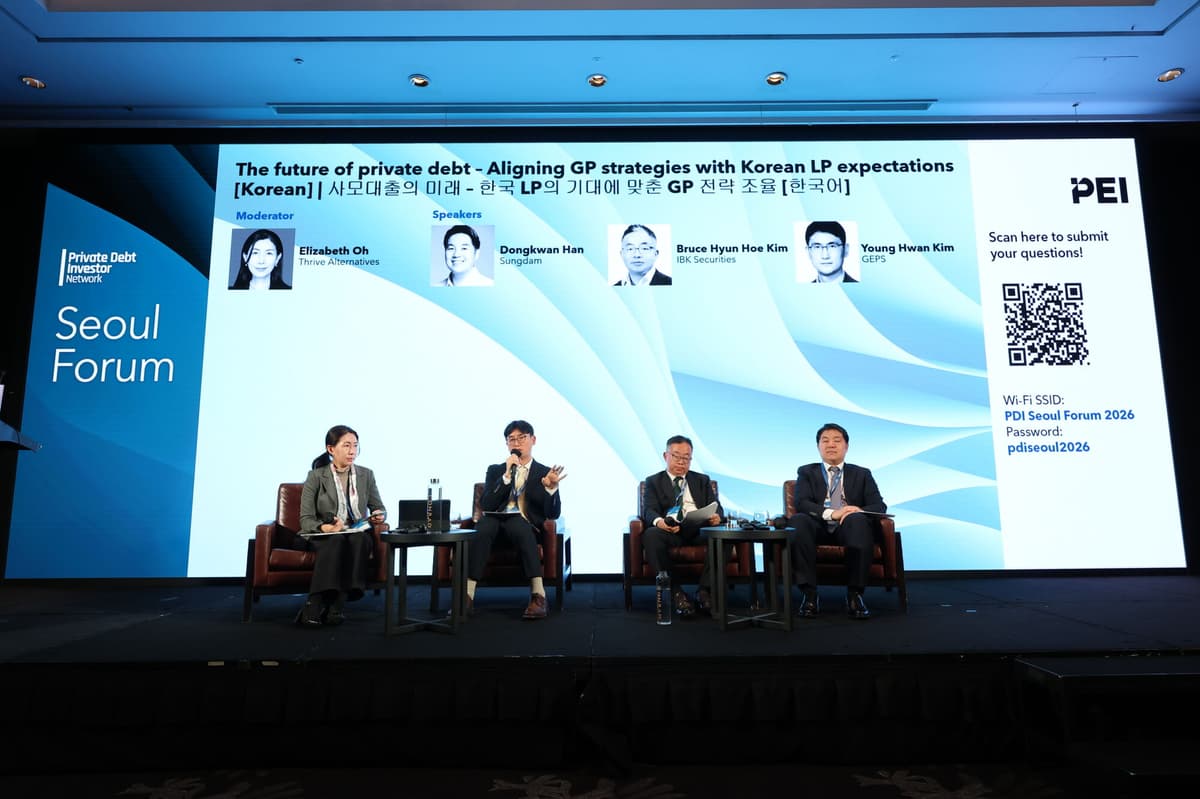
Credit Secondaries Gains Traction Among Korean LPs
Why It Matters
The shift gives Korean institutional investors a cost‑effective pathway to high‑yield credit exposure, bolstering portfolio returns amid tightening credit conditions. It also signals expanding demand for secondary market capacity, prompting managers to tailor products for Asian LPs.
Key Takeaways
- •Korean LPs increasingly allocate to credit secondaries for price advantage
- •Downside protection drives interest amid volatile credit markets
- •Domestic pension funds lead the shift, targeting 10% of allocations
- •Asia secondary market volume grew 25% YoY, attracting Korean capital
- •Low‑price purchases give exposure to high‑yield loans without primary commitments
Pulse Analysis
Credit secondaries—transactions that sell existing debt positions rather than originate new loans—have become a strategic tool for investors seeking yield without the typical illiquidity of primary credit markets. Globally, the secondary market for credit assets has expanded at a compound annual growth rate exceeding 15%, driven by heightened demand for price efficiency and risk mitigation. This growth has attracted a new class of participants, including pension funds, sovereign wealth funds, and insurance companies, all looking to diversify exposure while locking in discounts to face value. The evolution of sophisticated platforms and transparent pricing mechanisms has further lowered entry barriers, making credit secondaries an increasingly mainstream investment avenue.
In South Korea, the appetite for credit secondaries is gaining noticeable traction among large limited partners. The country's three major public pension funds—National Pension Service, Government Employees Pension, and Teachers’ Pension—collectively manage assets exceeding $300 billion (≈₩400 trillion). Recent internal surveys reveal that these institutions are earmarking roughly 10% of their alternative‑asset allocations for secondary credit opportunities, citing the ability to acquire high‑yield loans at a discount and with built‑in downside protection. Regulatory reforms that eased cross‑border secondary transactions have also played a role, allowing Korean LPs to tap into a broader pool of seasoned loan portfolios from Europe and North America.
The rising Korean interest reshapes the dynamics of the secondary market, prompting managers to develop region‑specific products and co‑investment structures. For sellers, the influx of Korean capital offers a deeper liquidity source, potentially compressing discount levels and accelerating deal cycles. Meanwhile, Korean LPs stand to benefit from enhanced return profiles and reduced credit risk, positioning them favorably against domestic banks tightening lending standards. As the market matures, expect more tailored credit‑secondary funds, increased data transparency, and a tighter integration of Korean institutional investors into the global secondary ecosystem.
Credit secondaries gains traction among Korean LPs
Comments
Want to join the conversation?
Loading comments...