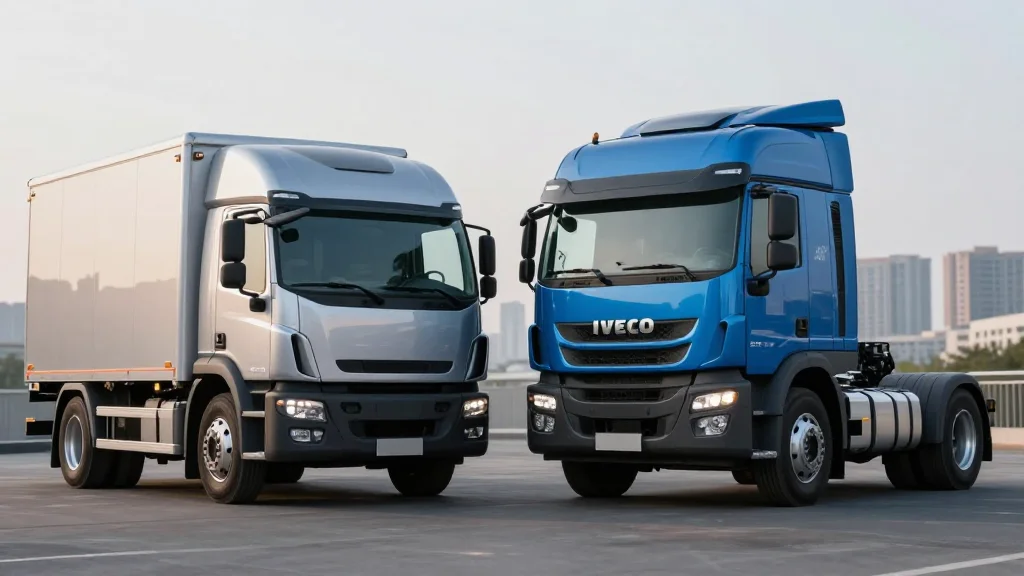
Iveco Deal to Strengthen Tata Motors’ Global CV Footprint, Says N Chandrasekaran
Companies Mentioned
Why It Matters
The Iveco deal positions Tata Motors to compete with global CV giants, unlocking new markets and technology platforms that could reshape its growth trajectory and industry dynamics.
Key Takeaways
- •Tata Motors targets top‑four spot in global commercial‑vehicle market
- •Proposed Iveco acquisition aims to add $80 billion revenue base
- •Deal expected to close by Q2 FY27 pending regulatory approval
- •Expansion will accelerate electric, hydrogen, and AI‑driven vehicle technologies
- •International footprint will grow across Europe, Asia, and Africa
Pulse Analysis
Tata Motors’ pursuit of Iveco marks a strategic escalation in the Indian conglomerate’s commercial‑vehicle ambitions. Over the past decade, Tata’s automotive arm has expanded its product range and revenue, now eyeing an $80 billion topline that would dwarf its 2017 group figures. By absorbing Iveco’s European manufacturing network and brand equity, Tata aims to leapfrog into the elite tier of global CV makers, a segment traditionally dominated by European and Chinese firms. The acquisition also offers immediate access to Iveco’s advanced diesel platforms and emerging electrified powertrains, aligning with Tata’s roadmap for sustainable mobility.
Beyond scale, the deal is a technology catalyst. Iveco’s investments in electric trucks, hydrogen fuel‑cell prototypes, and connected‑vehicle telematics dovetail with Tata’s own R&D thrusts in AI‑enabled fleet management and digitisation. Integrating these capabilities could accelerate Tata’s rollout of zero‑emission commercial vehicles across emerging markets, where regulatory pressure and cost considerations are driving rapid adoption. Moreover, the combined entity would benefit from shared procurement, joint platform development, and cross‑regional supply‑chain optimisation, potentially improving margins in a price‑sensitive industry.
However, the transaction faces headwinds. Regulatory approvals in multiple jurisdictions, especially the European Union’s antitrust review, must be secured by Q2 FY27. Geopolitical volatility and fluctuating commodity prices could also impact projected volume growth. Tata’s ability to harmonise corporate cultures and integrate disparate engineering teams will be critical to realising synergies. If managed effectively, the Iveco acquisition could redefine Tata Motors’ competitive stance, propelling it into a leadership role in both traditional and next‑generation commercial‑vehicle markets.
Iveco deal to strengthen Tata Motors’ global CV footprint, says N Chandrasekaran
Comments
Want to join the conversation?
Loading comments...