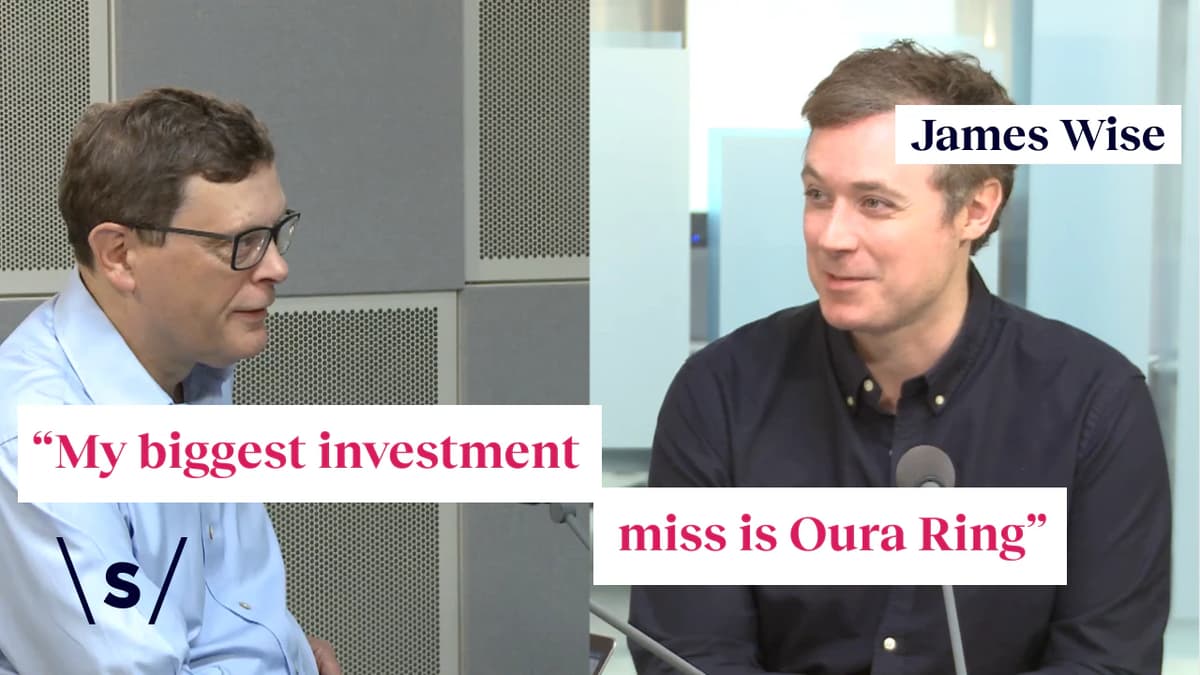
James Wise on Why the Sovereign AI Unit Criticism Is Wrong – and the One Company He Wishes He’d Backed
Companies Mentioned
Why It Matters
The Sovereign AI Unit represents the UK’s biggest state‑backed AI push, shaping Europe’s ability to attract talent and compete globally. Its success or failure will influence public policy, venture capital flows, and the continent’s position in the emerging AGI race.
Key Takeaways
- •Sovereign AI Unit allocated £500 m (~$635 m) for AI research
- •Investments include Isomorphic Labs, Ineffable Intelligence, Callosum
- •Wise defends fund against backlash over public‑sector AI spending
- •SAP acquired Prior Labs, a Balderton‑backed frontier AI lab
- •Wise cites missed investment as key learning for VCs
Pulse Analysis
James Wise has become a recognizable figure in European tech investing, having backed high‑growth companies such as Depop, GoCardless and Convergence. His recent partnership with SAP to acquire Prior Labs underscores his belief that deep‑tech AI startups can deliver strategic value beyond pure financial returns. By leveraging Balderton’s network and his own expertise, Wise positions himself at the intersection of venture capital and corporate innovation, a space increasingly critical as AI moves from experimental labs to commercial products.
The UK’s Sovereign AI Unit, chaired by Wise, marks a bold governmental commitment of £500 million (about $635 million) to accelerate AI breakthroughs. Early allocations to Isomorphic Labs, a drug‑discovery AI firm, Ineffable Intelligence, focused on large‑model safety, and Callosum, a generative‑AI startup, illustrate a diversified portfolio targeting both foundational research and market‑ready applications. Critics argue the fund risks misallocation and public‑sector overreach, but Wise counters that strategic state investment can de‑risk early‑stage AI projects, attract private co‑investment, and signal confidence to global talent pools.
Europe’s AI ambitions hinge on coordinated funding, talent pipelines, and regulatory clarity. The Sovereign AI Unit’s progress will be a litmus test for whether the continent can match the United States and China in the race toward artificial general intelligence. Successful outcomes could catalyze a virtuous cycle of private‑sector venture activity, academic collaborations, and exportable AI solutions, while setbacks may reinforce skepticism about public‑funded tech initiatives. For investors and policymakers alike, monitoring the unit’s milestones offers insight into the evolving dynamics of the global AI ecosystem.
James Wise on why the Sovereign AI Unit criticism is wrong – and the one company he wishes he’d backed
Comments
Want to join the conversation?
Loading comments...