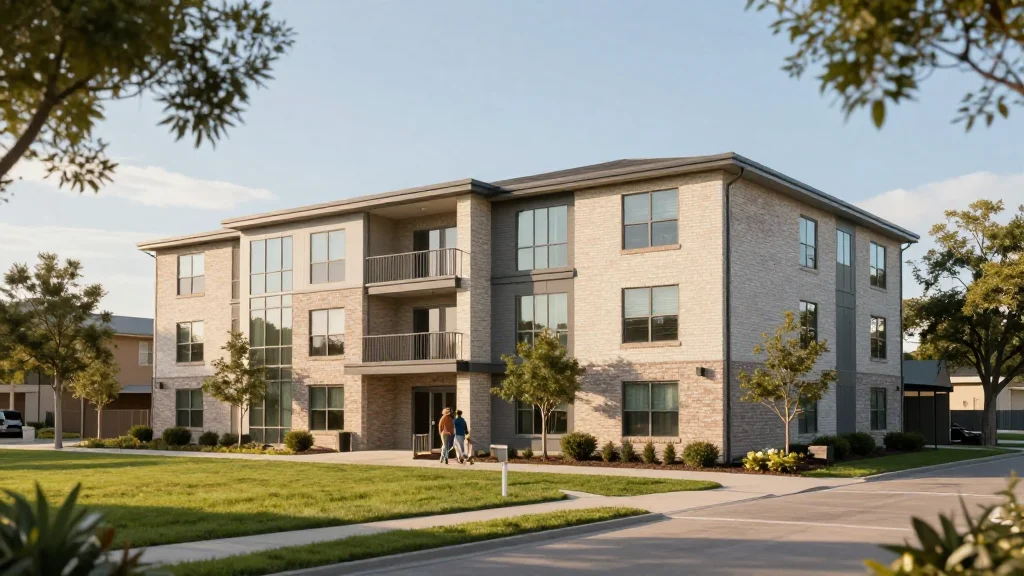
Palladium USA Opens $33 Million Mixed‑Income Apartment Complex in Katy, Texas

Companies Mentioned
Why It Matters
The opening of Palladium Park Row Katy Living illustrates how private‑equity‑backed developers are capitalizing on the intersection of public subsidies and market demand for affordable housing. By securing $33 million in combined public and private financing, Palladium USA delivered a fully leased, mixed‑income community in record time, proving that the blended‑finance approach can generate both social impact and investor returns. For the broader private‑equity landscape, the project underscores a shift toward asset classes that blend stable cash flows with policy‑driven incentives. As housing affordability remains a political priority, firms that master these partnership structures may gain a competitive edge, attracting capital from investors seeking ESG‑aligned opportunities while diversifying traditional PE portfolios.
Key Takeaways
- •Palladium USA launched a $33 million mixed‑income development with 93 units in Katy, Texas.
- •The project includes 58 affordable apartments for households earning 30%‑80% of AMI and 35 market‑rate units.
- •Financing combined $5 million ARPA funding, $15 million LIHTC, $13.3 million tax‑credit equity, and $12 million+ long‑term debt.
- •Full occupancy was achieved in under three months, one of the fastest lease‑ups for the developer.
- •Public‑private partnership involves Harris County Housing Finance Corporation, Texas DHCA, and PNC Bank.
Pulse Analysis
Palladium USA’s rapid lease‑up demonstrates that demand for quality, affordable housing in suburban Texas is outpacing supply, creating a fertile environment for private‑equity firms to deploy capital. The project's financing mix—leveraging federal ARPA dollars, state tax credits, and private debt—mitigates risk while delivering attractive equity yields, a formula that could become a template for future PE‑driven housing initiatives. Historically, private equity has shied away from low‑margin affordable housing due to perceived regulatory complexity; however, the success of this development suggests that sophisticated structuring and strong public partners can unlock a new, resilient asset class.
From a strategic perspective, the deal aligns with the broader ESG trend, allowing investors to meet social impact mandates without sacrificing returns. As federal housing policy evolves, firms that have built relationships with entities like the Harris County Housing Finance Corporation will be better positioned to secure future tax‑credit allocations. Yet, the model’s scalability hinges on the continuity of tax‑credit programs and the availability of low‑interest public funds. Any policy shift could compress margins, prompting PE firms to diversify across geographies or incorporate higher‑margin market‑rate components to preserve profitability.
In the next 12‑18 months, we expect to see a wave of similar projects in high‑growth Sun Belt markets, where demographic trends and state‑level incentives converge. Private‑equity managers will likely monitor Palladium’s operational performance closely, using occupancy rates, rent growth, and resident satisfaction as leading indicators of the model’s viability. If the financial outcomes meet expectations, the sector could witness a reallocation of capital from traditional buy‑out deals toward purpose‑driven, income‑stable real‑estate assets.
Palladium USA Opens $33 Million Mixed‑Income Apartment Complex in Katy, Texas
Comments
Want to join the conversation?
Loading comments...