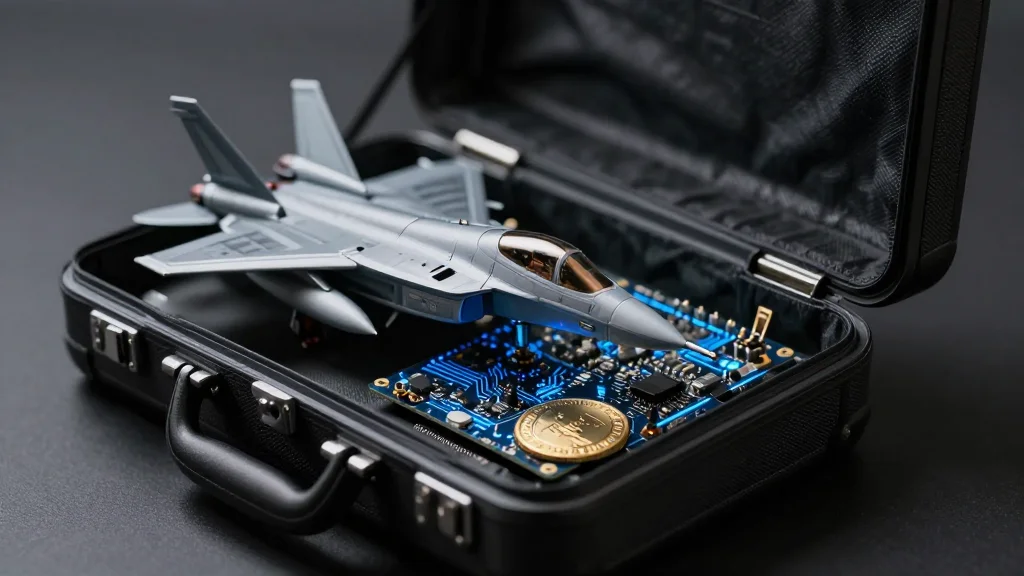
Pentagon AI Contracts Fuel Private‑Equity Surge in Defense Sector

Companies Mentioned
Why It Matters
The convergence of AI and defense spending creates a high‑margin, government‑backed market that aligns with private‑equity’s search for stable, long‑duration cash flows. As AI becomes the lingua franca of modern warfare, firms that can deliver integrated, autonomous solutions will command premium valuations, drawing more capital and potentially accelerating consolidation in the sector. This dynamic also raises policy questions about the influence of private‑equity owners on national security priorities and the transparency of defense procurement. For investors, the trend offers a new asset class that blends the defensive characteristics of traditional defense stocks with the growth potential of cutting‑edge technology. However, it also introduces risks related to regulatory scrutiny, export controls, and the ethical implications of autonomous weapons, which could affect both valuation and public perception.
Key Takeaways
- •Pentagon’s AI strategy awards multiyear contracts to Palantir, Anduril and Lockheed Martin.
- •Anduril remains private, with equity held by venture and private‑equity firms; retail exposure via ETF XOVR.
- •Palantir’s Foundry and Gotham platforms become core data infrastructure for all U.S. service branches.
- •Lockheed Martin embeds AI into legacy platforms, extending the life of its fifth‑generation fighters.
- •Private‑equity funds are increasing allocations to defense‑AI companies, seeking long‑term government‑backed revenue.
Pulse Analysis
The Pentagon’s AI push is redefining the economics of defense contracting. Historically, defense spend was dominated by large, publicly traded OEMs that won bulk hardware contracts. AI flips that script by rewarding software agility, data integration and autonomous capabilities—areas where smaller, venture‑backed firms excel. Private‑equity’s entry into this space is a logical extension of its playbook: identify a high‑growth niche with defensible barriers, secure a foothold before public markets fully price the opportunity, and eventually exit via IPO or strategic sale.
In the short term, we can expect a wave of secondary market transactions for Anduril shares as funds look to lock in exposure ahead of a potential IPO. Palantir, already public, may see its valuation buoyed by expanding DOD contracts, prompting activist investors to push for higher AI‑related spend. Lockheed Martin, while still a legacy player, will likely spin off or create joint ventures to isolate its AI units, making them more attractive to private‑equity partners seeking pure‑play exposure.
Long‑term, the infusion of private‑equity capital could accelerate consolidation, with larger firms acquiring niche AI specialists to integrate capabilities faster than organic development permits. This could lead to a more vertically integrated defense ecosystem, but also raises concerns about reduced competition and the potential for profit motives to outweigh strategic considerations. Regulators and policymakers will need to balance the benefits of rapid AI adoption with oversight to ensure that national security remains paramount.
Pentagon AI Contracts Fuel Private‑Equity Surge in Defense Sector
Comments
Want to join the conversation?
Loading comments...