
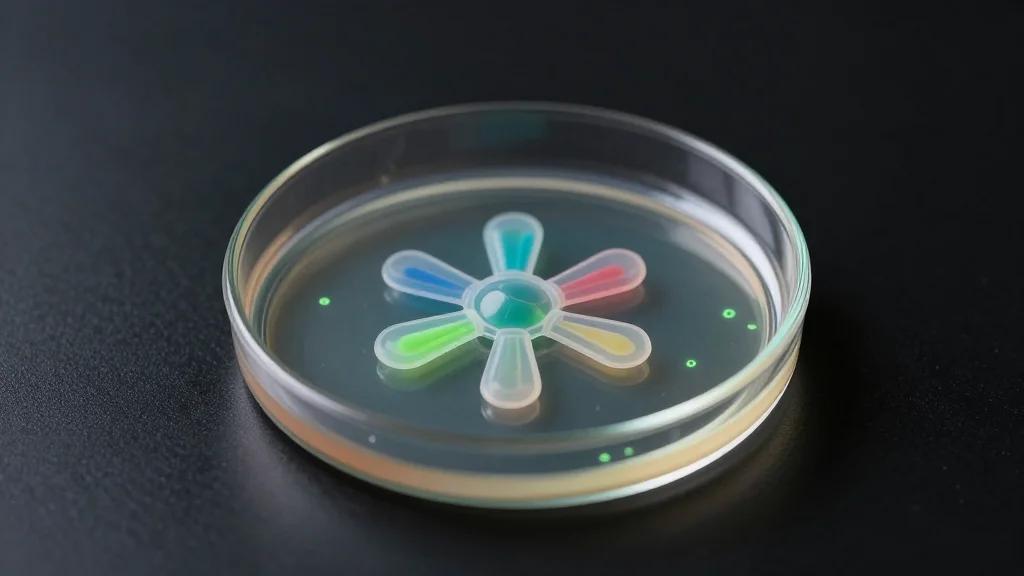
A Modular, Synthetic Origin of Replication
Researchers at Rice University have engineered a synthetic origin of replication, SynORI, that replaces the native ColE1 feedback loop with programmable RNA regulators. The modular design yields six orthogonal plasmid compatibility groups that can coexist in E. coli for at least a week and enables copy‑number tuning across a 115‑fold range, from ~1.6 to ~185 copies per cell. By incorporating the parCBA multimer‑resolution system, SynORI also suppresses plasmid multimers, improving vector stability. However, the refactored origin shows reduced stability without antibiotic selection, requiring continued selective pressure.

Deaminet 2026: Breakthroughs in Base Editing, Deaminase Biology, and Therapeutic Translation
Deaminet 2026 showcased accelerating advances in base and prime editing, highlighted by rapid Addgene distribution growth and new mechanistic insights such as PE6d’s heightened processivity and ABE8e’s dimer‑driven efficiency. Novel off‑target detection platforms like beCasKAS and Inrich‑seq revealed far more unintended...
Strengthening Foundations: Reflections on 2025 and What's Ahead for 2026
Addgene closed 2025 by supporting researchers in 112 countries, highlighted by a rapid plasmid shipment to Laos. The nonprofit welcomed over 500 new depositing labs and its materials featured in 9,000 publications last year. New tools such as a Developer’s...
Addgene’s Expanding Collection of Research Tools for Industry Scientists
Addgene, celebrating two decades of plasmid distribution, now offers nearly 10,000 unique research tools to industry scientists. The collection spans fluorescent protein plasmids, AI‑generated CRISPR editors, enzyme‑producing vectors, viral‑vector kits, and extensive antibody libraries. New filters on the Addgene website...