
News•Mar 11, 2026
A New Model Defines an Upper Limit to Planetary Radiation Belt Intensity
Researchers at the University of Helsinki have unveiled a new theoretical model that sets a universal upper limit on the intensity of planetary radiation belts. The framework combines magnetic field strength, plasma density, and wave‑particle interaction physics to calculate a ceiling applicable to Earth, Jupiter, Saturn and beyond. Validation against measurements from the Van Allen belts and giant‑planet magnetospheres shows the model accurately predicts observed intensities. The study suggests even the most magnetically active planets cannot exceed this bound.
By American Astronomical Society – Press

News•Mar 11, 2026
Strange Cosmic Burst From Colliding Galaxies Shines Light on Heavy Elements
Astronomers observed an unprecedented burst of high‑energy radiation emanating from two colliding galaxies, offering direct evidence of rapid heavy‑element synthesis during galactic mergers. The event, captured by space‑based X‑ray and gamma‑ray observatories, displayed spectral signatures of r‑process nucleosynthesis, traditionally associated...
By American Astronomical Society – Press
News•Mar 11, 2026
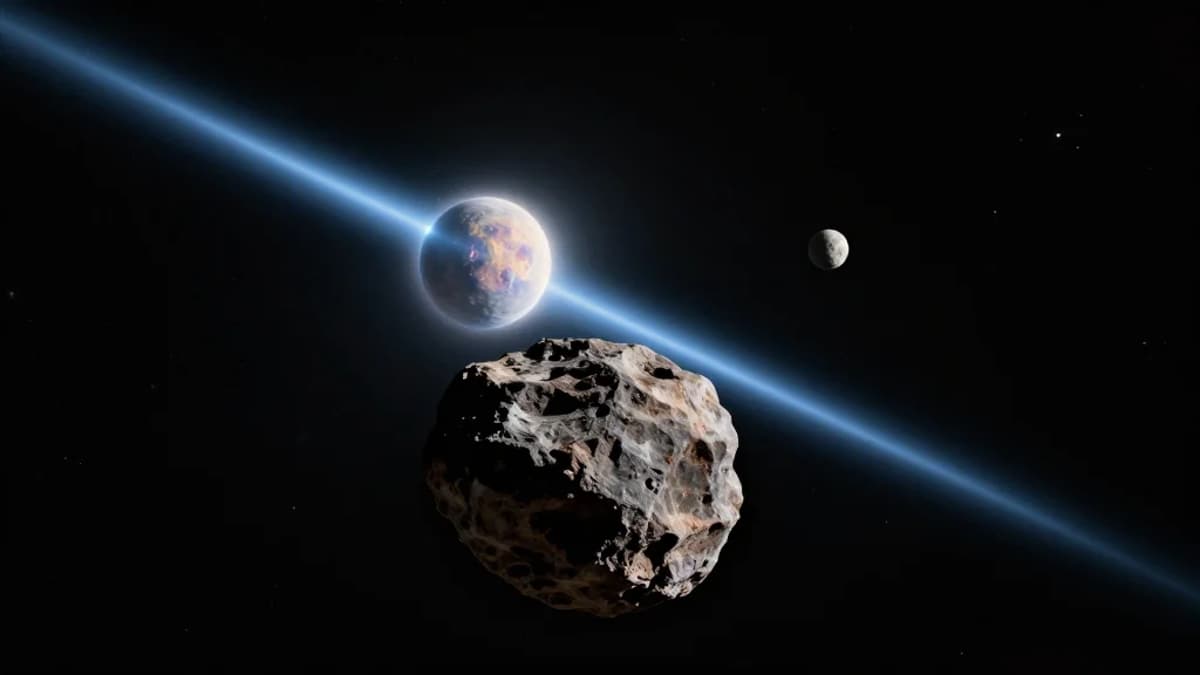
Trailblazing the Search for Pulsar-Bound Exotrojans
Researchers at West Virginia University have unveiled a novel technique to search for exotrojans—co‑orbital bodies—bound to pulsars. Applying the method to decades‑long pulsar timing data, they report the first plausible exotrojan candidate orbiting the millisecond pulsar PSR B1257+12. The approach isolates...
By American Astronomical Society – Press
News•Mar 11, 2026
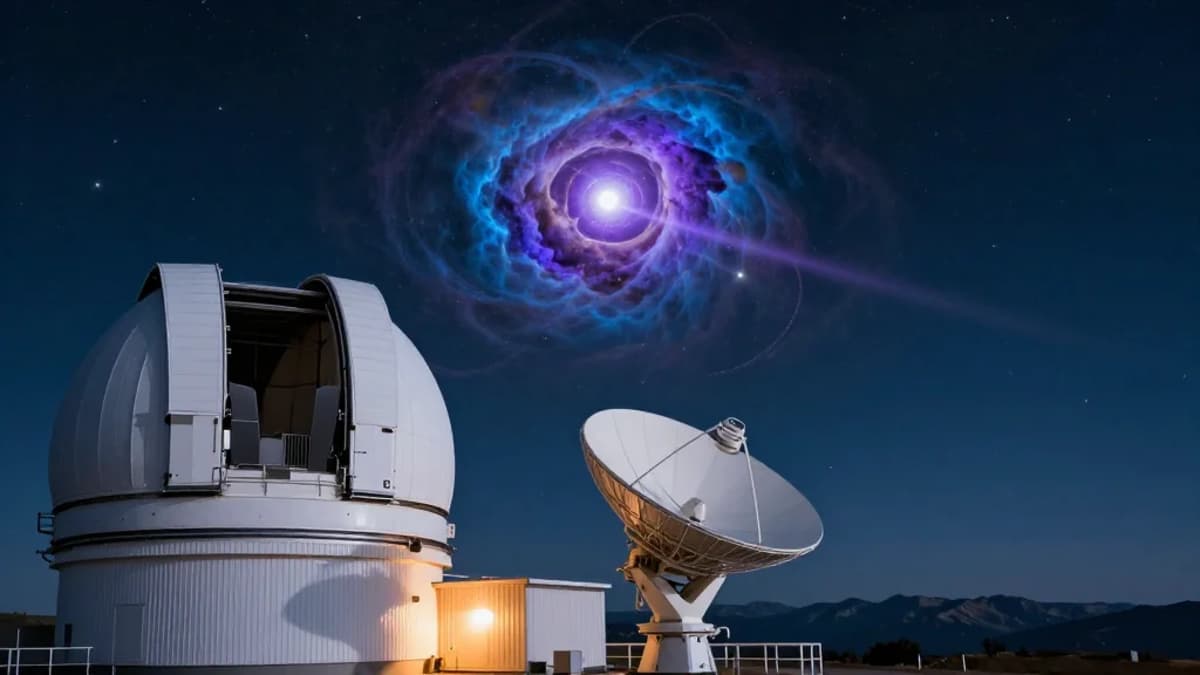
Astronomers Capture Birth of a Magnetar, Confirming Link to Some of Universe’s Brightest Exploding Stars
Astronomers using NASA's NICER and Swift observed the birth of a magnetar in real time as a massive star collapsed, producing a brief, ultra‑bright X‑ray flash. The event released roughly 10^46 ergs in less than a second, matching predictions for...
By American Astronomical Society – Press

News•Mar 11, 2026
New Research Bridges the Worlds of General Relativity and Supernova Astrophysics
UCSB researchers have introduced a fully relativistic framework that integrates Einstein’s general relativity into core‑collapse supernova models. By coupling the field equations with advanced neutrino transport, their high‑resolution simulations reveal that relativistic gravity steepens the gravitational potential, boosting shock strength...
By American Astronomical Society – Press
News•Mar 11, 2026
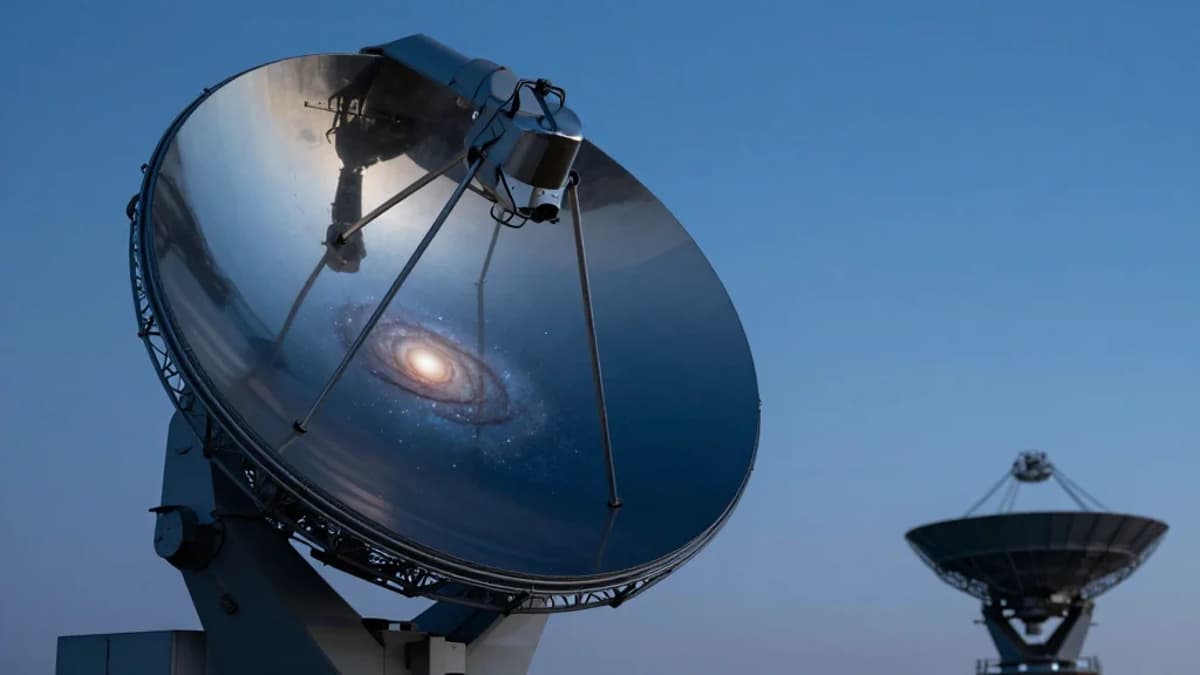
New Method Reveals Slower Expansion in Our Cosmic Neighborhood
A novel observational technique has produced a more precise measurement of the expansion rate in the nearby universe, indicating it is slower than previously estimated. The study, leveraging gravitational‑wave standard sirens and refined Cepheid calibrations, finds a local Hubble constant...
By American Astronomical Society – Press
News•Mar 11, 2026
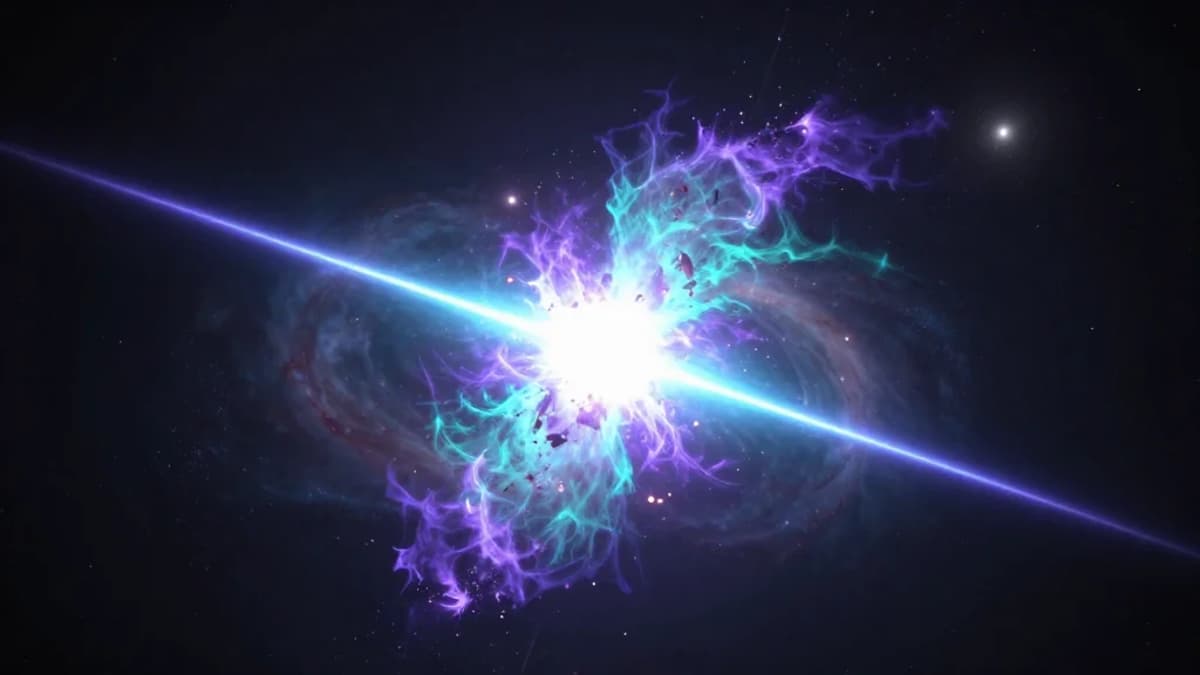
NASA Discovers Crash of Extreme Stars in Unexpected Site
NASA's Chandra X‑ray Observatory has identified a rare collision of two neutron stars in a region of space previously thought too sparse for such events. The merger, detected through a burst of high‑energy X‑rays and a subsequent kilonova, occurred far...
By American Astronomical Society – Press
News•Mar 10, 2026
First NSF NOIRLab Follow-Up Observations Triggered by NSF–DOE Rubin Alerts
NSF’s NOIRLab has completed its first set of follow‑up observations triggered by alerts from the Rubin Observatory’s Legacy Survey of Space and Time (LSST). Within minutes of the alerts, NOIRLab telescopes—including the 4‑meter Mayall and the 2.4‑meter Blanco—obtained imaging and...
By American Astronomical Society – Press
News•Mar 10, 2026
The Ultra-High-Energy Neutrino May Have Begun Its Journey in Blazars
A recent ultra‑high‑energy (UHE) neutrino detected by the IceCube observatory has been linked to a flare from a distant blazar, suggesting the jet of the active galaxy accelerated particles to extreme energies. The association relies on temporal coincidence and directional...
By American Astronomical Society – Press
News•Mar 10, 2026
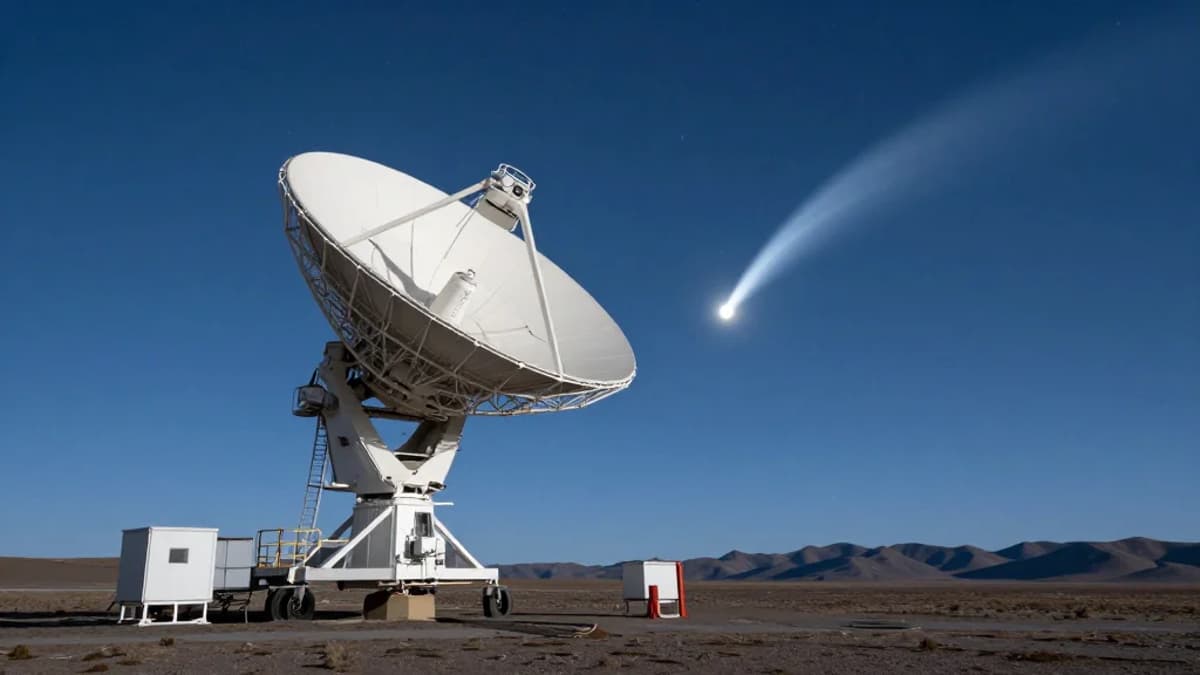
ALMA Detects Extremely Abundant Alcohol in Interstellar Comet 3I/ATLAS
The Atacama Large Millimeter/submillimeter Array (ALMA) has reported the detection of an unusually high concentration of alcohol—specifically ethanol—in the interstellar comet 3I/ATLAS. Spectroscopic analysis shows ethanol levels roughly ten times greater than those measured in typical solar‑system comets. The observation...
By American Astronomical Society – Press