
CIO Index (All Stories)
CIO-focused portal with IT strategy, governance, EA and sourcing content.
Integrated IT Investment Lifecycle Assurance Framework for High-Risk Technology Initiatives
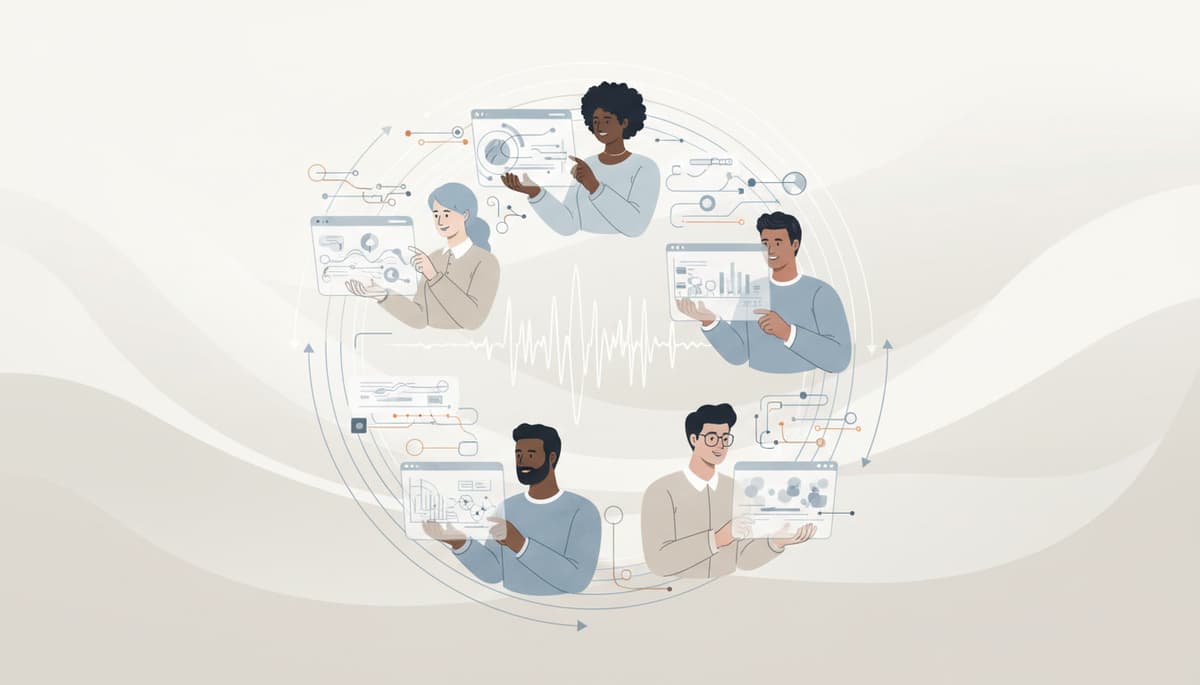
The Integrated IT Investment Lifecycle Assurance Framework introduces a continuous‑oversight model for governing large technology initiatives. It embeds governance controls at every stage—from business case development to post‑implementation review—rather than relying on periodic approvals. By incorporating independent quality assurance, lifecycle checkpoints, and structured escalation, the framework aims to detect risks early and keep executive visibility high. The approach, originally built on a statewide public‑sector oversight model, is positioned as a transferable blueprint for any organization managing high‑risk IT investments.
Digital Transformation Governance Framework Example: How to Structure and Prioritize Decisions
Digital transformation initiatives often falter because decision‑making lacks discipline, leading to fragmented projects and misallocated spend. The article presents a governance framework that unites strategy definition, evidence‑based validation, and criteria‑driven prioritization into a single decision system. By applying transparent scoring...

IT Governance Organization: Structuring for Strategic Success
The new guide provides a practical blueprint for building an IT governance organization that moves beyond frameworks to a concrete operating model. It details how authority is distributed, governance bodies are chartered, decision‑rights are codified with RACI matrices, and escalation...

CIO as CEO: The Enterprise Risk Leader
The new guide repositions the chief information officer as the enterprise risk leader, aligning technology risk governance with the rigor applied to financial and operational risk. It draws on standards like COBIT, ISO 27001 and NIST while remaining framework‑agnostic, and it...

Enterprise Architecture Operating Model Guide: Operationalize and Scale EA Practice Effectively
The Enterprise Architecture Operating Model Guide turns EA from a static blueprint into a hands‑on discipline by offering a catalog of reusable "plays" that map people, processes, and technology to business outcomes. It splits its methodology into Business‑Technology Alignment and...

Organizing for the AI Era: Enterprise AI Organizational Design Framework
The "Organizing for the AI Era" framework offers enterprises a structured blueprint to redesign authority, accountability, and operating models as AI becomes a core capability. It moves beyond literacy and policy, delivering concrete artifacts such as an AI Operating Model...

What Is Post Merger Integration (PMI)?
Post‑Merger Integration (PMI) is the structured process of combining two companies into a single, value‑creating entity. It encompasses cultural alignment, IT and data consolidation, and functional harmonization, guided by detailed checklists and a 100‑day plan. Successful PMI requires senior‑level sponsorship,...

What Is an IT Strategy Framework? Definition, Role, Purpose, Components and Key Characteristics
An IT Strategy Framework is a reusable, high‑level model that structures how organizations formulate, govern, and align technology decisions with business goals. It separates strategic structure from content, ensuring consistency across planning cycles while remaining technology‑agnostic. The guide distinguishes the...

Practical Case Study: IT Strategic Planning Framework for Transforming IT From Reactive to Proactive
The case study outlines a practical IT strategic planning framework that shifts IT functions from reactive firefighting to proactive delivery. It integrates quantitative assessments, stakeholder workshops, prioritized roadmaps, and governance into a repeatable discipline. By converting planning into an operational...
![[Full Lifecycle] Cloud & Platform Engineering Operating Model Playbook: Design, Govern, Deliver, and Operate](/cdn-cgi/image/width=1200,quality=75,format=auto,fit=cover/https://cioindex.com/wp-content/uploads/2026/03/Full-Lifecycle-Cloud-Platform-Engineering-Operating-Model-Playbook.jpg)
[Full Lifecycle] Cloud & Platform Engineering Operating Model Playbook: Design, Govern, Deliver, and Operate
The Cloud & Platform Engineering Operating Model Playbook provides a structured overlay that extends existing enterprise technology functions to manage cloud environments at scale. It integrates strategy, architecture, governance, delivery, operations, and financial management into a unified system, emphasizing automated...

The TOGAF Standard: What It Is, How It Works, and Why It Matters for Enterprise Architecture
The Open Group’s TOGAF Standard, now at version 9.2, remains the leading open‑source framework for enterprise architecture, offering a modular structure, updated business‑architecture guidance, and a comprehensive Architecture Development Method (ADM). It covers the four core domains—business, data, application, and...

AI Operating Model Overlay Playbook
The AI Operating Model Overlay Playbook introduces a plug‑in framework that adds AI‑specific decision points, controls, and evidence requirements to an enterprise’s existing IT operating model. It defines tiered delivery pathways, standard artifact sets, and post‑go‑live monitoring to make AI...
IT Governance Operating Model Framework
The IT Governance Operating Model Framework offers a direction‑level architecture that translates governance intent into daily operational discipline. It defines six interdependent components—including decision architecture, layered accountability, and embedded risk—aligned with standards such as COBIT, ISO 38500, ITIL 4, NIST CSF 2.0, and...

Comprehensive AI Management Framework Landscape
The Comprehensive AI Management Framework Landscape is a vendor‑neutral reference that maps six distinct categories of AI governance, strategy, risk, operating, and maturity frameworks. It helps leaders match specific management decisions to the appropriate framework, avoiding overlap and friction. By...

IT Governance Frameworks: A Practical Guide to What Works, Where, and Why
The guide offers a pragmatic look at modern IT governance frameworks, emphasizing purpose over checklist compliance. It breaks down each framework’s intended problem‑solving role, highlighting strengths, limits, and the hidden risks of fragmented application. By mapping overlaps and friction points,...