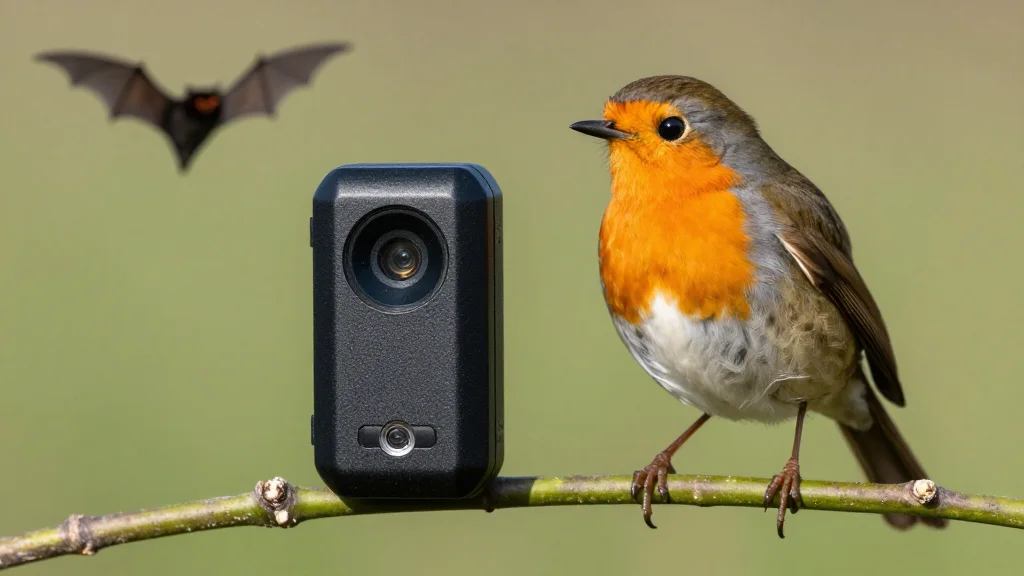
Could AI Be a Boon to Regenerative Agriculture?
Artificial intelligence is entering regenerative agriculture as a way to quantify biodiversity gains. Startups are deploying bioacoustic sensors and computer‑vision apps that identify birds, bats, bees, and insects, turning sound and image data into actionable farm insights. Pilot projects, such as Marks & Spencer’s partnership with AgriSound, show non‑crop habitats can generate up to 90 percent of bee activity, while rental costs remain modest. Yet data‑privacy, validation, and AI’s own carbon footprint pose challenges before widespread adoption.

Union Seeks Ban on ‘Surveillance Pricing’ at Grocery Stores
The United Food and Commercial Workers Union is urging Congress to ban "surveillance pricing" tied to electronic shelf labels (ESLs) as major retailers like Walmart, Kroger and Whole Foods roll out the technology nationwide. The union’s "Affordable Groceries and Good...
For California Farmers, a Clean-Energy Dilemma
New Leaf proposes the 200‑MW Seahawk battery‑storage project near Watsonville, aiming to supply power for roughly 200,000 homes. After the 2025 Moss Landing fire, local farmers and officials raised safety and farmland‑contamination concerns, prompting Santa Cruz County to draft stricter...

Civil Eats Nominated for a Record 5 James Beard Media Awards
Civil Eats has been nominated for a record five 2026 James Beard Foundation Media Awards, becoming a finalist in four categories: Health and Wellness, Columns and Newsletters, Profile, and Narrative Photography. Senior Staff Reporter Lisa Held earned two nominations for...

Inside a Historic Supreme Court Case on Pesticide Risks
The U.S. Supreme Court heard Monsanto v. Durnell, a pivotal case on whether federal pesticide law preempts state “failure‑to‑warn” claims over Roundup’s alleged cancer risks. Plaintiffs argue Bayer, the successor to Monsanto, should have warned users about glyphosate, while the...

Betting on Whole-Grain Baking
U.S. bakers are increasingly abandoning industrial white flour in favor of whole‑grain flours milled on‑site from local farms. By building direct relationships with regional growers, bakeries like Washington, D.C.’s Seylou and Baltimore’s Motzi Bread secure sustainable grain supplies while sharing...
Trump Withdraws Casey Means as Nominee for Surgeon General
President Donald Trump withdrew Casey Means, his second nominee for U.S. Surgeon General, after Senate opposition over her comments on vaccines and birth control. Means, a leading figure in the Make America Healthy Again (MAHA) movement, had pledged to warn...
House Passes Farm Bill With Pesticide Liability Shield Removed
The House passed the Farm, Food, and National Security Act of 2026 with a 224‑200 vote, stripping a pesticide liability shield and rolling back emissions standards for farm equipment. The vote saw a rare bipartisan split, with Democrats largely supporting...
Exclusive: Democrats Ask USDA to Drop ‘Risky’ Meatpacking Proposal
Democratic lawmakers, led by Sen. Cory Booker, have asked the USDA to abandon a rulemaking effort that would permanently raise line speeds at poultry and pork processing plants. They argue that faster lines increase worker injuries, including amputations, and diminish...
Supreme Court to Consider Whether the Government Can Fine Farms that Use Guestworkers
The U.S. Supreme Court has agreed to hear a case challenging the Department of Labor’s authority to fine farms that violate H‑2A guest‑worker rules without a prior court trial. The dispute stems from Sun Valley Orchards in New Jersey, which was...
Finding ‘Big Wins’ for Indigenous Food Systems
Heather Dawn Thompson, a Cheyenne River Sioux leader now serving as vice‑president of Native Nations Conservation at the World Wildlife Fund, recounts her work reshaping USDA policies to support Indigenous food sovereignty. Key initiatives include expanding the Food Distribution Program...

Will ‘Product of the USA’ Give Cattle Ranchers a Boost?
On National Agriculture Day, USDA announced a revamped “Product of the USA” label that now requires meat, poultry and egg products to be raised, slaughtered and processed in the United States. The change comes as U.S. cattle herds hit a...
USDA Finalizes Rollback of Environmental Permitting Regulations
The U.S. Department of Agriculture finalized a rule that dramatically reshapes how it complies with the National Environmental Policy Act (NEPA). The regulation slashes NEPA paperwork by roughly 66 percent, eliminates public‑comment periods, and strips climate‑change and environmental‑justice analyses from...
Food Companies Backslide on Promises to Reduce Pesticides
The As You Sow “Pesticides in the Pantry” report shows that ten of the seventeen biggest U.S. food companies earned lower scores this year, indicating a retreat from earlier pledges to cut synthetic pesticide use. General Mills, once a leader...
Will AI Be a Net Positive For Aquaculture?
Finfish aquaculture is grappling with disease, mortality, pollution and costly feed, prompting a surge of AI solutions. Over $610 million was poured into AI projects in 2024, with more than 90 startups—mostly in Norway and the United States—targeting disease prediction, net...