
Recent Posts
Video•Feb 12, 2026
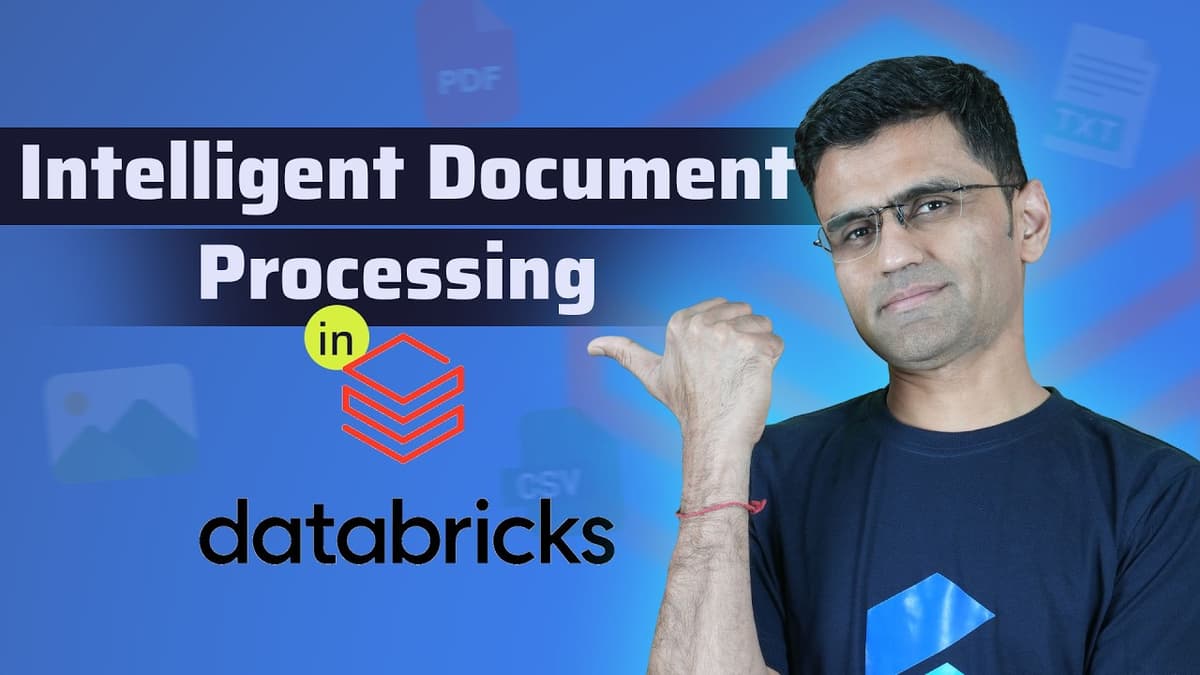
Intelligent Document Processing in Databricks
The video walks through Databricks’ Intelligent Document Processing (IDP) solution, demonstrating how to build an end‑to‑end pipeline that extracts key financial data from PDF invoices. Using a fictitious company, Green Sheen, the presenter shows how raw PDF files are uploaded to a managed volume, read as binary data, and then passed through the AI Parse Document function to obtain a structured representation of pages, elements, and bounding boxes. The tutorial highlights the two‑step approach: first OCR to retrieve raw text, then semantic parsing to identify tables, headers, and monetary fields. Regular expressions are applied to the parsed elements to isolate subtotal, tax, shipping, and total‑due values, which are then written to a Gold‑level Delta table. Databricks Genie is connected to this table, enabling natural‑language queries such as “total due for Bio Hue Chemicals.” Key examples include the extraction of bounding‑box metadata for invoice sections and the comparison of AI Parse Document’s performance and pricing against competitors like Snowflake and AWS Textract. The presenter notes that the function delivers higher accuracy at a lower cost, making it suitable for organizations processing millions of documents. By automating what was previously a manual, error‑prone data‑entry bottleneck, the pipeline accelerates analytics, reduces operational expenses, and empowers AI agents to consume structured data directly from previously unstructured sources.
By Codebasics

Video•Feb 2, 2026
What Is Snowflake? Learn Snowflake in 30 Minutes
The video provides a rapid overview of Snowflake, the cloud‑native data‑warehouse that debuted with the largest software IPO in 2020, raising $3.36 billion. It highlights Snowflake’s rapid adoption—used by 751 of Forbes’ top 2,000 global firms and spawning tens of thousands...
By Codebasics
Video•Jan 31, 2026
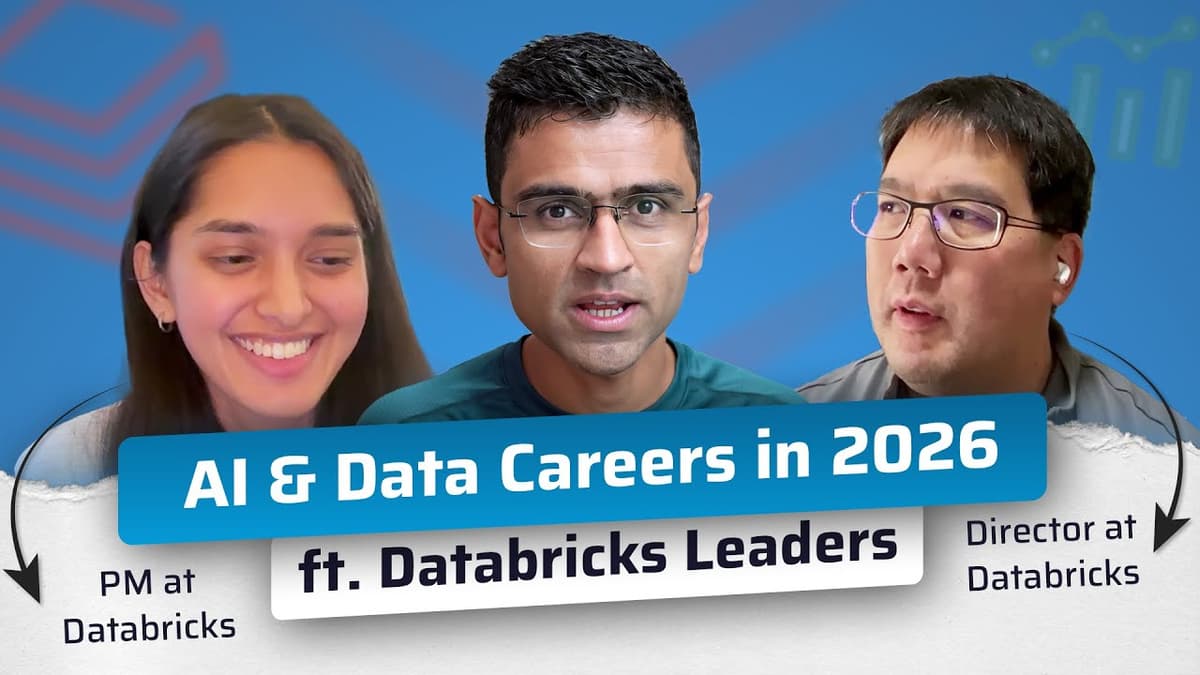
AI & Data Careers in 2026 Ft. Databricks’ Leaders | Platforms & Skills
The podcast spotlights the shifting landscape of AI and data careers as we look toward 2026, featuring Databricks product manager Archika Dogra and PM director Danny Lee. They examine which skills, roles, and platforms will dominate and how professionals can...
By Codebasics