
The Contracts Queen’s Guide to Optimizing Contract Playbooks for AI
The article outlines how to convert traditional contract playbooks into AI‑ready assets for modern redlining CLMs and agents. It stresses building the playbook first in a spreadsheet, treating that file as the single source of truth, and customizing prompts to match each vendor’s token limits. The guide also contrasts human intuition with AI token‑based processing and mandates rigorous user‑acceptance testing before rollout. By following these steps, legal teams can accelerate deal velocity while preserving control over business‑critical contract rules.

Why AI Indemnities Are Shrinking and What to Ask for Instead
AI indemnities are contracting as vendors recognize they cannot underwrite open‑ended risks tied to evolving models and probabilistic outputs. The shift drives contracts to embed tighter governance obligations, audit rights, and escalation procedures as the primary mechanisms for risk allocation....

Government Prime Contracts: Flowdown Obligations and Risks
Government prime contracts embed mandatory flowdown clauses that subcontractors must obey, even when presented as a single line reference to FAR or DFARS regulations. These clauses cover ethics, cybersecurity, whistleblower protection, and domestic content rules such as the Buy American...

Stark Sanctions: Knowing Your End-User
Tony Stark’s fictional failure to monitor end‑users in *Iron Man* illustrates real‑world compliance gaps that can lead to sanctions violations. The article warns that companies must verify the ultimate recipient of both hardware and SaaS licenses, using automated OFAC screening...

The Phantom Bribe: Red Flags in the Trade Federation
The article uses the Trade Federation from *Star Wars: The Phantom Menace* to illustrate how failure to vet politically exposed persons (PEPs) and shadow directors can lead to illegal actions like blockades. It highlights the FCPA’s broad definition of bribery...

The Oreo Cookie Method: How to Get the Best of Human Expertise and AI in Contract Review
The Oreo Cookie Method is a five‑step, tool‑agnostic workflow that places two attorney‑led reviews around AI‑driven redlining. By having lawyers set context, direct AI playbooks, run general reviews, and perform targeted clean‑ups, the process captures AI speed while preserving human...

Prehistoric Procurement: Why Underbidding Is the Real Apex Predator
The article uses Jurassic Park’s Dennis Nedry fiasco to illustrate how underbidding critical software contracts creates powerful insider‑threat vectors. By paying a lead architect too little, InGen left a single individual with unchecked access, leading to sabotage and data theft....

The IP Social Club: Why Handshakes Are a Founder’s Ruin
The article uses the film *The Social Network* as a cautionary tale to illustrate how informal handshakes and missing paperwork can cripple a tech startup. It highlights three critical failures: the absence of a signed Assignment of Inventions, vague equity‑dilution...

Poor Unfortunate SLAs: Why Your Terms Shouldn’t Require a Soul Transfer
The article uses Disney’s *The Little Mermaid* to illustrate how poorly drafted service level agreements can trap businesses in impossible performance obligations and expose them to data‑security risks. It warns against specific‑performance milestones that let the provider control outcomes, stresses...

Making Complexity Clear: Contract Design for Multilingual, Multi-Jurisdiction Deals
Large APAC deals now routinely cross several borders, languages and legal systems, turning contracts into dense, hard‑to‑interpret documents. The article argues that intentional contract design—plain language, visual aids, bilingual layouts, and layered structures—can dramatically reduce misinterpretation. Digital platforms and AI‑driven...

Who Wears the Shoes: Drafting the Who, What, and How of Indemnification
The article outlines a practical framework for drafting effective indemnification clauses by focusing on three core questions: who provides the indemnity, what claims are covered, and how the indemnity is triggered and managed. It stresses that clauses must be concise,...
The Power of Good Contract Templates
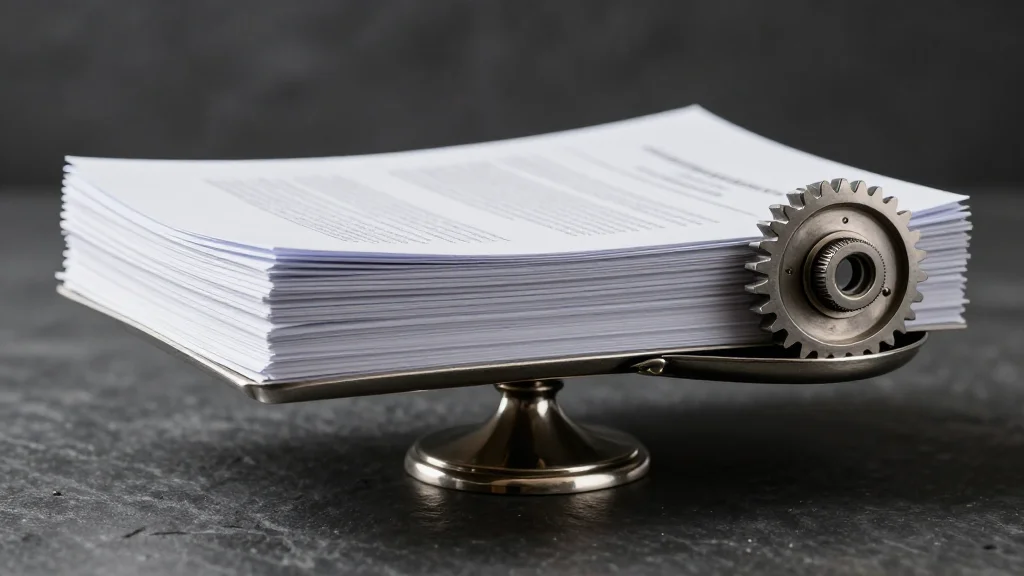
The article argues that well‑crafted contract templates are a strategic business tool, not merely legal paperwork. By codifying risk preferences and commercial intent once, templates streamline negotiations, reduce legal review cycles, and prevent ad‑hoc risk decisions. Organizations that rely on...

Top 3 Indemnification Drafting Lessons From a General Counsel
General counsel outlines three critical indemnification drafting lessons. First, indemnity must be tied to specific contractual breaches rather than act as blanket insurance. Second, it should be limited to third‑party claims and drafted in sync with the limitation of liability...

Anatomy of a Data Security Addendum
The article dissects Data Security Addenda (DSAs), highlighting how most vendor templates lack the structural completeness needed for real breach scenarios. It stresses that precise definitions of Customer Data and Security Incident are foundational, influencing every downstream obligation. The piece...

When ‘Market’ Isn’t Market: The New Reality of AI Contract Negotiations
The article argues that the traditional notion of market language in technology contracts no longer applies to AI agreements, where terms are still evolving. Because regulatory, insurance, and liability frameworks remain unsettled, parties craft varied clauses focused on transparency, data...