
Recent Posts
News•Feb 11, 2026
When the Recruiter Stops Believing the Culture (and Candidates Can Tell)
The article defines "cultural drift" as the gap between a company’s proclaimed values and the behaviors that actually emerge, often surfacing after growth, re‑orgs, or leadership changes. Recruiters, as the first human touchpoint for candidates, notice this drift early, sensing when polished messaging no longer matches reality. The piece highlights that recruiter drift can stem from genuine company shifts or from recruiter burnout, leading to vague, defensive communication that erodes trust. It offers practical remedies—culture receipts, panel alignment, workload balance, and honest language frameworks—to restore authenticity and protect the employer brand.
By ERE

News•Jan 28, 2026
What Happens to AI Hiring When the Uniform Guidelines Disappear?
The Uniform Guidelines on Employee Selection Procedures, a 50‑year standard for validating hiring tools, face possible rescission, creating uncertainty for AI‑driven recruitment. In January 2026, Eightfold AI was hit with a class‑action lawsuit alleging it compiles consumer‑report‑like dossiers without notice,...
By ERE
News•Jan 23, 2026
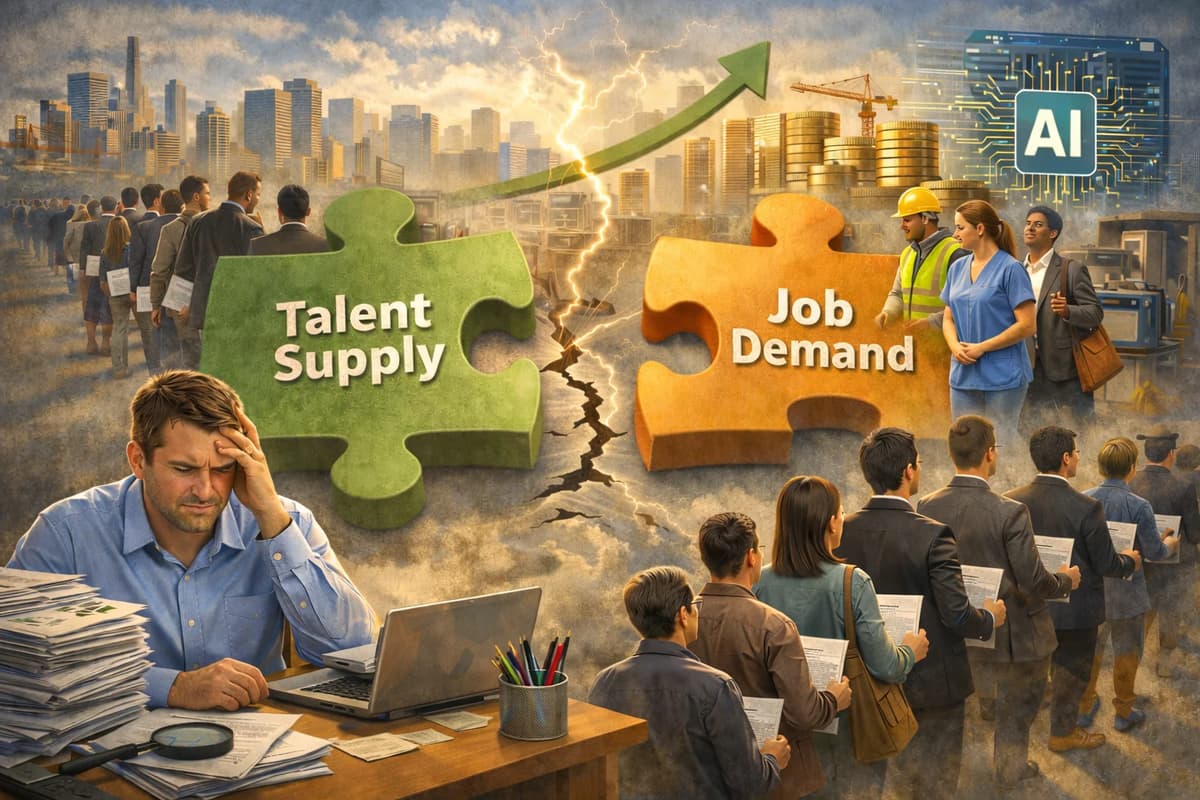
The Next Expansion Won’t Fix Hiring
Economic forecasts for 2026 show stronger growth, lower rates and rising AI investment, yet recruiters face a persistent talent shortage. Demand‑driven expansion is creating more job requisitions, but labor supply remains constrained by limited immigration, an aging workforce, and sector‑specific...
By ERE