European Central Bank
Publication
0 followers
Euro-area monetary briefings.
Recent Posts
Video•Feb 5, 2026
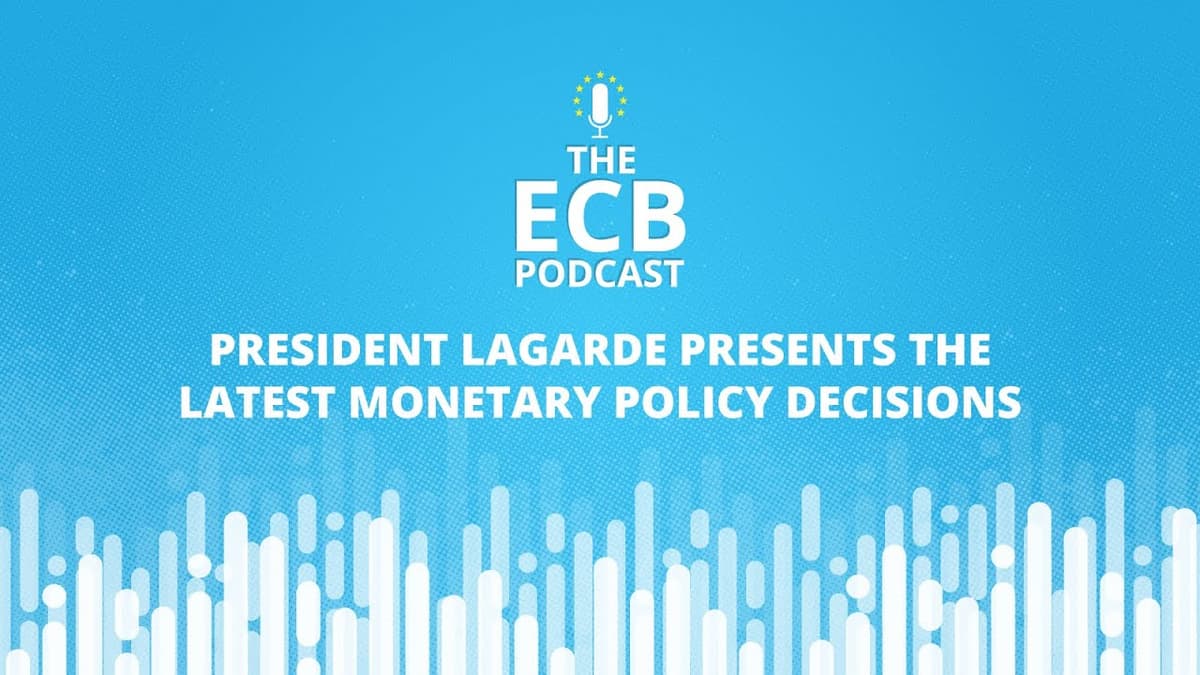
President Lagarde Presents the Latest Monetary Policy Decisions – 5 February 2026
President Christine Lagarde’s February 5 press conference confirmed that the European Central Bank kept its three key policy rates on hold, emphasizing a data‑dependent stance as inflation eases toward the 2% medium‑term target. The meeting also marked Bulgaria’s accession to the euro area, granting its central bank governor voting rights on the Governing Council. The ECB highlighted a modest 0.3% euro‑area growth in Q4 2025, led by services, especially information and communication, while manufacturing remained resilient despite global trade headwinds. Unemployment slipped to 6.2% and household consumption is expected to benefit from rising labor incomes and lower savings rates. Public spending on defence and infrastructure, together with firms’ digital investment plans, are projected to bolster domestic demand. Lagarde stressed that the bank will not pre‑commit to any rate path, reiterating a “data‑dependent and meeting‑by‑meeting” approach. She called for deeper single‑market integration, accelerated completion of the savings‑and‑investments and banking unions, and rapid adoption of the digital euro to strengthen monetary‑policy transmission. The decision to pause rate cuts signals confidence that price stability is returning, yet the ECB warned that geopolitical tensions, trade policy uncertainty and a stronger euro could reignite inflationary pressures. Markets will watch upcoming data closely, as any shift in inflation dynamics could prompt a policy pivot, affecting borrowing costs across the euro area.
By European Central Bank
Video•Feb 5, 2026
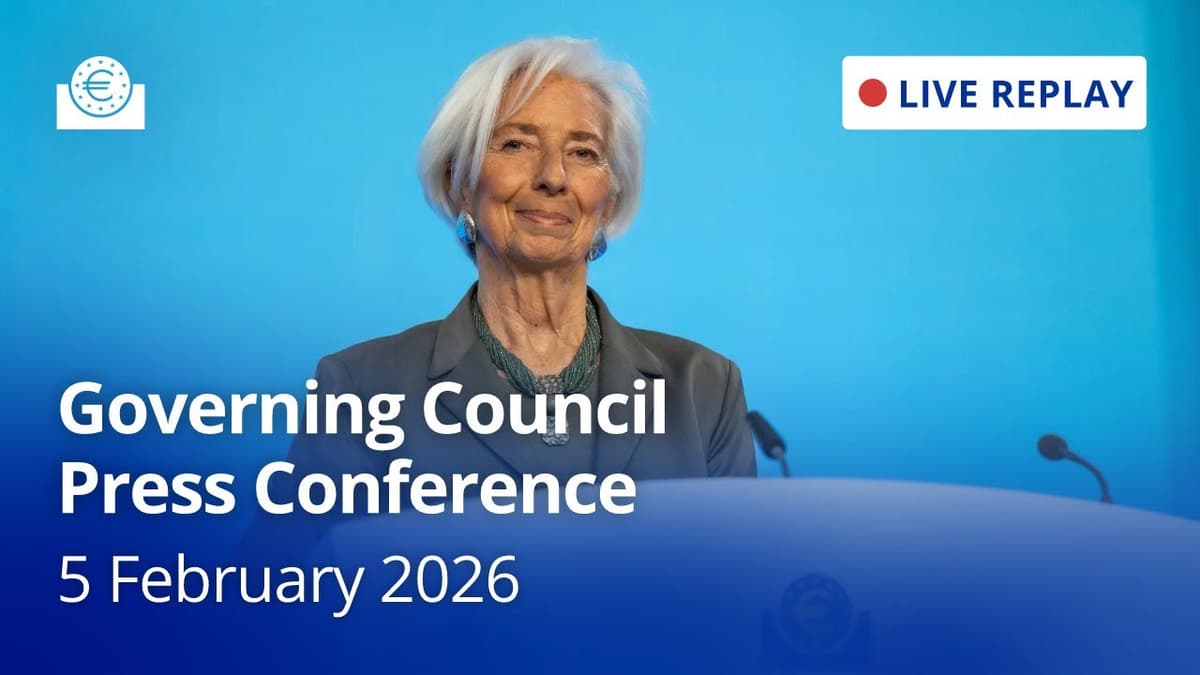
ECB Governing Council Press Conference - 5 February 2026
The European Central Bank’s Governing Council met on 5 February 2026 and left its three policy rates unchanged, underscoring a data‑dependent, meeting‑by‑meeting approach. The press conference also marked Bulgaria’s formal entry into the euro area on 1 January, bringing the bloc’s membership to...
By European Central Bank