International Institute for Nanotechnology
YouTube channel for Northwestern University’s International Institute for Nanotechnology (IIN). It features lectures, panel discussions, and updates on cutting-edge nanotech research and innovations, showcasing work by top nanoscientists and the institute’s role in advancing nanotechnology.
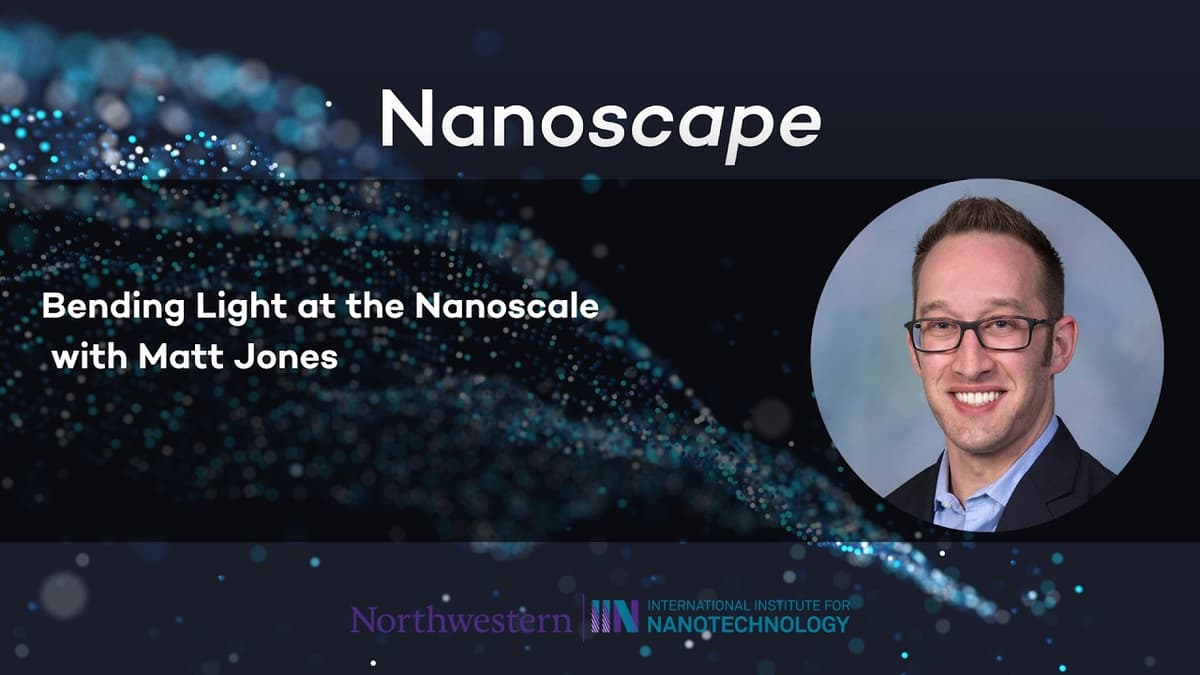
Bending Light at the Nanoscale with Matt Jones
The Nanoccape podcast features Rice University chemist Matt Jones discussing how nanoscale engineering lets scientists bend, focus, and manipulate light far beyond conventional optics. Drawing inspiration from Star Wars, Jones explains that while today’s lightsabers remain fiction, the underlying physics is becoming tangible through precise control of metal and semiconductor nanoparticles. Jones emphasizes that much of nanomaterial synthesis still follows empirical “recipes” without a deep mechanistic understanding. His lab now probes the atomic‑scale dynamics of particle formation and self‑assembly, aiming to replace trial‑and‑error with predictive design. This approach underpins the creation of metamaterials—structures whose optical response is dictated by nanoscale geometry rather than bulk composition. A striking example is the spontaneous chiral ordering of gold nanocrystals, which yields a negative index of refraction, a prerequisite for invisibility‑cloak concepts. Jones also highlights DNA‑functionalized particles that convert light into heat to release therapeutic agents, illustrating a gentle, controllable drug‑delivery strategy. He envisions meta‑lenses that overcome the diffraction limit, enabling optical imaging of sub‑200 nm cellular features without electron‑microscope damage. If these mechanisms mature, industries from medical diagnostics to defense could see disruptive products: super‑resolution microscopes, invisible‑cloaking paints, and smart photothermal therapies. The shift from recipe‑based nanofabrication to mechanistic control promises faster innovation cycles and scalable manufacturing of next‑generation photonic devices.

Soft Robotics Inspired by Nature | Building Artificial Muscles that Move and Sense with Ryan Truby
The Nanocape episode spotlights Ryan Truby’s work at Northwestern University, where he re‑imagines robots from the inside out by replacing stiff, precision‑driven mechanisms with bio‑inspired soft materials and artificial muscles. Truby argues that the next wave of robotics must...

Can Nanoscience Build Better Clothes? With Cécile Chazot
Nanoscience is poised to transform clothing by re‑engineering polymers at the molecular level, a theme explored in a Nanoscape interview with Northwestern professor Cécile Chazot. Chazot explains that failure in plastics and textiles begins when molecular chains slide past each...

The RNA Multiverse with Julius Lucks
The Nanoccape episode spotlights Professor Julius Lucks, a chemical‑engineer turned synthetic biologist, who explores RNA’s “multiverse” – its ability to fold, wiggle, and act as a molecular computer. Leveraging nanotechnology principles, Lucks and his team engineered RNA sensors that emit...
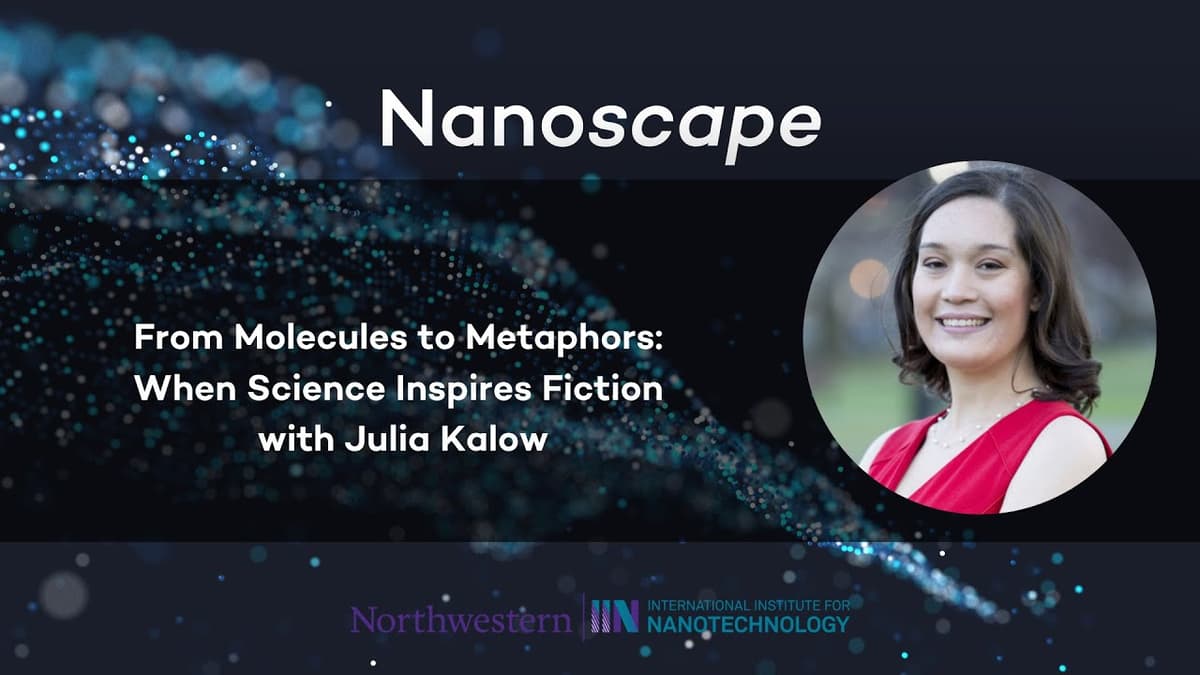
From Molecules to Metaphors: When Science Inspires Fiction with Julia Kalow
The Nanocape podcast featured Northwestern chemist and creative‑writing graduate Julia Kalow, who discussed how storytelling and nanoscience intersect and how her dual background shapes her research. Kalow explained that writing is a form of thinking that clarifies grant proposals and drives...