

Why "Ethical" Leaders Still Create Unethical Cultures
The video examines why leaders who follow rules can still foster unethical workplaces, arguing that the way they exert influence—through dominance or prestige—shapes their team's moral compass. Across seven studies, including field surveys, time‑lag analyses, and lab experiments, researchers found that dominance‑oriented leaders, even with spotless ethical records, trigger perceptions of low moral character. In contrast, prestige‑based leaders, who lead by expertise and respect, do not generate the same ethical erosion. The authors explain the mechanism as trait inference: employees observe intimidation or control and automatically extrapolate broader unethical traits, creating a narrative that “if the boss can act that way, cutting corners is permissible.” This cascade leads to norm‑violating behavior such as cheating for monetary gain. The implication for businesses is clear: during rapid change or crises, the temptation to adopt a dominant, command‑and‑control style can silently undermine ethical foundations. Leaders should prioritize prestige‑based influence to preserve integrity and sustain long‑term performance.

Why We Are Who We Are
The London Business School podcast explores Nigel Nicholson’s new book *Unique You*, which argues that individuality—what he calls "unique individuality"—has been systematically overlooked in psychology, business, and culture. Nicholson outlines four foundational laws: every person is singular, we do not...

Are We Ready for a World Shaped by AI?
London Business School hosted a Think Ahead forum where Professor Nicos Savva and industry leaders examined the accelerating pace toward artificial general intelligence. The panel outlined how organisations must create transparent, accountable AI governance frameworks and treat alignment as a...

Why Delaying Student Loan Payments Benefits Everyone
The London Business School podcast explores how the timing of student‑loan repayments shapes graduates’ financial trajectories. Professor Francisco Gomez explains that in the UK the surge in debt stems mainly from a growing cohort of borrowers, while in the US...

Learn the Invaluable with Executive Education | London Business School
London Business School’s Executive Education series positions itself as a catalyst for senior leaders seeking to translate vision into measurable results. The program promises an “invaluable” learning experience that blends classroom theory with the practical realities of today’s fast‑moving markets. Curriculum...

The Platform Dilemma: Growth Vs. Profitability
The video examines the fundamental trade‑off every platform chief executive faces—pursuing rapid user growth or safeguarding profit margins. The dilemma intensifies when a platform’s success depends on a few powerful partners such as hospitals, hotels or top content creators, whose...

In Conversation with Coca-Cola CEO James Quincey at London Business School
In a London Business School session, Coca‑Cola chief executive James Quincey discussed how the company is reinventing an iconic brand while confronting sustainability and a rapidly shifting consumer landscape. He outlined the dual challenge of protecting the timeless elements of...

Can Your Business Thrive in Today’s Landscape?
The Think Ahead podcast episode tackles how leaders can blend organizational agility with enduring strategic vision amid today’s chaotic business landscape. Professor Sergey Gurif hosts strategy scholar Jessica Spangin and COO Suzanne Haywood, who argue that rapid geopolitical shifts, AI...

Why Do People Resist Gender Gap Initiatives?
The podcast episode examines why gender‑diversity programs often encounter resistance, even among employees who claim to value equality. Eleanor Flynn, an organizational‑behavior professor at London Business School, argues that the missing piece is not ideology or self‑interest but the lay...

How Influence Really Works in Modern Leadership
The Think Ahead podcast episode examines how influence operates in modern leadership, especially under layered crises such as supply‑chain disruptions, rapid AI change, and climate threats. Professor Nerra Sivanatan presents cross‑national research covering 69 countries and 140,000 respondents, showing that...
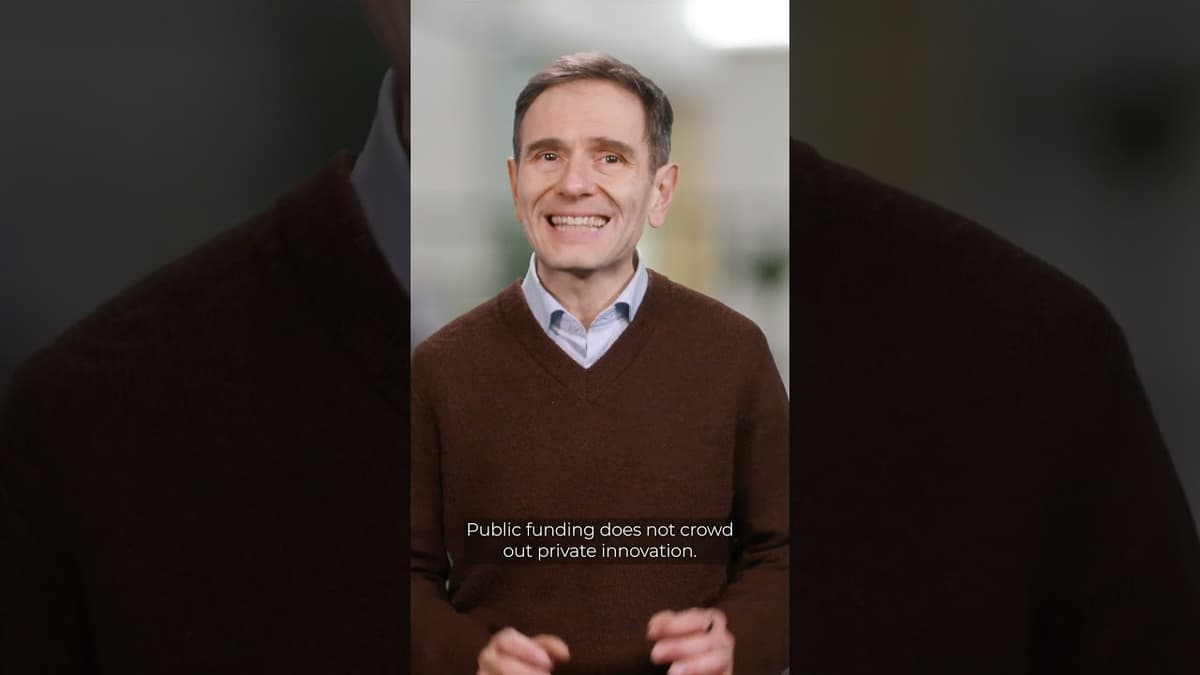
How Public Funding Unlocks Private Innovation
The video argues that a tiny slice of U.S. patents—just 2 % of all filings—drives roughly one‑fifth of medium‑term productivity and GDP growth, and that these patents are publicly funded yet privately owned. Research shows the patents originate from university labs and...

Why Companies Don't Always Reveal Employee Data
The episode examines the landmark court‑ordered release of EEO‑1 reports, a dataset that finally lets researchers peer inside individual firms rather than relying on aggregate industry or regional statistics. Assistant professor Rachel Flem explains how the data, covering ten job...