
Recent Posts
Video•Feb 26, 2026
Market Does as the Market Does | 2/26/26 Cattle Chatter
The latest Cattle Chatter segment, recorded at Commodity Classic in San Antonio, examined why cattle futures have surged to record highs despite a lack of obvious catalysts. Hosts Susan Littlefield and Brad Kimma highlighted the industry’s historically tight supply, ongoing border‑crossing restrictions, and unusually low feed costs as primary drivers of current price strength. The conversation also delved into a series of market‑moving rumors – a false shutdown report at South Dakota’s Demota plant, lingering concerns over a potential JBS labor strike, and uncertainty surrounding Mexican feed‑lot operations. Both analysts agreed that such uncertainty is inherently bearish, even as weather conditions and cheap feed continue to support higher weights and prices. Notable moments included Kimma’s mantra, “the market does what the market does,” and Littlefield’s observation that “uncertainty is bearish, especially for cattle.” They referenced Secretary Rollins’ comments on screwworm treatment protocols and the broader geopolitical question of a possible border reopening, underscoring how policy signals can ripple through commodity pricing. For market participants, the takeaway is two‑fold: while fundamentals suggest a sustained bullish backdrop, short‑term volatility driven by rumors and policy ambiguity may create buying opportunities for speculators. Producers and processors should monitor supply‑chain news closely, as a sudden dip could present a strategic entry point before the market resumes its upward trajectory.
By Market Talk (Jesse Allen)
Video•Feb 23, 2026
Any Tariff Volatility in the Markets on Monday? (AOA Markets 2/23/26)
The Agriculture of America episode on February 23, 2026 featured Barchart senior analyst Darin Newsom discussing potential tariff volatility in grain and oilseed markets, with a focus on soybeans. He highlighted that while current price action appears mixed, lingering trade...
By Market Talk (Jesse Allen)
Video•Feb 22, 2026
U.S. Cotton Acres Expected to Be Down 3% in 2026
The National Cotton Council’s 45th annual early‑season planting intention survey and 2026 economic outlook reveal that U.S. cotton growers plan to plant roughly 9 million acres this spring, a 3.2% decline from last year and the lowest level since 2015. The...
By Market Talk (Jesse Allen)

Video•Feb 22, 2026
Meat Continues to Have a Moment (January Meat Demand Monitor)
The January 2026 Meat Demand Monitor (MDM) was the focus of the program, featuring Kansas State University’s Glenn Tonsor. The discussion highlighted the latest data on beef, pork and chicken consumption, contrasting month‑over‑month seasonality with year‑over‑year trends, and underscored the continued...
By Market Talk (Jesse Allen)
Video•Feb 22, 2026
A February Update From the Iowa Farm Bureau
On February 12, 2026, Iowa Farm Bureau President Brent Johnson appeared on Agriculture of America to discuss the organization’s policy priorities and recent developments affecting Iowa’s agricultural sector. Johnson highlighted the bureau’s stance on upcoming farm‑bill negotiations, trade tensions, and...
By Market Talk (Jesse Allen)
Video•Feb 22, 2026
Farmers to Plant 6% MORE Soybeans in 2026?
CoBank’s Lead Economist for Grains and Oilseeds, Tanner Ehmke, disclosed that U.S. farmers are projected to plant nearly 6% more soybeans in the 2026 season compared with 2025. The forecast stems from recent price trends, favorable planting conditions, and strong...
By Market Talk (Jesse Allen)
Video•Feb 20, 2026
One on One With USDA's Luke Lindberg
At the USDA Ag Outlook Forum, Undersecretary for Trade and Foreign Agricultural Affairs Luke Lindberg highlighted the event's renewed focus on international trade. He provided updates on several key trade agreements, emphasizing progress toward a prospective U.S.-India agricultural deal. Lindberg...
By Market Talk (Jesse Allen)
Video•Feb 19, 2026
Wheat and Crude Oil Continue Rally on Thursday
The program highlighted a fresh rally in wheat futures alongside a jump in crude oil, while soybeans showed modest gains and corn stayed range‑bound. Analysts attributed wheat’s upside to three “prongs”: unusually dry conditions across the Southwest, lingering Black Sea shipping...
By Market Talk (Jesse Allen)
Video•Feb 19, 2026
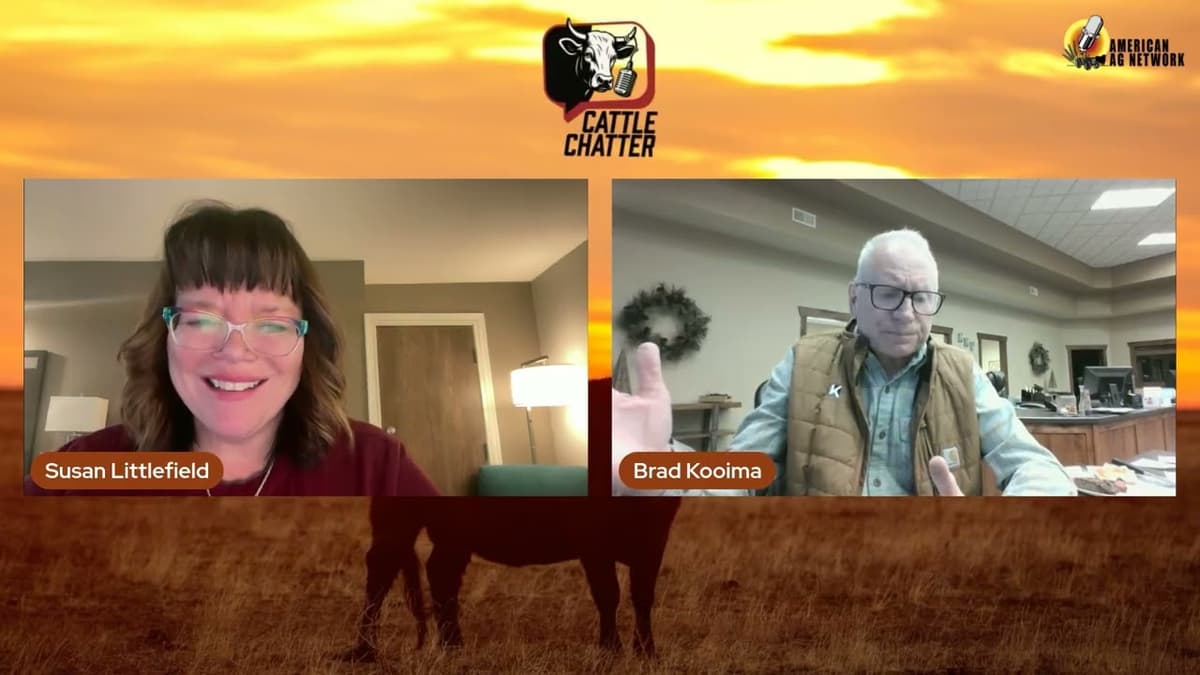
Cash Still Wears the Crown 2 19 26 Cattle Chatter
The Cattle Chatter episode from the NCC Classic in Carney, Nebraska focused on the continued dominance of cash cattle prices while flagging several near‑term risks, including a pending labor vote at JBS’s Greeley plant, the impact of a closed U.S.–Mexico...
By Market Talk (Jesse Allen)
Video•Feb 17, 2026
Mixed Markets to Start the Week (AOA Markets 2/17/26)
U.S. agricultural markets opened mixed after the three‑day weekend, with grain futures showing modest gains while livestock contracts fell. Senior Barchart analyst Darin Newsom highlighted pressure on corn from a larger June‑July crop outlook and support for soybeans amid tightening...
By Market Talk (Jesse Allen)
Video•Feb 13, 2026
What Did We See in the Markets Ahead of the Holiday Weekend?
The program opened with a quick market scan before the three‑day President’s Day weekend, noting a mixed trading day: livestock showed modest movement, while grains and oilseeds were largely flat. Host Tommy Graafi and co‑host discussed how the quieter session...
By Market Talk (Jesse Allen)