
Can the ACL Actually Heal Without Surgery?
The Ask Mike Reinold podcast examined the cross‑bracing protocol, a non‑operative approach that immobilizes the knee in 90 degrees flexion for about four weeks to allow an ACL tear to heal. Recent Australian studies report roughly a 30 percent success rate, while a 2026 Clinical Journal of Sports Medicine paper found a 70 percent re‑tear rate when the brace is applied later than the first week. Clinicians remain skeptical, noting the protocol’s suitability mainly for proximal avulsion tears and highlighting risks such as blood clots, stiffness, and uncertain long‑term stability. The discussion underscores the need for careful patient selection versus traditional reconstruction.
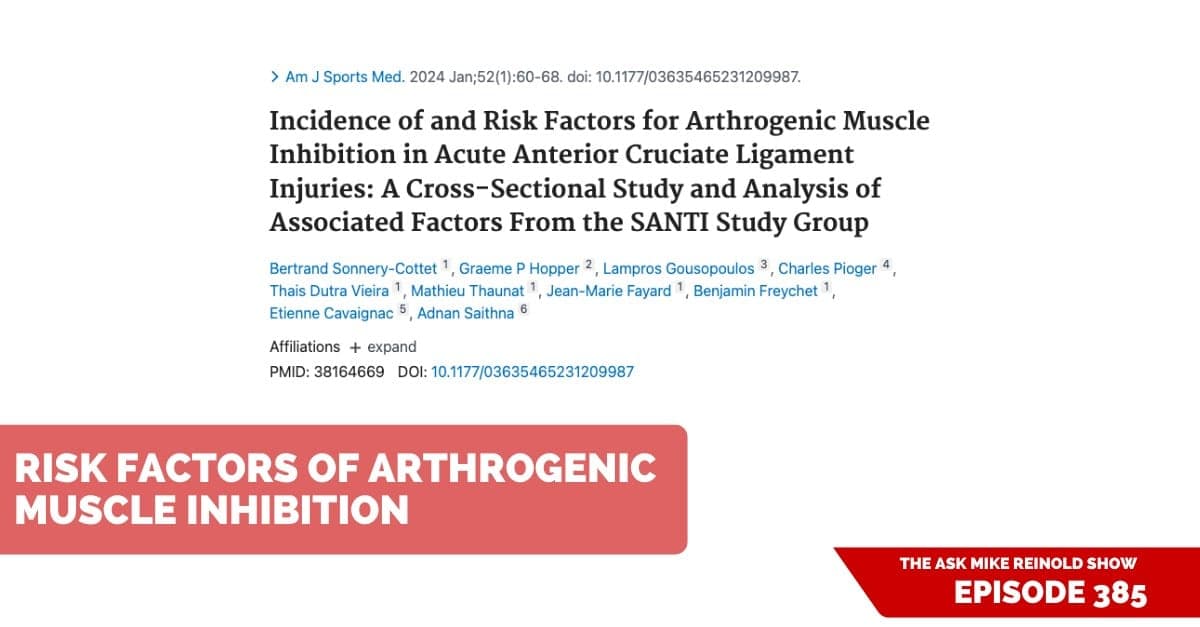
Risk Factors of Arthrogenic Muscle Inhibition
The 2024 American Journal of Sports Medicine study examined arthrogenic muscle inhibition (AMI) in 300 patients with acute anterior cruciate ligament (ACL) injuries. Over half (56%) displayed some degree of AMI, though none reached the irreversible grade 3. Simple hamstring‑fatiguing drills...
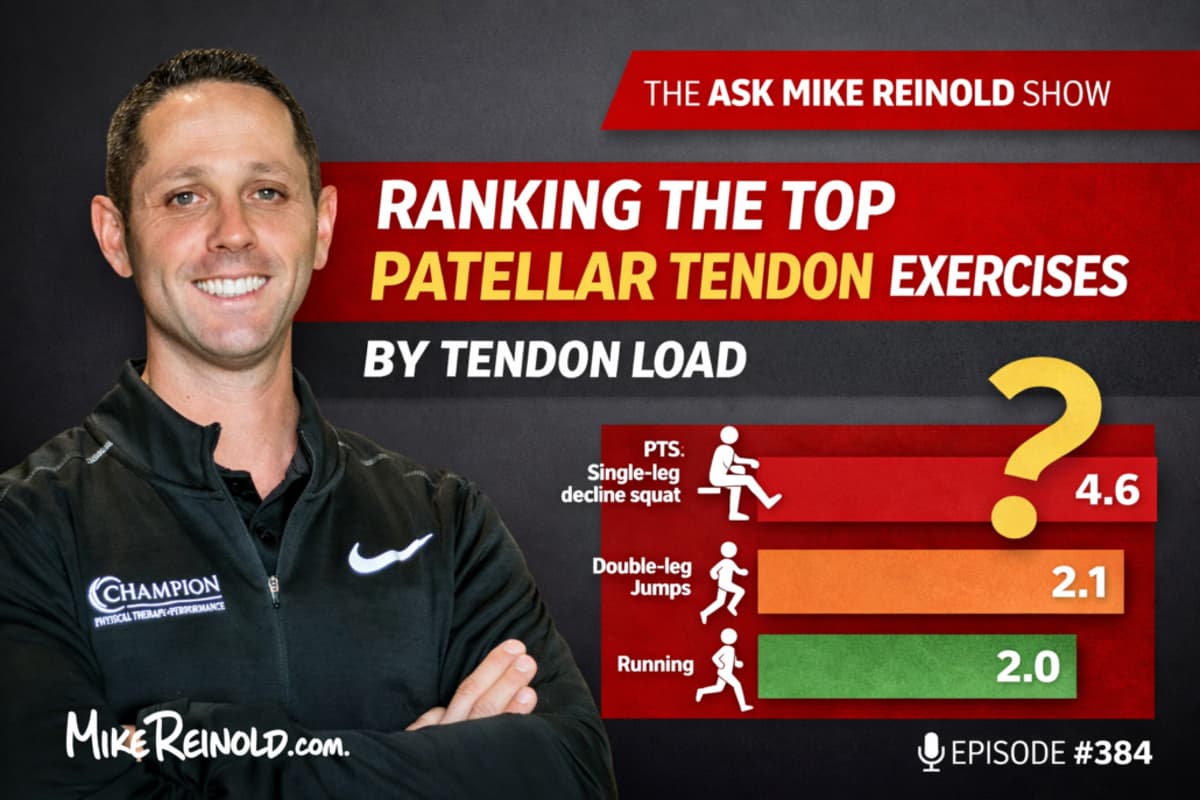
Ranking the Top Patellar Tendon Exercises by Tendon Load
The 2025 Medicine & Science in Sports & Exercise study quantified patellar tendon load across 35 common rehabilitation exercises, creating a weighted loading index that blends peak force, impulse, and loading rate. Researchers classified exercises into low, moderate, and high...

Using ChatGPT and AI in Physical Therapy
In episode 383 of #AskMikeReinold, physical therapists discuss how AI—especially ChatGPT, Google Gemini, and niche tools like OpenEvidence—is being woven into daily practice. They highlight OpenEvidence’s ability to surface PubMed‑linked research with minimal hallucinations, while ChatGPT and Gemini assist with treatment...
Should Adults Lift for Less than 5 Reps Per Set?
In episode 382 of #AskMikeReinold, the panel debates Mike Boyle’s claim that adult clients should not perform sets with fewer than five repetitions. Coaches Diwesh Poudyal, Dave Tilley, Dan Pope, and Kevin Coughlin largely agree that low‑rep, maximal loading is unnecessary...