
Recent Posts
News•Feb 26, 2026
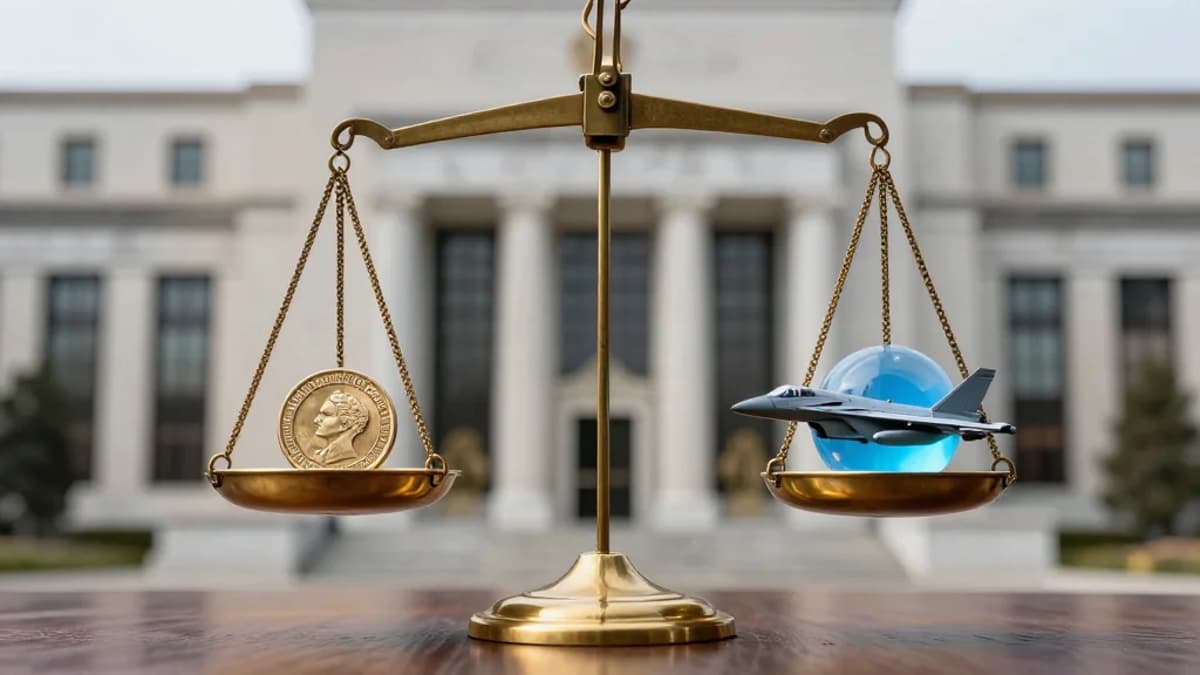
From Fed Failures to Inflation and Stablecoins: America’s Trust Is Cracking
The new book *Avoid Fiscal & Economic Disaster with Ethics, Economics, and Excellence* by former Fed official Bill Bergman and retired Air Force Lt. Col. Larry Feltes warns that America’s greatest vulnerability is a collapsing trust in its institutions. They link Fed losses, persistent inflation, soaring military budgets, and the rise of stablecoins to a broader erosion of confidence in government and markets. The authors argue that regulatory capture and fiscal mismanagement amplify the crisis, and they propose ethics‑focused reforms, a revamped budget process, and stronger fiscal oversight. Their interview underscores an imminent risk of another financial shock if trust is not restored.
By Naked Capitalism

News•Feb 25, 2026
How Africa Keeps Losing Despite China V. West Race for Minerals
The United States hosted its first Critical Minerals Ministerial in February 2026, unveiling a preferential trading bloc, price‑floor mechanisms and a $12 billion strategic stockpile to curb China’s dominance. At the same time, a US‑backed consortium struck a $9 billion deal with...
By Naked Capitalism

News•Feb 23, 2026
India Exchanges BRICS Ties for Lead Role in the American AI Cage
India is rapidly pivoting from its BRICS stance toward deeper integration with the West, highlighted by a landmark EU free‑trade agreement and its entry into the US‑led Pax Silica AI alliance. The India‑Middle‑East‑Europe Corridor (IMEC) is being repurposed from a logistics...
By Naked Capitalism

News•Feb 23, 2026
Bibi Put Israel’s Partners in an Awkward Position With His Description of the “Hexagon”
Israeli Prime Minister Benjamin Netanyahu announced a new “hexagon” of alliances that would link Israel with India, Arab states, African nations, Greece, Cyprus and unspecified Asian partners. He framed the network as a counter‑balance to an Iranian‑led “Resistance Axis” and...
By Naked Capitalism

News•Feb 21, 2026
Michael Hudson: Destiny of Civilization – Financialization & Collapse
Michael Hudson argues that the shift from industrial capitalism to finance‑driven rentier capitalism has turned economic growth into rent extraction, eroding productivity and widening inequality. He traces the historical battle against landlord rents in 19th‑century Britain to today’s debt‑financed housing,...
By Naked Capitalism

News•Feb 19, 2026
Russia’s BRICS Sherpa Debunked Speculation About It Turning Into A Security Bloc
Russia’s deputy foreign minister and BRICS Sherpa Sergey Ryabkov publicly refuted claims that the bloc is evolving into a security or collective‑defence organization. He clarified that recent naval exercises off South Africa were conducted by individual member states, not a...
By Naked Capitalism

News•Feb 18, 2026
Will Russia (and Iran) Be Forced to ‘Restore Order’ in the Caucasus? Part 2: The March to Central Asia
The article examines how Azerbaijan’s new rail, gas and power corridor through Armenia is reshaping the Caucasus‑Central Asia nexus, while the United States seeks a 74% stake in the infrastructure for five decades. Moscow and Tehran face pressure to intervene...
By Naked Capitalism

News•Feb 17, 2026
Coffee Break: Armed Madhouse – Requiem for Nuclear Arms Control
With the New START treaty lapsing on Feb. 5, 2026, the United States and Russia lost the last binding caps on their strategic nuclear forces. The article warns that the primary instability stems not from overt arsenal growth but from three...
By Naked Capitalism