
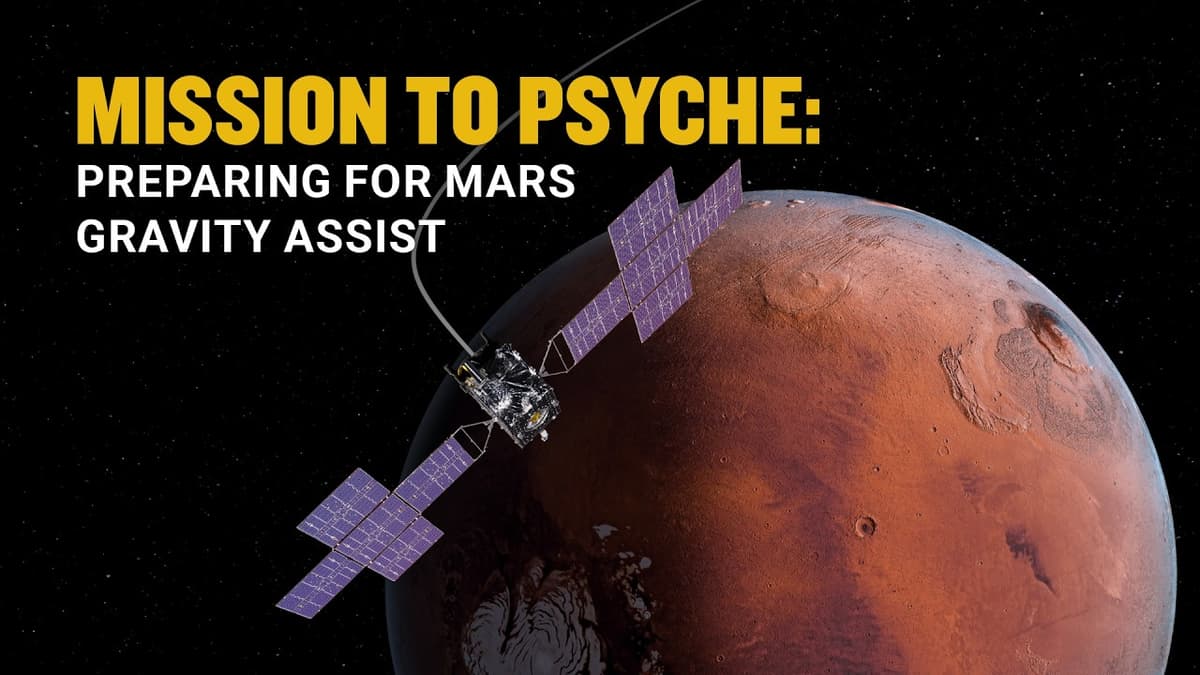
Psyche Spacecraft Prepares for Mars Flyby
NASA’s Psyche spacecraft is set for a close Mars flyby on May 15, 2026, skimming just 3,000 miles above the Red Planet. The maneuver serves as a gravity‑assist, using Mars’s pull to boost velocity and, crucially, to tilt the spacecraft’s orbital plane by roughly three degrees so it can intersect the trajectory of its ultimate target, the metal‑rich asteroid Psyche. Launched from Kennedy Space Center on October 13, 2023, Psyche has been cruising through deep space with all scientific payloads online. The gravity assist will not only increase speed but also align the spacecraft with the asteroid’s orbital plane, a maneuver impossible without Mars’s gravitational boost. During the encounter, the imaging suite will be especially active, capturing timelapse footage of Mars as a thin crescent, creating a short video of the planet’s approach and departure. Mission scientists expressed excitement about the visual data, noting that the high‑phase view offers a rare perspective of Mars’s limb and atmospheric glow. The flyby will also serve as a systems check, confirming that instruments remain fully functional before the long cruise to Psyche, where they will map the asteroid’s geology, composition, magnetic and gravitational fields. Successfully leveraging Mars’s gravity positions Psyche to reach its primary science target—a presumed exposed planetary core—providing unprecedented insight into early solar‑system building blocks and the formation of terrestrial planets like Earth.

What's Up: May 2026 Skywatching Tips From NASA
NASA’s May sky‑watching briefing highlights three standout events: the Eta Aquarid meteor shower, a Moon‑Venus evening conjunction, and a rare Blue Moon at month’s end. The Eta Aquarids, debris from Halley’s Comet, peak May 5‑6 and can produce up to 50 meteors...
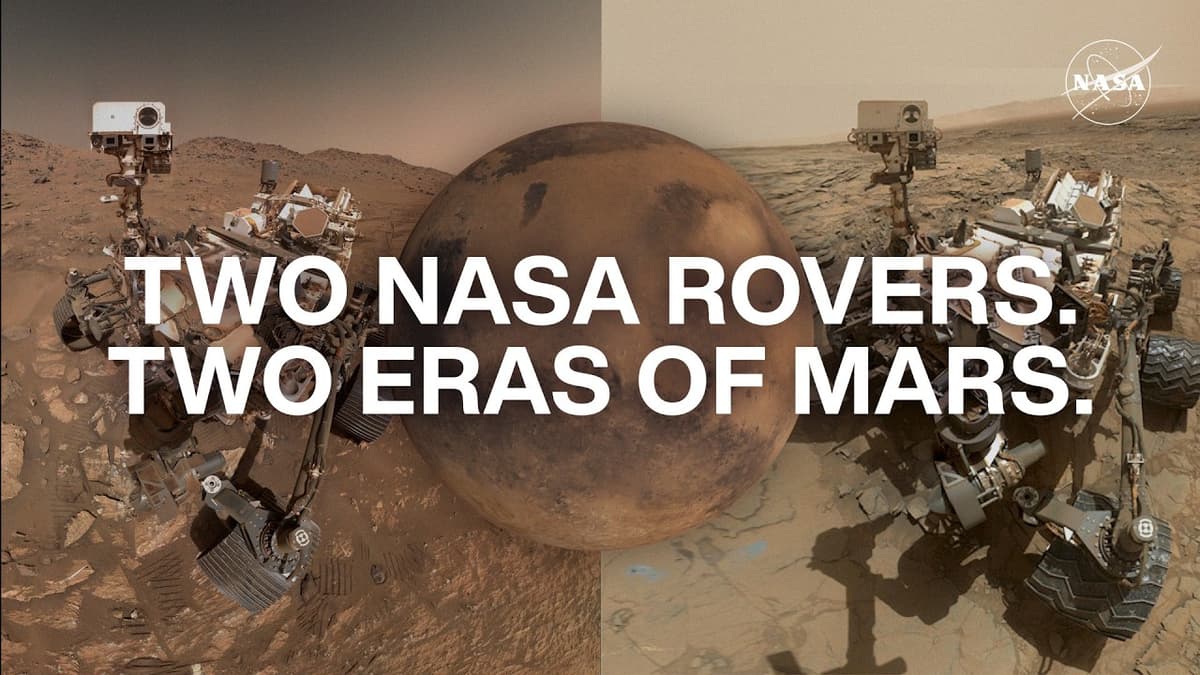
Two Rovers, Billions of Years of Martian History – NASA’s Perseverance and Curiosity Rovers
NASA’s Perseverance and Curiosity rovers are simultaneously probing distinct chapters of Martian history, operating about 2,300 miles apart on the Red Planet. Perseverance, perched on the rim of Jezero Crater, examines rocks that are nearly four billion years old—material formed before...

NASA’s SkyFall Mars Helicopters
The short video titled “NASA’s SkyFall Mars Helicopters” offers a cinematic preview of NASA’s next‑generation rotorcraft designed to fly in the thin Martian atmosphere. Through a blend of music, mechanical whirring, and the iconic NASA logo, the clip sets a...

What's Up: April 2026 Skywatching Tips From NASA
NASA’s Jet Propulsion Laboratory released a concise sky‑watching briefing for April 2026, highlighting three celestial events that will be visible to the naked eye or modest equipment: Mercury’s greatest elongation, the Lyrid meteor shower, and Comet C/2025 R3. On April 3, Mercury will...

How Perseverance Learned to ‘Self-Locate’ on Mars
NASA’s Perseverance rover has gained the ability to determine its exact position on Mars without Earth‑based assistance, thanks to a new system called Mars Global Localization. The rover stitches together panoramic shots into a bird’s‑eye map, then an onboard algorithm rapidly...

What's Up: February 2026 Skywatching Tips From NASA
NASA’s February “What’s Up” briefing highlights three sky‑watching themes: the upcoming Artemis II crewed lunar flyby, the prime visibility of the Orion constellation, and a planetary parade that will light up the evening sky. Artemis II is slated for a February launch window,...