Video•Feb 12, 2026
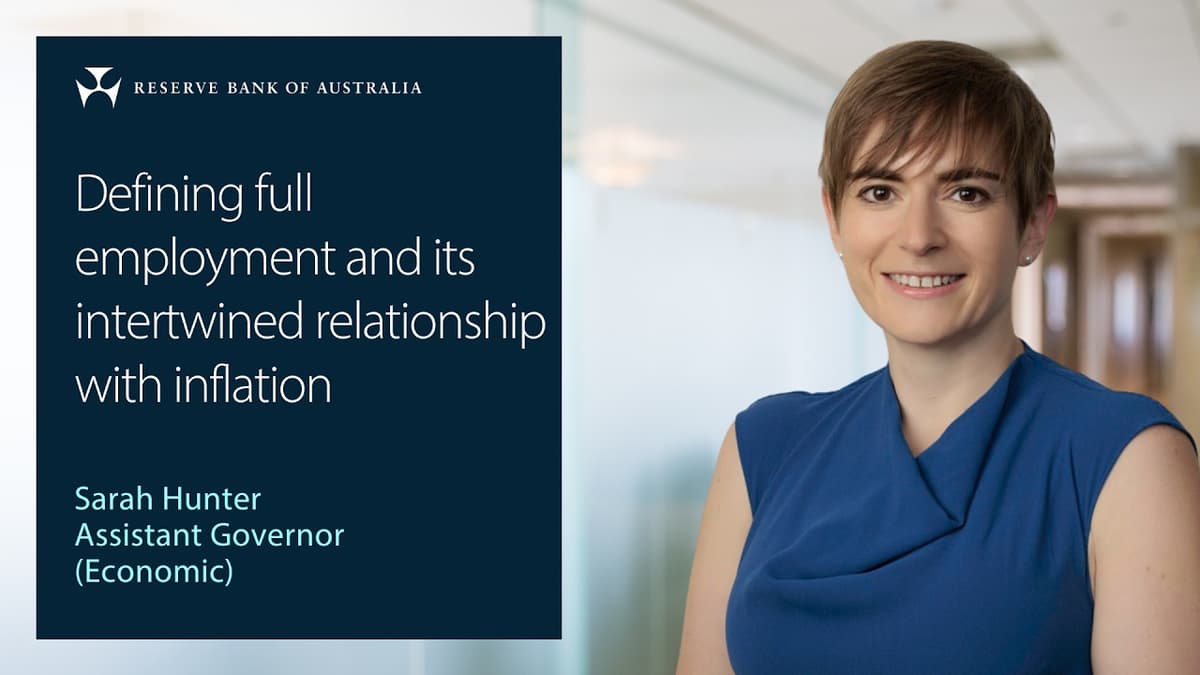
Speech by Sarah Hunter - CEDA, Perth 12 February 2026
Sarah Hunter, the Reserve Bank of Australia’s chief economist, used a Perth forum to explain how the central bank evaluates labour‑market health and its link to inflation. She emphasized that while the post‑COVID easing has softened some pressures, the market is still a bit tight, especially for skilled trades in construction and infrastructure projects.
The RBA has overhauled its analytical toolkit, moving beyond the single unemployment rate to a composite of four statistical methods and a suite of indicators—vacancy rates, job‑finding rates, average hours worked, and firm‑reported hiring constraints. These metrics show declining vacancies, slower growth in employment, and reduced hours, suggesting that the labour market is approaching balance but remains on the tight side.
Hunter highlighted that firms continue to cite labour availability as a constraint, with many sectors reporting difficulty filling positions. She also revisited the NAIRU framework, noting that today’s anchored inflation expectations dampen the feedback loop that once caused accelerating price pressures when unemployment fell below the natural rate.
The implication for policymakers is clear: the RBA must monitor the nuanced indicator set closely, as a persistently tight labour market could keep inflation modestly above the 2.5% target, influencing future monetary‑policy decisions and signalling that premature rate cuts may be unwarranted.
By Reserve Bank of Australia (RBA)