
Science Daily AI
Publication
0 followers
Science Daily's coverage of artificial intelligence research
Recent Posts
News•Feb 10, 2026
AI Reads Brain MRIs in Seconds and Flags Emergencies
University of Michigan researchers unveiled Prima, a vision‑language AI that reads brain MRIs in seconds and flags urgent cases. In a study of over 30,000 scans, Prima achieved 97.5% accuracy across more than 50 neurological diagnoses and could prioritize emergencies such as strokes. The system integrates imaging with patient history, delivering real‑time alerts to the appropriate specialist. Published in Nature Biomedical Engineering, the work suggests a scalable path to faster, more accurate neuro‑radiology.
By Science Daily AI

News•Feb 1, 2026
“Existential Risk” – Why Scientists Are Racing to Define Consciousness
A new review in Frontiers in Science warns that rapid advances in artificial intelligence and neurotechnology are outpacing scientific understanding of consciousness. Researchers argue that defining and detecting consciousness has become an urgent scientific and moral priority, with potential applications...
By Science Daily AI

News•Jan 28, 2026
AI that Talks to Itself Learns Faster and Smarter
Researchers at the Okinawa Institute of Science and Technology demonstrated that AI systems equipped with an internal "self‑talk" module and enhanced working memory learn faster and generalize better across tasks. By training models to engage in quiet internal speech while...
By Science Daily AI
News•Jan 21, 2026
The Human Brain May Work More Like AI than Anyone Expected
A new Nature Communications study finds that the human brain processes spoken language in a stepwise fashion that mirrors the layered architecture of large language models such as GPT‑2 and Llama 2. Using electrocorticography recordings while participants listened to a 30‑minute...
By Science Daily AI

News•Jan 13, 2026
This AI Spots Dangerous Blood Cells Doctors Often Miss
Researchers at Cambridge, UCL and Queen Mary have unveiled CytoDiffusion, a generative‑AI system that scrutinizes blood‑smear images to flag abnormal cells. Trained on more than half a million samples, the model captures subtle morphological variations that often elude human experts....
By Science Daily AI

News•Jan 5, 2026
AI May Not Need Massive Training Data After All
Johns Hopkins researchers demonstrated that AI systems built with brain‑inspired architectures can exhibit human‑like neural activity without any pre‑training. By comparing untrained transformers, fully connected networks, and convolutional neural networks, they found that only the convolutional designs produced activity patterns matching...
By Science Daily AI

News•Dec 22, 2025
This AI Finds Simple Rules Where Humans See only Chaos
Researchers at Duke University unveiled an AI framework that distills complex, high‑dimensional dynamics into simple, linear‑like equations. Inspired by Koopman’s operator theory, the system combines deep learning with physics‑based constraints to isolate a few hidden variables governing behavior. Tested on...
By Science Daily AI
News•Dec 21, 2025
A New Tool Is Revealing the Invisible Networks Inside Cancer
Researchers at the University of Navarra have launched RNACOREX, an open‑source platform that maps miRNA‑mRNA regulatory networks linked to cancer survival. Tested on thirteen tumor types from TCGA, the tool matches the predictive power of sophisticated AI models while delivering...
By Science Daily AI
News•Dec 10, 2025
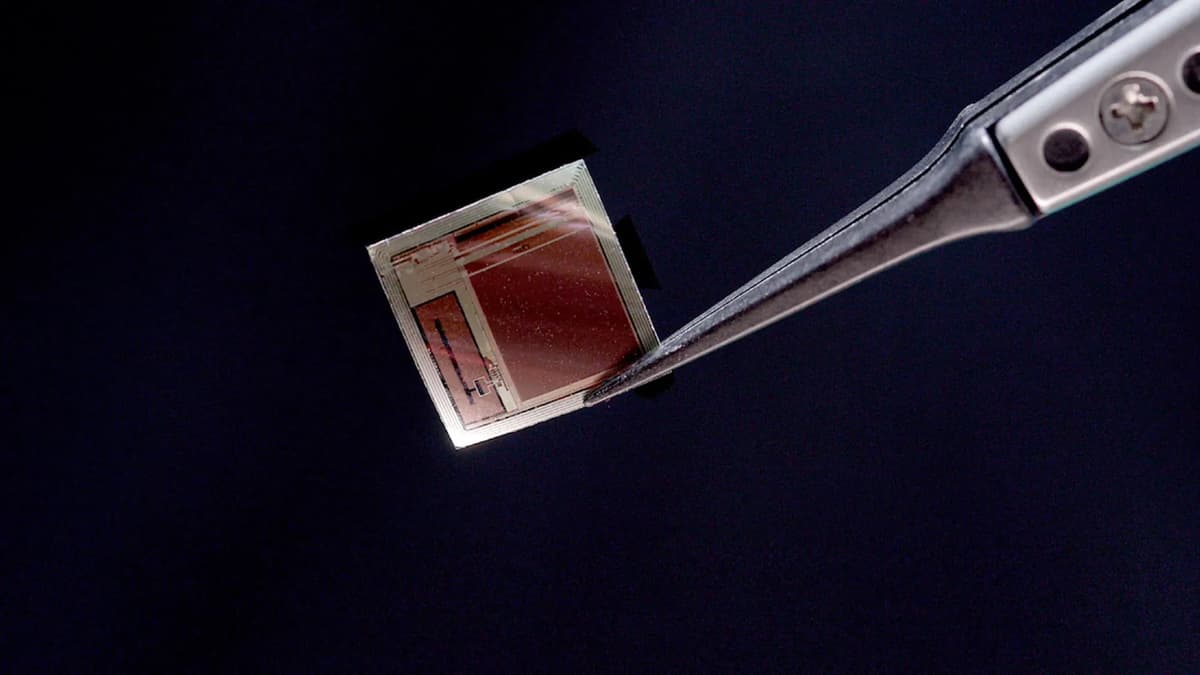
Scientists Reveal a Tiny Brain Chip that Streams Thoughts in Real Time
Researchers from Columbia, Stanford, Penn and NY‑Presbyterian unveiled BISC, a 3 mm³ silicon brain‑computer interface that streams neural data at 100 Mbps. The chip hosts 65,536 electrodes, 1,024 recording and 16,384 stimulation channels, and communicates wirelessly via a wearable relay. Early human...
By Science Daily AI