
Chasing Storms with the Hurricane Hunters (Amelia Earhart Lecture in Aviation History)
The Amelia Earhart Lecture highlighted the U.S. Air Force Reserve’s 53rd Weather Reconnaissance Squadron, the world’s only routine military unit that flies into hurricanes, winter storms and tropical cyclones. Using WC‑130J "Super Hercules" aircraft, the squadron gathers critical meteorological data that cannot be obtained from satellites or ground stations. The panel explained how the crew—pilots, co‑pilots, a weather officer, a meteorologist, a navigator and a dropsonde operator—coordinate to penetrate storms at roughly 10,000 feet, releasing up to twenty dropsondes per mission. These devices descend like reverse weather balloons, measuring temperature, humidity, pressure, wind speed and direction from altitude to the ocean surface, creating a vertical profile of the storm’s inner core. Data collected in real time is transmitted to the National Hurricane Center, where it is assimilated into forecast models and directly informs forecasters, emergency managers and the public. The speakers emphasized that satellite imagery cannot capture the low‑level wind fields or pressure gradients essential for accurate predictions, making the airborne observations indispensable. The discussion underscored the squadron’s unique role: volunteers from the Reserve choose this demanding assignment, driven by a blend of scientific curiosity and public‑service commitment. Their work improves evacuation orders, saves lives, and advances meteorological research, reinforcing the strategic value of the Hurricane Hunters to national safety and climate science.
Whirly-Girl #13
The Smithsonian’s Air Space episode spotlights the Whirly Girls, an organization of women helicopter pilots founded in 1955 by Jean Ross Howard. Howard, a former fixed‑wing pilot and wartime aviation enthusiast, gathered the thirteen licensed women pilots of her era...
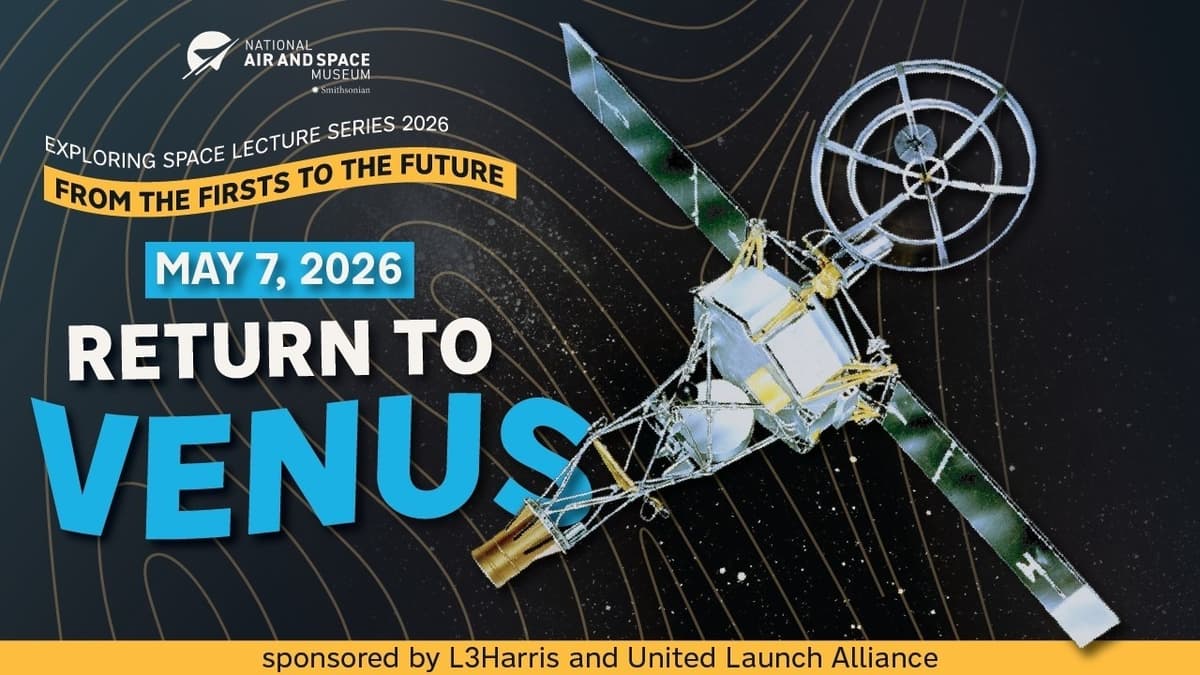
Return to Venus (Exploring Space Lecture)
The National Air and Space Museum’s Exploring Space Lecture celebrated its 50‑year anniversary by revisiting the historic Mariner 2 flyby of Venus, the first successful interplanetary mission. Curator Matt Schindel hosted planetary scientists Sarah Seeger of MIT and Bruce Campbell of...

ASL STREAM: Return to Venus (Exploring Space Lecture)
The National Air and Space Museum’s Exploring Space Lecture focused on Venus, commemorating Mariner 2’s 1962 flyby and celebrating the museum’s 50‑year anniversary. Curator Matt Schindel introduced MIT physicist Sarah Seeger and museum scientist Bruce Campbell to discuss past discoveries and...
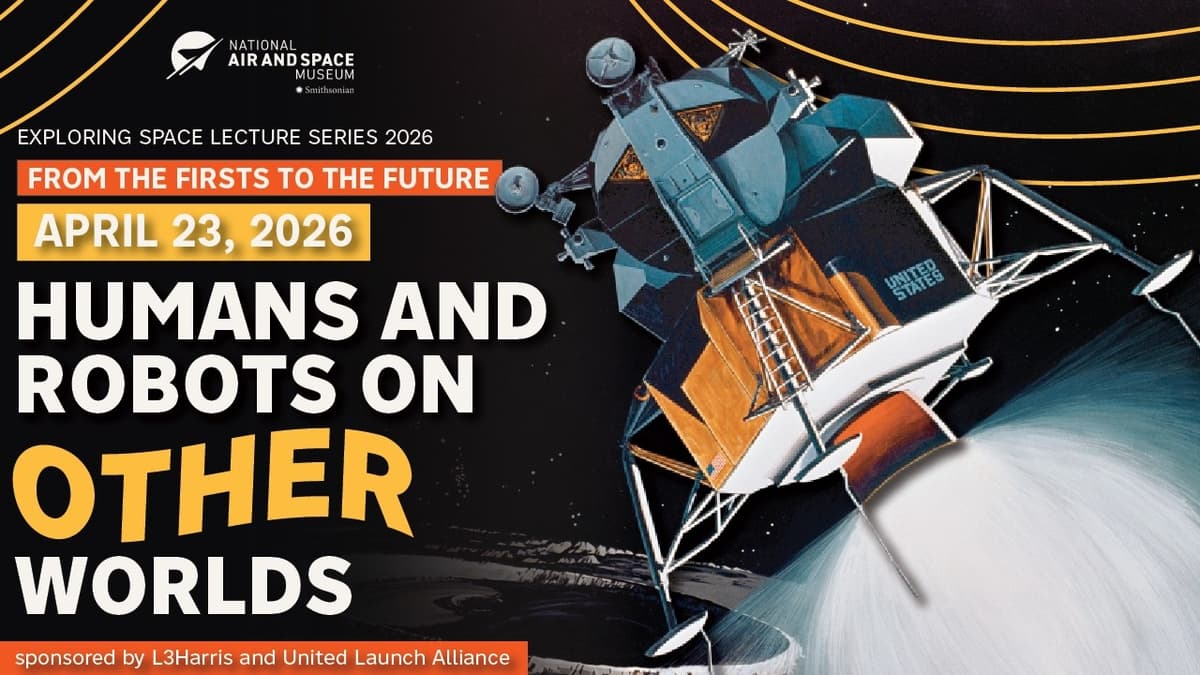
Humans and Robots on Other Worlds (Exploring Space Lecture)
The lecture series explores how humans and robots collaborate to explore the Moon and other planetary bodies, using the 1960s Lunar Orbiter images and Apollo landings as historic milestones. Featuring shuttle astronaut Robert Curbeam, cybernetics engineer Håvard Grip, and space historian...
How a Camera Works
The video explains how cameras work by tracing the path of light from a subject through lenses to a recording medium, drawing a direct parallel to the optics of telescopes. It outlines the evolution from film‑based cameras, where light exposure...

The Artemis II Splashdown Will Look a Bit Like How the Frogmen Recovered Crews During Apollo
The video explains that NASA’s Artemis II mission will conclude with a splashdown that closely resembles the recovery of Apollo crews, despite the Orion capsule being larger and designed for four astronauts. Recovery will occur nearer to the continental United States, likely...

Is There Anyone Out There? (Exploring Space Lecture)
The Smithsonian’s Air and Space Museum opened its 2026 "Exploring Space" lecture series by revisiting humanity’s first interstellar postcards – the Pioneer plaques and the Voyager Golden Record – and reflecting on the museum’s 50‑year legacy of preserving aerospace artifacts....

2026 Michael Collins Trophy for Current Achievement: The Boeing Starliner Flight Test Crew
The Boeing Starliner crew flight test marked the spacecraft’s inaugural crewed launch, aimed at validating training protocols and vehicle performance ahead of operational missions. After a flawless liftoff on an Atlas 5, the crew encountered the loss of two thrusters, prompting a...

2026 Michael Collins Trophy for Lifetime Achievement: Dr. Farouk El-Baz
Dr. Farouk El‑Baz received the 2026 Michael Collins Trophy for Lifetime Achievement, honoring a career that fused lunar geology, remote sensing, and humanitarian water projects. His early fascination with NASA’s Bellcomm led him to catalog every Apollo lunar photograph, pinpointing...

From Janitor’s Kid to NASA Leader
Rosa Avalos‑Warren, born in Lima, Peru, rose from a janitor’s family to become NASA’s Near Space Network launch‑vehicles and robotics director. Her story underscores how curiosity, relentless self‑advocacy and strategic use of scholarships can bridge socioeconomic gaps to elite aerospace...

What's Wrong With This Rocket?
The video examines Robert Goddard’s 1928 “Hoopskirt Rocket,” one of the first liquid‑fuel rockets preserved at the National Air and Space Museum. Its peculiar, inverted configuration and modest 60‑foot ascent illustrate the experimental nature of early rocketry. The launch achieved a...

What Happened at This Roswell Rocket Site?
The video chronicles Robert Goddard’s early experiments, focusing on the 1928 Hoopskirt Rocket and his subsequent twelve‑year tenure at a remote ranch near Roswell, New Mexico. It ties the modest launch that rose roughly the height of the Hollywood sign...