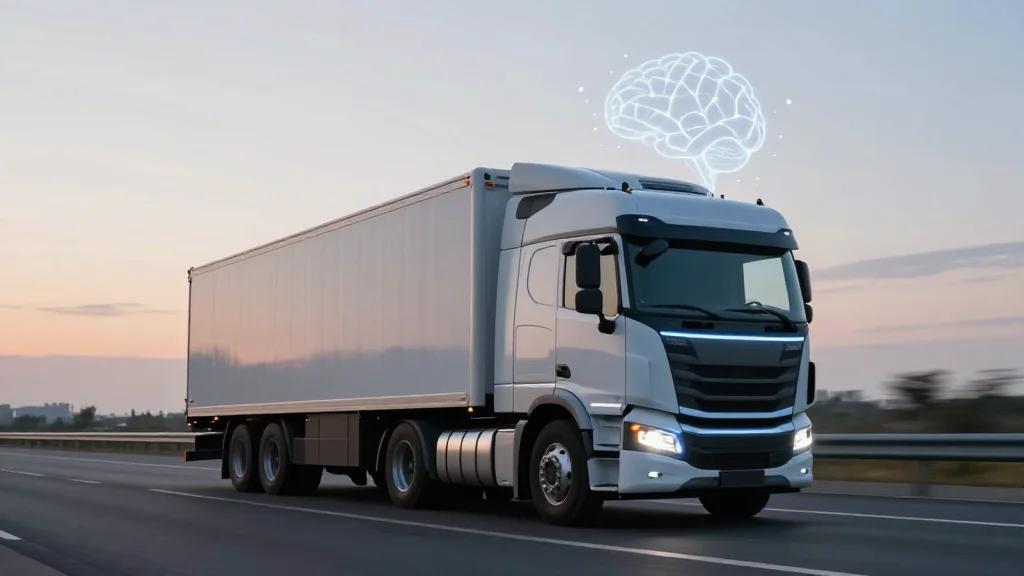
On the Effects of Artificial General Intelligence on Transport
The article explores how Artificial General Intelligence (AGI) could transform transport by eventually automating all modes—from cars and trucks to trains, planes, and ships. In the near term, humanoid robots may act as interim operators, allowing legacy fleets to stay functional while purpose‑built AGI vehicles are developed. The piece also warns that AGI‑driven virtual agents could dramatically cut commuting and business‑travel demand, reshaping freight patterns and urban space. Finally, it highlights systemic risks of centralized AGI control and the need for built‑in redundancy and new city‑planning approaches.

On "Universality" In Spatial Models
The 2012 radiation model was marketed as a universal law for human mobility, but subsequent research has shown its limitations. Studies introduced finite‑size corrections, scale parameters, and alternative attraction measures, revealing systematic errors especially in large cities and at finer...
Investigating Platoon Formation and Retention Using Reduced-Scale Mobile Robots with Controllers Based on Established Car-Following Models
A team of researchers evaluated five classic car‑following models—GHR, Gipps, IDM, PID, and ACC—by implementing them as controllers on reduced‑scale mobile robots (RSMRs). The experiments covered steady‑flow, congested, and stop‑and‑go traffic scenarios, revealing that the IDM‑based controller delivered the optimal...
Transportist: April 2026
Transportist’s April 2026 roundup flags a deepening energy crunch in Australia, where diesel shortages are already curbing grocery deliveries and waste collection, and fuel rationing debates resurface. In the United States, aviation faces staffing gaps at TSA and a LaGuardia...
Estimating Mode Choice in Decentralized Shared Mobility: A Bagging-Enhanced Heterogeneous Ensemble Method
The paper introduces a Bagging‑enhanced Stacking Heterogeneous Ensemble Method (BESHEM) that fuses linear, tree‑based, probabilistic, instance‑based, and neural network models to predict travel mode choice. Applied to User‑organized Pre‑pooled Ride‑hailing (UPR) on suburban Chinese university campuses, BESHEM outperforms twenty individual...
Crowdshipping Participation Among Private Vehicle Users
A 2026 study published in the Journal of Urban Mobility examines what drives private‑vehicle commuters in Mumbai to join crowd‑shipping initiatives. Using an integrated choice and latent variable model, the authors find that longer travel times and higher costs deter...
Network Origin-Demand Estimation Using Percolation
The paper introduces Network Origin‑Demand Estimation (NODE), a percolation‑based method for generating origin‑destination (OD) matrices. NODE expands outward from each origin in order of increasing generalized cost, matching trip productions to destination attractions while depleting destination capacities. When multiple origins...
Access for Appraisal: A Systematic Review of Estimating Transport Benefits via Real-Estate Uplift
The paper by Mann and Levinson (2026) argues that real‑estate value uplift can serve as a robust alternative to travel‑time savings in transport cost‑benefit analysis. A systematic review identified fourteen empirical studies, most of which apply difference‑in‑differences for ex‑post appraisal,...
Seeking Causality in Transport Research
David Levinson’s 2026 perspective highlights a chronic mismatch in transport research: policymakers ask causal questions while most studies rely on associative designs and still use causal language. The paper delineates causal, associational, and descriptive claims, then proposes a compact set...
Spatial Patterns of Access-Density Mismatch Reveal Infrastructure Gaps and Strategic Opportunities for New Housing
Researchers Jantabadi, Ermagun, and Levinson analyze access‑density mismatch across the fifty most populous U.S. metropolitan areas. They find a statistically significant positive correlation between local residential density and both automobile and transit access, with automobile access exerting a stronger effect....
Streetcar and Interurban Deployment in the United States: 1894-1926
The study by Li, Hoang, and Lahoorpoor compiles operating track lengths for U.S. streetcar and interurban systems from 1894 to 1926, using McGraw American Street Railway Investments Directories. It aggregates data by state and metropolitan area, revealing a national peak...