
Recent Posts
Video•Feb 27, 2026
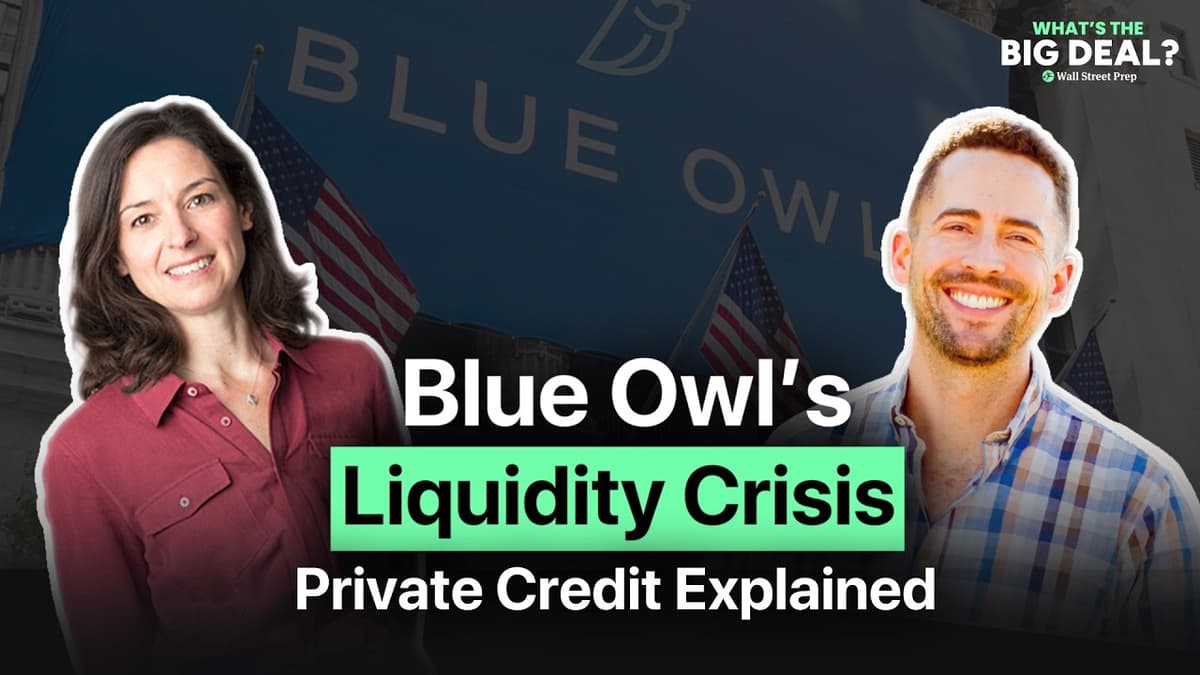
Blue Owl's Liquidity Crisis (Private Credit Explained)
The podcast’s first episode dissects the recent Blue Owl liquidity squeeze, highlighting how a private‑credit manager was forced to suspend investor redemptions amid mounting cash‑flow stress. Private credit now commands roughly $3.5 trillion in assets, having doubled since 2018, after banks retreated post‑2008 due to higher risk‑weight capital rules. Most of the market consists of direct‑lending funds that issue long‑dated, illiquid loans to sponsor‑backed buyouts, with average weighted lives of three to five years. Blue Owl’s structure is a semi‑private Business Development Company (BDC) that combines public‑market dividend payouts with private‑fund redemption rights. As co‑host Graeme explained, BDCs avoid corporate tax by distributing 90 % of pre‑tax earnings, but they depend on timely loan repayments to fund buy‑backs. When repayments lag, the vehicle can face a liquidity crunch, which is exactly what triggered the redemption halt. The episode underscores that investors—especially retail and high‑net‑worth participants attracted by high yields—must align their liquidity horizons with the inherently illiquid nature of private‑credit assets. Mis‑matching can force managers into emergency measures, potentially eroding confidence in the broader private‑credit market.
By Wall Street Prep

Video•Feb 12, 2026
The Best AI for Financial Modeling
The video evaluates whether AI can produce investment‑banking‑grade three‑statement models in 2026, benchmarking the latest tools against the same rubric used for entry‑level analysts. The author tasked Shortcut, Microsoft Copilot, and ChatGPT with building a model from scratch and graded...
By Wall Street Prep