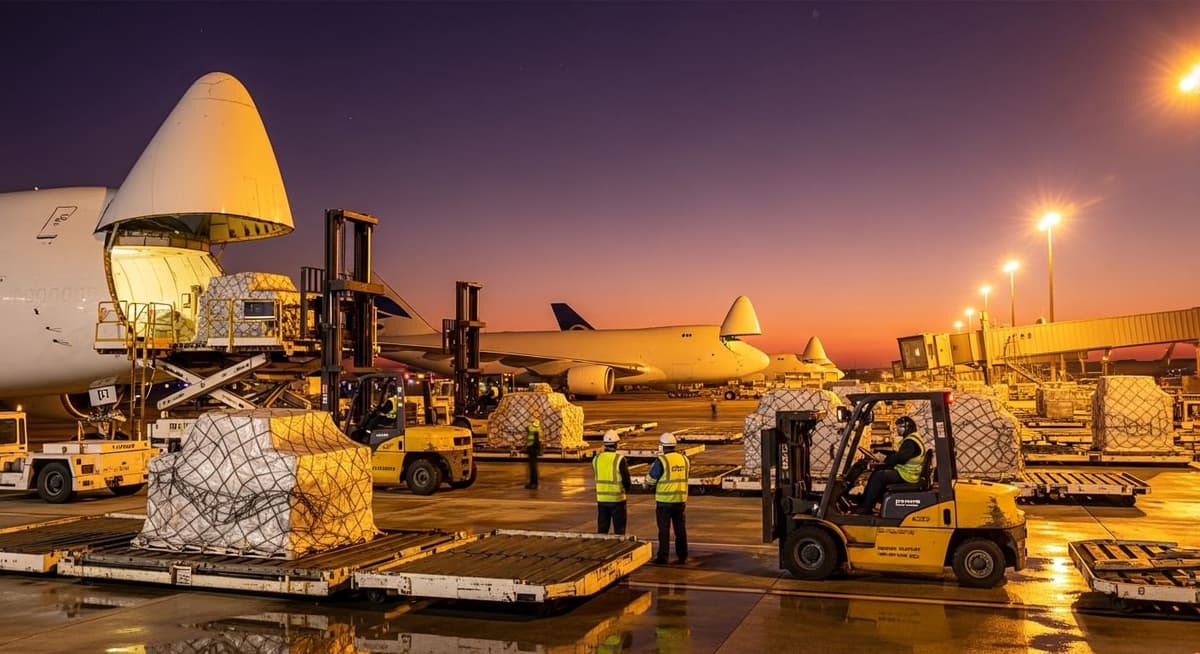
4colors Research & Partners Secure Funding to Tackle Aircraft Loading with Quantum Computing
•February 23, 2026
0
Why It Matters
It proves quantum computing can deliver measurable efficiency and sustainability gains for airlines, accelerating industry adoption of advanced optimisation technologies.
Key Takeaways
- •NQCC SparQ grant funds hybrid quantum cargo optimisation
- •Consortium includes Airbus, DNV, ORCA, 4colors Research
- •Photonic quantum systems target fuel burn reduction
- •Mixed‑integer optimisation improves payload utilisation
- •Incremental gains cut CO₂ emissions and turnaround time
Pulse Analysis
The aerospace sector faces a classic combinatorial bottleneck: arranging cargo to satisfy weight, balance, and structural constraints while maximising payload. Traditional algorithms often rely on heuristics that struggle with the exponential growth of possible configurations, especially as aircraft become larger and cargo mixes more diverse. Hybrid classical‑quantum approaches promise to bridge this gap by using quantum processors to explore solution spaces far more efficiently, while classical hardware handles data preprocessing and result refinement. This synergy can unlock optimisation depths unattainable by pure classical methods, setting the stage for next‑generation logistics planning.
The newly funded project brings together a unique blend of expertise. 4colors Research contributes its track record in mixed‑integer optimisation and recent success in the Airbus × BMW Quantum Computing Challenge. Airbus and DNV supply domain knowledge on aircraft design and certification, ensuring that quantum‑derived loading plans meet safety standards. ORCA Computing provides photonic quantum hardware, a platform noted for low‑noise operation and scalability, which is well‑suited for the mixed‑integer problems at hand. Backed by the NQCC SparQ grant, the consortium can accelerate prototype development, conduct real‑world testing on airline data, and demonstrate tangible performance improvements within a realistic timeframe.
If successful, the impact extends beyond immediate fuel savings. Even modest improvements in payload utilisation translate into lower per‑tonne emissions, supporting airlines’ ESG commitments and regulatory pressures. Faster turnaround reduces gate occupancy, enhancing fleet productivity and revenue potential. Moreover, a proven hybrid quantum workflow could be replicated across other logistics‑intensive domains such as maritime shipping or ground transport, positioning the consortium as a pioneer in commercial quantum optimisation. The project therefore not only advances quantum technology readiness but also reshapes the economics of sustainable aviation.
4colors Research & Partners Secure Funding to Tackle Aircraft Loading with Quantum Computing
0
Comments
Want to join the conversation?
Loading comments...