AWS Quantum Technologies Releases Qiskit-Braket Provider v0.11, Now Compatible with Qiskit 2.0
•February 23, 2026
0
Why It Matters
The release accelerates developer adoption of Amazon Braket by simplifying workflow migration and boosting performance, positioning AWS as a more attractive quantum‑cloud platform.
Key Takeaways
- •Qiskit‑Braket v0.11 adds BraketEstimator and BraketSampler
- •Full compatibility with Qiskit 2.0 and older versions
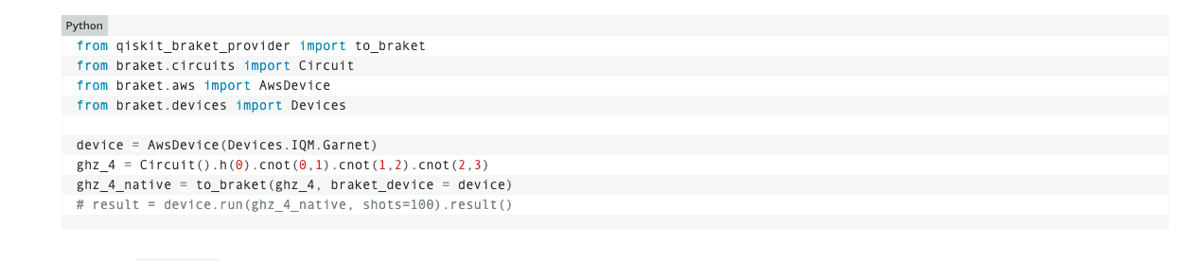
- •`to_braket` compiles Qiskit, OpenQASM 3, and Braket inputs
- •Direct program‑set execution reduces overhead on Amazon devices
- •Flexible optimization levels enable hardware‑specific tuning
Pulse Analysis
Interoperability has become a decisive factor in the rapidly maturing quantum‑computing market. By aligning the Qiskit‑Braket provider with Qiskit 2.0, AWS removes a major friction point for researchers and enterprises that rely on IBM’s open‑source stack. The `to_braket` compilation bridge accepts native Qiskit circuits, OpenQASM 3 scripts, and Braket program sets, allowing users to target Amazon’s diverse hardware portfolio without rewriting code. This seamless translation not only shortens development cycles but also encourages cross‑platform benchmarking, a critical step toward establishing industry‑wide performance standards.
The introduction of BraketEstimator and BraketSampler primitives marks a shift from generic wrappers to purpose‑built execution engines. These classes expose advanced observable parsing, parameter handling, and direct program‑set submission, delivering lower latency and higher fidelity on Braket’s superconducting and ion‑trap devices. Developers can now leverage familiar Qiskit APIs while exploiting Amazon’s native optimizations, such as hardware‑specific gate synthesis and error mitigation techniques. The flexible `to_braket` function further supports custom optimization levels, enabling fine‑grained control over circuit depth and qubit allocation, which is essential for near‑term noisy intermediate‑scale quantum (NISQ) applications.
From a strategic perspective, the v0.11 update strengthens AWS’s position in the competitive quantum‑cloud arena dominated by Azure Quantum and Google Cloud. By offering a robust, backward‑compatible bridge to the most widely used quantum SDK, Amazon lowers the barrier for enterprises to migrate workloads to its managed Braket service. This could translate into increased usage of AWS’s pay‑as‑you‑go quantum resources, driving revenue growth and fostering a broader ecosystem of third‑party tools. As quantum hardware continues to evolve, the ability to compile once and run anywhere will be a decisive advantage, and AWS’s latest move signals its commitment to becoming the de‑facto platform for cloud‑based quantum experimentation.
AWS Quantum Technologies Releases Qiskit-Braket Provider v0.11, Now Compatible with Qiskit 2.0
0
Comments
Want to join the conversation?
Loading comments...