Bosonic Josephson Junctions Infer Rotation Frequency Via Modified Tunneling Dynamics
•January 21, 2026
0
Why It Matters
Accurate, miniaturized rotation sensing is critical for inertial navigation and structural monitoring, and quantum‑enhanced Josephson‑junction sensors promise higher precision than existing technologies.
Key Takeaways
- •Rotation exponentially lengthens tunnelling period.
- •Linear rise in transverse momentum with rotation.
- •Off‑center wells cause asymmetric tunnelling and self‑trapping.
- •Angular momentum scales linearly with rotation, quadratically with displacement.
- •Orientation produces Gaussian dependence in self‑trapping signatures.
Pulse Analysis
Current rotation‑sensing technologies—ring‑laser gyroscopes and MEMS devices—balance size, power consumption, and precision, but they face fundamental limits in sensitivity and drift. Quantum sensors based on ultracold atoms have emerged as a compelling alternative, leveraging coherence and entanglement to amplify minute inertial effects. Within this landscape, bosonic Josephson junctions offer a uniquely compact platform: a pair of condensates trapped in a double‑well potential whose tunnelling dynamics act as a built‑in interferometer for rotational motion.
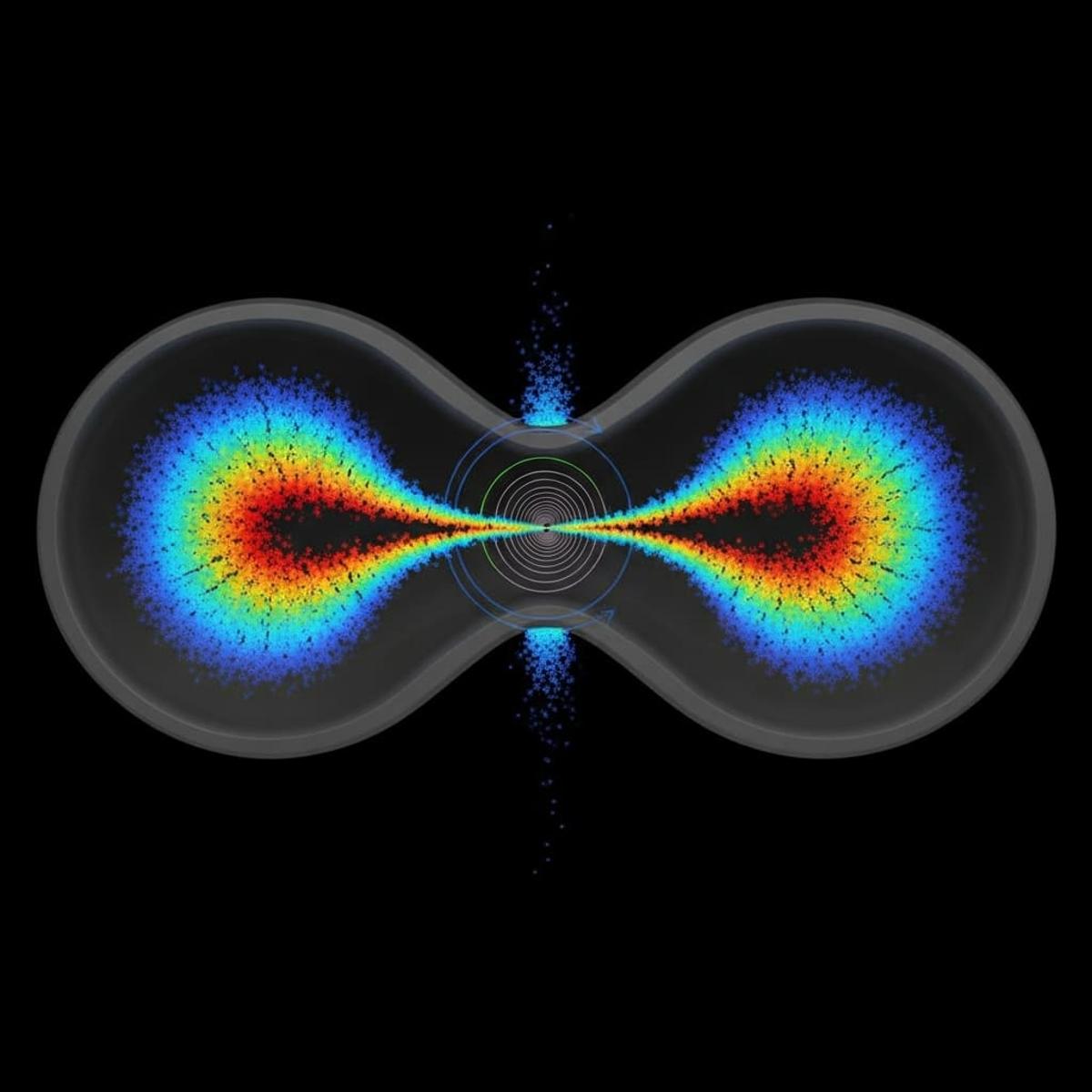
The study by Roy, Alon and collaborators demonstrates that rotation imprints clear, quantifiable changes on the junction’s dynamics. Mean‑field and many‑body simulations reveal an exponential elongation of the tunnelling period and a corresponding surge in time‑averaged angular momentum as the angular frequency rises. Simultaneously, the transverse‑momentum amplitude grows linearly, while off‑center wells introduce asymmetric tunnelling and partial self‑trapping, encoding both radial displacement and orientation. These signatures—linear, exponential, and Gaussian dependencies—provide a multi‑parameter readout that can be extracted from straightforward time‑resolved measurements, sidestepping the need for complex optical interferometry.
If translated into hardware, such quantum‑enhanced sensors could reshape inertial navigation, geophysical surveying, and structural health monitoring by delivering higher accuracy in a smaller footprint. Challenges remain, including maintaining ultracold conditions, controlling switching times for time‑dependent rotations, and scaling the system for field deployment. Ongoing research into robust trapping architectures and hybrid integration with photonic readout may soon bridge these gaps, positioning bosonic Josephson junctions as a next‑generation cornerstone of precision rotation sensing.
Bosonic Josephson Junctions Infer Rotation Frequency Via Modified Tunneling Dynamics
0
Comments
Want to join the conversation?
Loading comments...