Could Neutral Atoms Take the Lead in Quantum Computing?
Key Takeaways
- •Neutral atoms use laser tweezers to reposition qubits dynamically
- •Reconfigurability cuts ancilla qubits needed for error correction
- •Low‑Density Parity Codes may reduce physical‑to‑logical qubit ratio >100×
- •Oratomic aims to ship a reconfigurable neutral‑atom processor in 2024
- •Potential to run RSA‑2048 level Shor’s algorithm within this decade
Pulse Analysis
Neutral‑atom quantum computing has moved from a niche research curiosity to a contender that could reshape the hardware landscape. Unlike superconducting chips, which are fabricated on fixed lattices, neutral‑atom arrays trap individual atoms in vacuum and manipulate them with optical tweezers. This optical control lets engineers physically rearrange qubits on the fly, eliminating the need for long chains of SWAP gates that inflate error rates in nearest‑neighbor architectures. The flexibility also opens a new class of hardware‑aware compilers that can schedule operations based on real‑time qubit geometry, a prospect that excites both quantum software developers and electronic‑design‑automation (EDA) vendors.
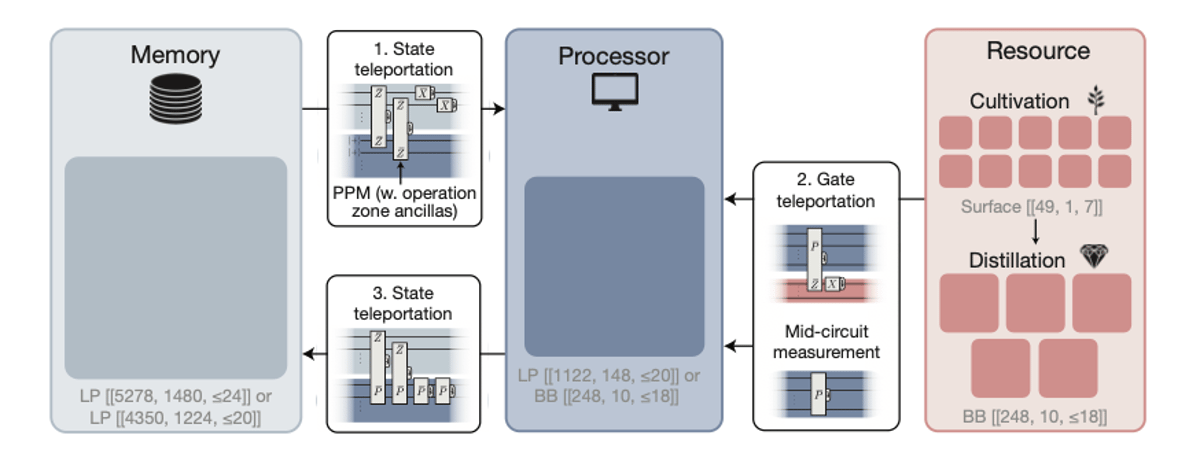
The most compelling claim in the Oratomic paper is the potential to slash the ancilla qubit budget required for quantum error correction. By pairing reconfigurability with Low‑Density Parity Codes, the authors estimate more than a hundred‑fold reduction in the physical‑to‑logical qubit ratio versus conventional surface‑code implementations. If validated, this breakthrough would lower the threshold for fault‑tolerant machines from millions of physical qubits to a few hundred thousand, dramatically shortening the timeline for running algorithms with real‑world impact. Such a reduction also eases cooling and control‑electronics demands, making large‑scale neutral‑atom systems more economically viable.
Commercial implications are immediate. Oratomic’s announced 2024 prototype could attract venture capital and government R&D funding aimed at next‑generation quantum processors. A faster path to cryptographically relevant Shor’s algorithm would pressure standards bodies to accelerate post‑quantum migration, while the reconfigurable architecture creates new opportunities for compiler optimization and hardware‑aware software stacks. In short, neutral‑atom platforms could become the bridge between today’s noisy intermediate‑scale quantum devices and the fault‑tolerant computers that industry and academia have been chasing for years.
Could Neutral Atoms Take the Lead in Quantum Computing?
Comments
Want to join the conversation?